
World’s Orbs get their biggest shop in Colombia
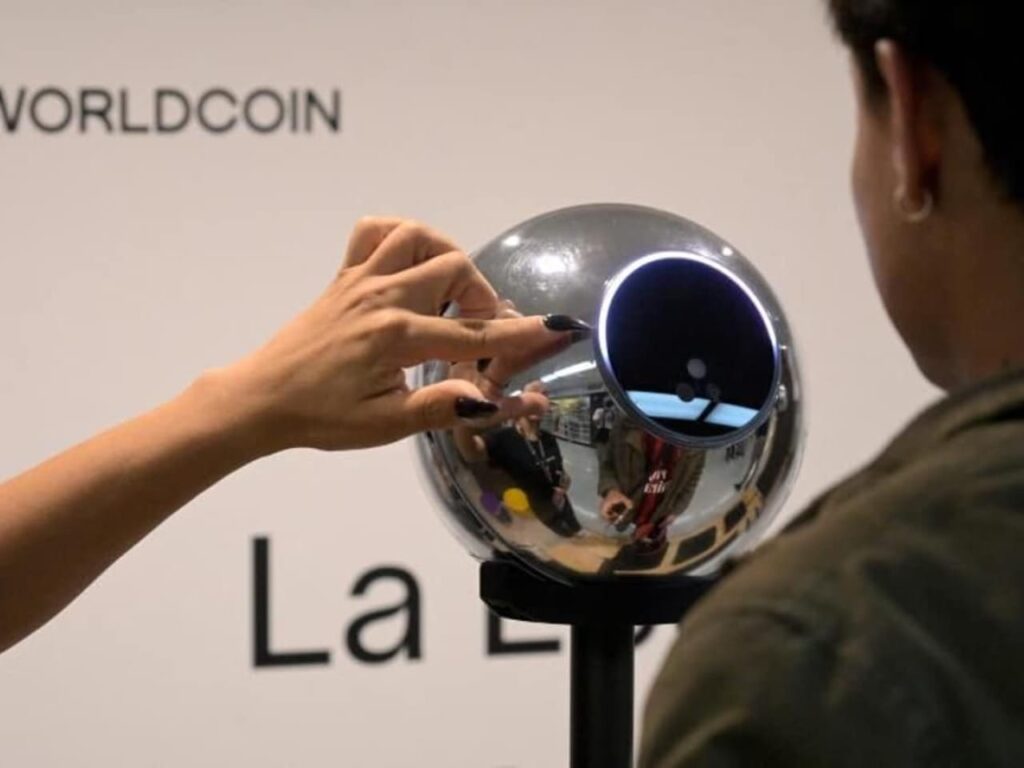
World has opened doors on its biggest center worldwide.
The flagship premises can be found in Bogotá, Colombia, located in the San Patricio neighborhood of the capital and measures more than 500 square meters.
At the brick-and-mortar store visitors can use the Orb, a biometric device that confirms a person’s uniqueness and generates an anonymous digital credential known as World ID. According to the company, nearly two million Colombians have already registered with World, making the Latin American country among the keenest adopters of the technology.
“Colombia is a rising technological powerhouse in Latin America,” says Carlos Ángel, General Manager for the Andean Region at Tools for Humanity, the parent and main developer of Worldcoin. “This space is more than just a place to verify your World ID; it is a hub for conversation and innovation.”
The network claims to have more than 26 million users across 160 countries. World was conceived by OpenAI’s Sam Altman, Alex Blania, and Max Novendstern as an open protocol to provide secure digital identities in the era of AI. The project is spearheaded by Tools for Humanity, based in San Francisco, which developed the network and the World app.
While the Orb is expanding around the world, including high-profile partnerships in Thailand and Japan, the company may eventually move away from the device, which it admitted was designed as an attention-getter. An announcement in March unveiled the Orb Mini, which is shaped (and built) a lot like a smartphone, suggesting it aims to have its technology fit into the average mobile device.
For now, the Orbs are eye-catching devices as they capture people’s iris biometrics. Taceo, the company behind World’s biometric iris matching software, closed a $5.5 million seed funding round led by Archetype VC last month. Taceo plans to use the capital to grow its team and scale its technology. The firm is also planning to expand its use cases beyond crypto and decentralized finance into identity verification, financial services, and AI.
The Austrian company has been developing cryptographic technology that allows payment providers to verify transactions and identities across decentralized networks without exposing underlying data. This includes encrypting the biometric data of World Network users who have scanned their irises to receive a proof-of-humanity (PoH) and gain access to World’s digital wallet and WLD cryptocurrency.
Tools for Humanity intends to upgrade its privacy, security, biometric hardware and digital ID expertise as the World project scales. Tools for Humanity will be the focus for four new TFH executives, which it appointed in July. The new hires have experience working at Twitter, Android, Apple, and a Germany-based law firm.
TFH engaged Latham & Watkins partner Tim Wybitul to help it work with the Bavarian data protection authority, which is taking the lead on judging Worldcoin’s GDPR compliance. Data protection and regulation has been a continuous bugbear for the company, as it has fallen afoul of regulators in Hong Kong, Indonesia, Kenya and Germany.
Mainland China has also warned against the dangers of sharing biometric information with foreign companies. Additionally, local authorities in Thailand have been put on notice to monitor the use of World’s iris biometric scanning Orbs. Thailand’s Department of Provincial Administration has issued a countrywide alert for local officials to raise public awareness and monitor sensitive biometric data collection activities to prevent fraud.
World’s local affiliate, Tools for Humanity Thailand, has partnered with 11 Thai partners, including state-owned National Telecom, to promote human verification services. “The government would like to ask citizens to be aware that trading such biometric data for a small reward may not be worth the possible damage that could occur in the future,” said Deputy Government spokesman Anukool Pruksanusak, in the Bangkok Post.
World introduced its iris-scanning Orbs to Thailand in March, with plans to have two million users and 1,000 Orb locations across the country by the end of the year. “In the long run of around five years, we may consider collecting a small transaction fee for the service,” said TFH Thailand Country Manager Pakapol Thangtongchin at the time.
Pruksanusak warned that biometric data is especially sensitive as unlike passwords it cannot be changed if compromised, such as in data breaches, and can be exploited for identity theft and impersonations in financial fraud.
In Japan, Hakuhodo is the flagship domestic partner for World’s expansion, in charge of planning and operational support through a partnership with Tools for Humanity announced last December. The marketing agency will help tailor the World experience to Japanese users.
The company signed a Medirom deal that aims to accelerate adoption of World ID by integrating it into Medirom’s Re.Ra.Ku relaxation salon chain. Medirom will begin installing Orbs across its Re.Ra.Ku network. The first deployments are expected later this year, with installations targeting about 100 salons by the end of December and 500,000 new World IDs to be issued annually to salon visitors.
Related Posts
-
 March 10, 2025
 -
 August 18, 2025
 -
 April 1, 2025
 -
 December 3, 2024
 -
 August 28, 2025
 -
 March 6, 2025
Article Topics
biometrics | Colombia | digital ID | iris biometrics | Latin America | World | World ID | World ID Orb

Comments