
Costa Rica unveils new identity card design with enhanced security features
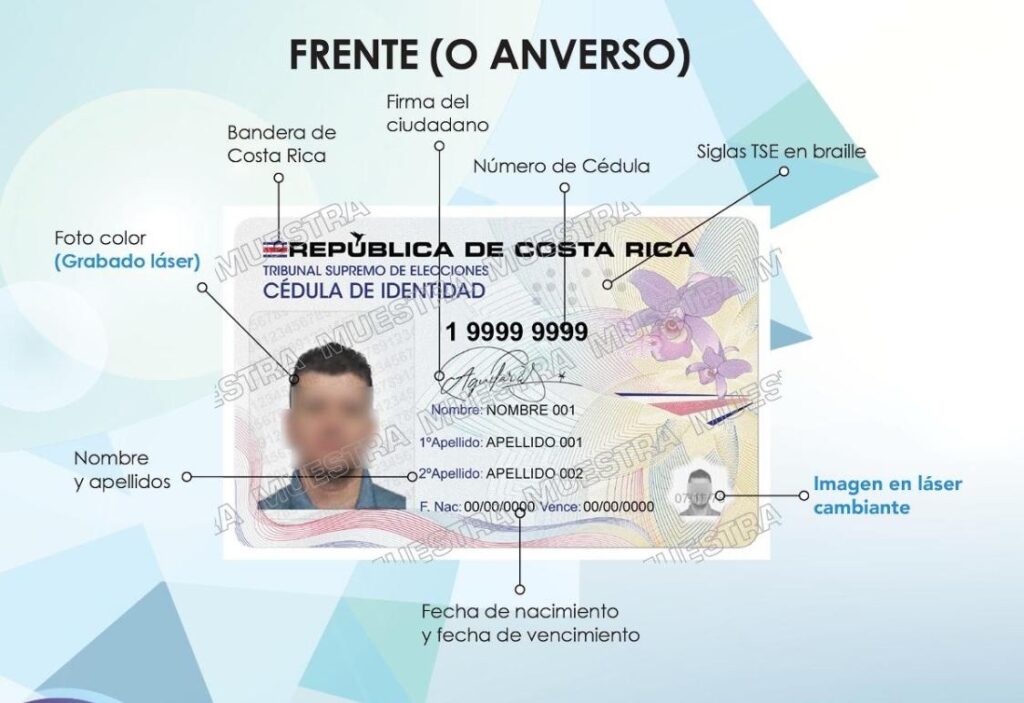
Costa Rica’s Supreme Electoral Tribunal (TSE) has officially launched a redesigned national identity card. While the card’s size and 10-year validity remain unchanged, the new format introduces advanced security elements aimed at protecting personal data and streamlining verification processes.
The updated card is made of polycarbonate and features color laser engraving for improved durability. It replaces the traditional barcode with MRZ (Machine Readable Zone) technology, enabling compatibility with automated identity verification systems.
Physical enhancements include embossed text, dashed lines, ultraviolet-visible components, and microtext—details that are nearly invisible to the naked eye but detectable with magnification tools.
The initials “TSE” (which stands for El Tribunal Supremo de Elecciones) now appear in Braille on the front of the card. A secondary, reduced-size photo of the cardholder has also been added, aligning with international standards set by the International Civil Aviation Organization (ICAO).
However, some personal data fields—such as parental names and electoral address—have been removed from the new design. It is not mandatory to switch to the new format if the current ID is still valid and in good condition.
The TSE confirmed that both the old and new versions of the identity card remain equally valid. Citizens will continue to receive the physical document free of charge, provided they do not exceed the annual limit of one replacement. The TSE has visual demonstrations of the new ID card on its official page here.
Costa Rica launched its mobile digital identity in the past month, allowing citizens to present the document on their smartphone the same way as a physical card. Costa Ricans can apply for the IDC (Identidad Digital Costaricense) by submitting their identity card number and face biometrics to confirm their identity.
Related Posts
-
 February 3, 2025
-
 September 12, 2025
-
 April 4, 2025
-
 March 3, 2025
-
 September 22, 2025
-
 April 4, 2025
Article Topics
Costa Rica | ICAO Passport Standards | identity document | identity management | national ID

Comments