
CBP Mobile Identify app pulled from Google Play Store amid intensifying scrutiny

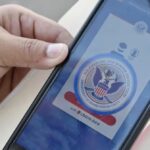
The Department of Homeland Security’s (DHS) Mobile Identify application was quietly removed from the Google Play Store after journalists and advocates exposed the app and questioned its use, legal authority, and distribution.
Developed for Customs and Border Protection (CBP), the app was made available to local law enforcement as a field-level biometric tool to identify individuals in real time.
Use of the app was extended to local law enforcement officers working under the federal 287(g) immigration enforcement program, and allows local police officers to capture a face image and query DHS biometric databases.
The federal 287(g) program allows DHS – through Immigration and Customs Enforcement (ICE) – to sign formal agreements with state and local law enforcement agencies that deputize certain officers to perform limited federal immigration enforcement functions.
Under these agreements, trained local law enforcement officers can check immigration status, issue detainers, and initiate removal proceedings under ICE supervision. What isn’t clear is why an app used by CBP is also allowed to be used by local police operating under ICE authority.
Consequently, the app has raised concerns about how CBP and ICE have been deploying mobile surveillance systems without public oversight or formal disclosure, and has underscored the growing concerns about DHS’s aggressive adoption of mobile surveillance tools with little transparency or external oversight. Never mind legality.
Indeed. Mobile Identify drew immediate attention because it appeared to extend DHS’s biometric reach into everyday local law enforcement encounters in which a smartphone photo could initiate a scan against DHS databases and return a reference number instructing officers whether to contact ICE to detain the person or let them go, effectively turning routine encounters into immigration checks
However, there is no dedicated, publicly available privacy impact assessment for Mobile Identify, and CBP has not released any detailed privacy documentation for the app.
Its sudden disappearance from Google Play Store has only intensified scrutiny over whether the tool was improperly listed to begin with, withdrawn in response to inquiries, or removed pending compliance evaluations, none of which DHS has clarified or even acknowledged.
The development of Mobile Identify remains largely opaque. Public reporting has not identified any standalone procurement line for the app, and CBP has not publicly named any contractor or internal development team behind it.
What is known is that DHS has, in recent years, expanded its suite of mobile identity tools by adapting pre-existing biometric components used across multiple agencies, including CBP and ICE.
Mobile Identify appears to have been built within this ecosystem, leveraging established database interfaces to DHS biometric databases and other systems, but without the public transparency typically expected for surveillance technology affecting civil liberties.
The lack of documentation has become a major concern for privacy advocates and for Democratic senators who see Mobile Identify as part of DHS’s broader expansion of mobile facial recognition.
With the app now removed from Google Play and DHS declining to explain its deployment history, questions about how widely Mobile Identify was used, and under what legal authority, remain unanswered.
While the House is focused on an entirely different set of applications, Senate Democrats have zeroed in on ICE’s internal use of mobile facial recognition tools – especially Mobile Fortify, a separate ICE app used by federal agents in the field which operates alongside CBP’s Mobile Identify app for local police.
On September 11, Senators Edward Markey, Ron Wyden, and Jeff Merkley led a coalition of Democrats in sending a letter to ICE Acting Director Todd Lyons demanding that the agency immediately halt its mobile facial recognition program until it provided full transparency.
The letter, which also was signed by Elizabeth Warren, Cory Booker, Chris Van Hollen, Bernie Sanders, Adam Schiff, and Tina Smith, warned that ICE’s deployment of a mobile biometric tool amounted to “a dangerous escalation in government surveillance,” one that jeopardizes privacy, free expression, and civil liberties.
The senators asked ICE to explain who built the app, how it was tested, whether it showed disparate error rates across demographic groups, what policies guided its deployment, and where it had already been used. They required answers by October 2.
When ICE failed to respond by the deadline, the same group of lawmakers issued a follow-up letter in early November, renewing their demand that the agency halt its use of mobile facial recognition technology and urging ICE to provide the full set of requested information without further delay.
To date, ICE has not publicly acknowledged the tool or provided the transparency the senators requested.
The House Committee on Homeland Security meanwhile has launched a separate, parallel investigation that focuses exclusively on public-facing apps that allow users to track or report the presence of ICE or DHS agents, not on ICE’s internal biometric tools.
Following a deadly attack on an ICE facility in Dallas, committee leaders Andrew Garbarino and Josh Brecheen sent letters on December 5 to Apple and Google demanding briefings on how the companies review and moderate such apps, arguing that some could jeopardize officer safety.
The letters request explanations of each platform’s policies for identifying, restricting, or removing apps that disclose agent movements. They do not address Mobile Identify or any other internal ICE technologies.
The House investigation is framed around law enforcement protection, not civil-liberties concerns, and reflects a wholly distinct line of oversight from the Democratic senators’ demands.
“The Committee is concerned that these apps not only jeopardize the safety of DHS personnel but also enable malicious actors to incite violence and obstruct lawful government operations,” the letters say.
The lawmakers added that “Apple’s App Store hosts apps that allow users to report and disseminate data to reveal the location and identification of DHS law enforcement and their movements. These tools risk the safety of these officers, their families, and the operations they are conducting.”
Although CBP has refused to clarify whether Mobile Identify remains in use on law enforcement devices, its public withdrawal has amplified concerns about the unchecked authority of frontline officers using biometric tools that can misidentify individuals, trigger enforcement actions, and feed sensitive data into long-term government databases.
With Senate Democrats demanding disclosures and several states already considering restrictions on DHS access to their driver license databases, Mobile Identify has become a focal point in the broader debate over biometric policing.
The distinction between the House investigation into public ICE-tracking apps and the Senate’s focus on ICE’s internal surveillance tools highlights the emerging political divide, one that is centered on officer safety, and the other centered on constitutional rights, technological accountability, and the limits of executive power.
Mobile Identify may have vanished from Google’s public storefront, but the oversight questions surrounding it are only now beginning to take shape, and they signal what could become a consequential inquiry into mobile biometrics and immigration enforcement in the U.S.
Related Posts
-
 March 11, 2025
 -
 August 13, 2025
 -
 June 26, 2025
 -
 November 4, 2025
 -
 May 9, 2025
 -
November 27, 2025
Article Topics
biometric matching | biometrics | border security | ICE - U.S. Immigration and Customs Enforcement | immigration | live facial recognition | mobile app | mobile biometrics | Mobile Identify | real-time biometrics

Comments