
Biometrics vendors should ‘step up their marketing’ say smartphone analysts
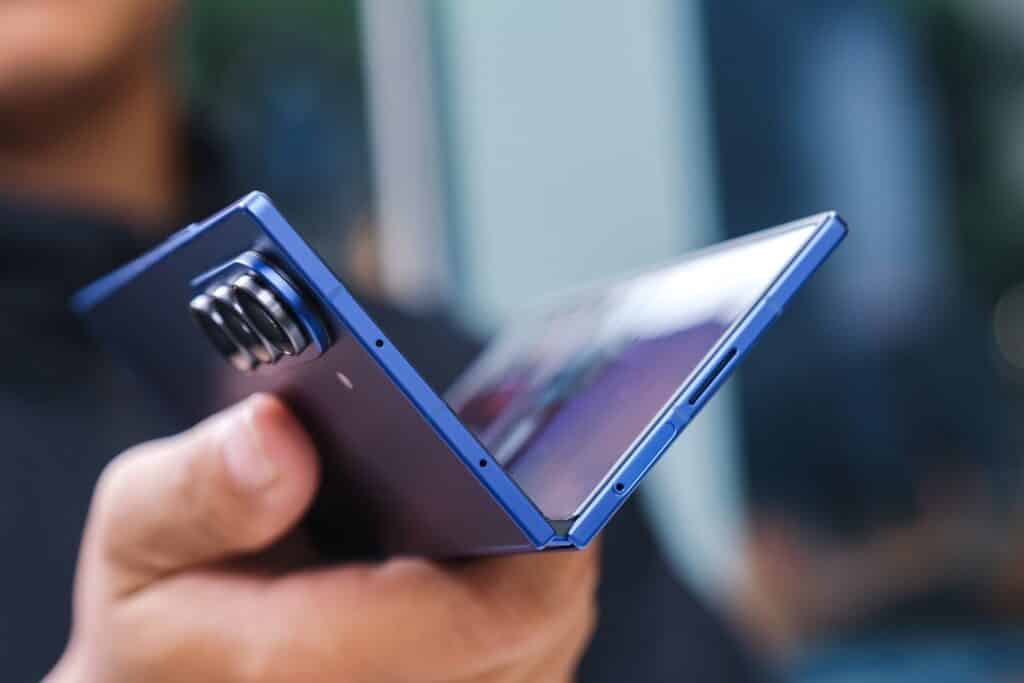
Next Biometrics has partnered with Taiwanese company Giantplus to invest in an innovative new technology that could change touchscreen authentication.
The so-called “anywhere-on-display” biometrics allows users to touch anywhere on the screen to authenticate their fingerprint. Next and Giantplus are hoping to commercialize the tech with a view to showcase a prototype at Mobile World Congress 2027.
Speaking to consumer tech analysts, Biometric Update learned more about the significance of device security, the approaches to biometrics from phone makers, and the burgeoning foldables category, in a feature story published last week.
Now, we’re looking more closely at foldables and how biometrics marketing could do with a boost. Runar Bjorhovde, senior analyst for smartphones and connected devices at Omdia, notes that almost all leading vendors have released several generations of either flip or fold devices to the market.
“We’re actually expecting 2026 to be a major turning point for foldable smartphones,” Bjorhovde tells Biometric Update.
“The big turning point this year is of course that we’re expecting Apple to introduce a foldable.”
Apple was the largest vendor in the smartphone market in 2025, selling over 240 million iPhones. And its users, as Bjorhovde says, have a higher propensity to pay more for phones on average compared to other brands. “There is also a very loyal premium user base that might feel incentivized to upgrade to a foldable.”
It’s not hard to imagine how being able to authenticate a finger anywhere on a screen would be convenient for foldable users, since the screen is that much bigger or it may come in an irregular form-factor, instead of hunting around for the applicable area.
Omdia has projected an almost 50 percent increase in foldable shipments for 2026 compared to 2025, with around 26.5 million units shipped. China has seen significant expansion, growing 32.8 percent year-on-year, driven by Huawei’s Mate and Pura X foldables.
Added competition, such as Apple’s entry into the space, and the growing affordability of flip-shaped devices will underpin 2026’s pivotal momentum, according to Omdia.
“[Foldables] are a proving ground for whether hardware R&D can still deliver meaningful differentiation in an industry where the gravitational pull is shifting toward software, artificial intelligence, and services as the core revenue drivers,” an Omdia report on foldables says.
Next’s bet on its tech could prove valuable then, although there is much yet to be proven. The Norwegian biometrics company has raised a loan just shy of a million dollars to support ongoing product development. Its CEO, Ulf Ritsvall, has said an NDA with a “smartphone leader” has been signed and that industry players have shown “substantial interest.”
Waiting for biometrics’ “Intel Inside” moment
Innovative engineering and cost effectiveness are key in consumer technology, but a major value-add is marketing. Companies such as Apple, Xiaomi (in its native China) and Sony have benefited enormously from this, becoming brands associated with qualities that inspire loyalty and hype.
Apple has come up with terms like Face ID and ProMotion to package and sell what could be otherwise considered arcane technology. But biometrics could do more in this arena.
“I think the biggest step many biometrics players can take to prove their importance is within marketing — in addition to maintaining their current innovation,” Bjorhovde says.
“Actually explaining why these sensors are so important and what they enable can massively help to simplify them to users, consequently making the value easier to understand.”
The Omdia analyst cites the example of a 1990s campaign called “Intel Inside.” It focused on elevating the status of silicon, getting customers to care more about the processors inside home computers, which catapulted Intel into becoming the dominant CPU vendor for PCs.
Bjorhovde mentions partner marketing, working with established brands to highlight specific parts of the hardware, targeting B2B customers. And telling stories in the mainstream press to explain why biometric sensors “make all the difference.”
“Really explaining what difference it makes for the users, and I think particularly aiming to trigger loss aversion could be a big benefit, referring to a feeling that something is missing if the user doesn’t have it.”
For Avi Greengart, lead analyst at Techsponential, it’s about the security biometrics can enable. “Security needs to be as easy to set up and use as possible, and consumers need to be presented with security scenarios where [biometrics] are the heroes of the story for locking their phone.”
For foldables, Greengart says they should get a “surge of interest” since this usually happens whenever Apple comes out with a new form factor for iOS users. The new iPhone Fold is also tipped to bring back Touch ID, according to reports.
Bjorhovde mentions how AI is changing the industry. “In the next years as well, the biggest challenge for device vendors will be managing the security aspects of AI, particularly as more vendors give access to more user-based information to fuel agentic systems.”
Foldables will certainly be a growth area, but significant challenges remain. “Foldables have become very durable devices breaking innovation barriers, but are still exceptionally expensive,” says Bjorhovde.
“We’re entering a 2026 where DRAM pricing is the number one concern for all smartphone brands, so it will be really important to prove the long-term ROI to any vendors to invest into the additional features or components, as the short-term focus will be elsewhere.”
Related Posts
-
 December 1, 2025
 -
 January 22, 2026
 -
 November 13, 2025
 -
 April 1, 2025
 -
 December 9, 2025
 -
 February 6, 2025
Article Topics
biometric sensors | biometrics | consumer adoption | marketing | Omdia | smartphones

Comments