
DHS study suggests OFIQ value ‘extremely limited’ for its biometrics use cases
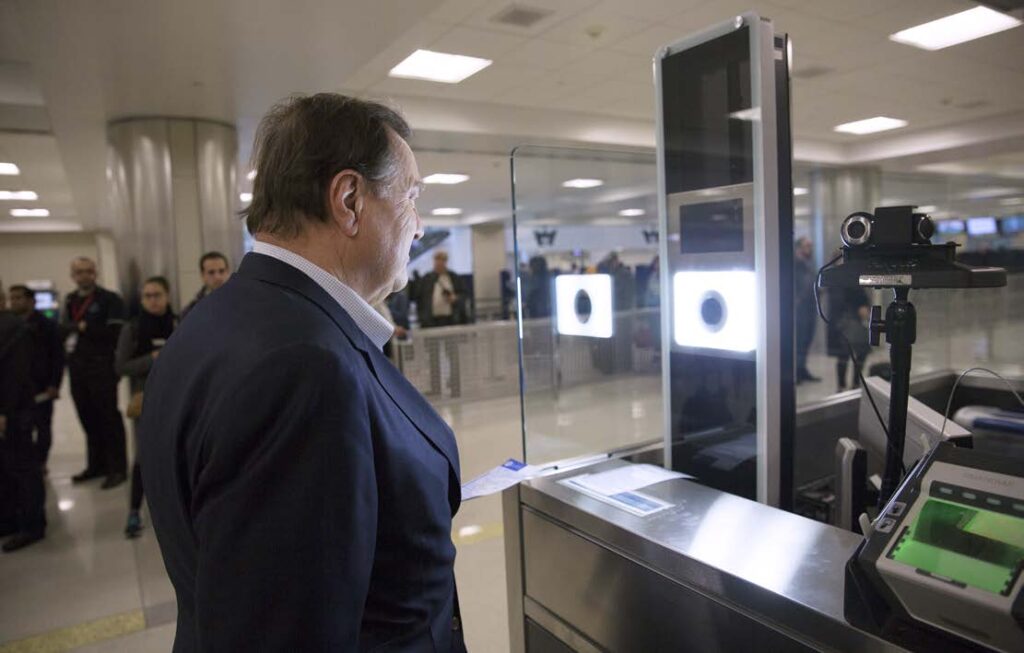
A study released by the U.S. Department of Homeland Security suggests that the Open Source Face Image Quality (OFIQ) tool is not very helpful for the applications in which DHS uses face biometrics.
Researchers with SAIC and the Identity and Data Sciences Laboratory at the Maryland Test Facility (MdTF) examined the potential benefits of OFIQ, which is a reference implementation in ISO/IEC 29794-5, published as an international standard last year.
The facial recognition data quality assessment tool was developed by the German Federal Office for Information Security (BSI) and maintained by eu-LISA.
The technical paper is titled “On the Utility of the Open Source Facial Image Quality Tool for Facial Biometric Recognition in DHS Operations.”
The study was written by Yevgeniy Sirotin, Jerry Tipton and the departing John Howard from MdTF, along with Arun Vemury from DHS’ Science and Technology Directorate’s (S&T’s) Biometric and Identity Technology Center.
They tested OFIQ with 16 different commercial facial recognition systems, and found the unified quality score it outputs “provides extremely limited utility in the DHS uses cases” they looked into. In particular, it underestimated the capability of the biometric systems, which matched faces assessed as very low quality by OFIQ at high accuracy rates.
The quality filter provided by OFIQ also “did not substantially reduce error rates.”
One of the potential uses of OFIQ is to inform repeat captures to improve the quality of the probe image, but the researchers found that in some cases, no significant gain in quality was made with the investment of additional time and resources to recapture facial images.
Despite the limitations the researchers found for OFIQ usefulness, they suggest it could have benefits for selecting which image to use for biometric matching from multiple options.
OFIQ is intended for use in processes beyond those DHS is responsible for, and a second version is already in development and slated for release in 2027.
Related Posts
-
 November 28, 2025
 -
 January 22, 2025
 -
 March 25, 2025
 -
 January 22, 2025
 -
 March 6, 2025
 -
 April 25, 2025
Article Topics
biometric data quality | biometrics | BIS | DHS | face biometrics | facial recognition | ISO 29794-5 | Open Source Face Image Quality (OFIQ)

Comments