
Biometrics from iProov to power EPP at JFK’s giant New Terminal One
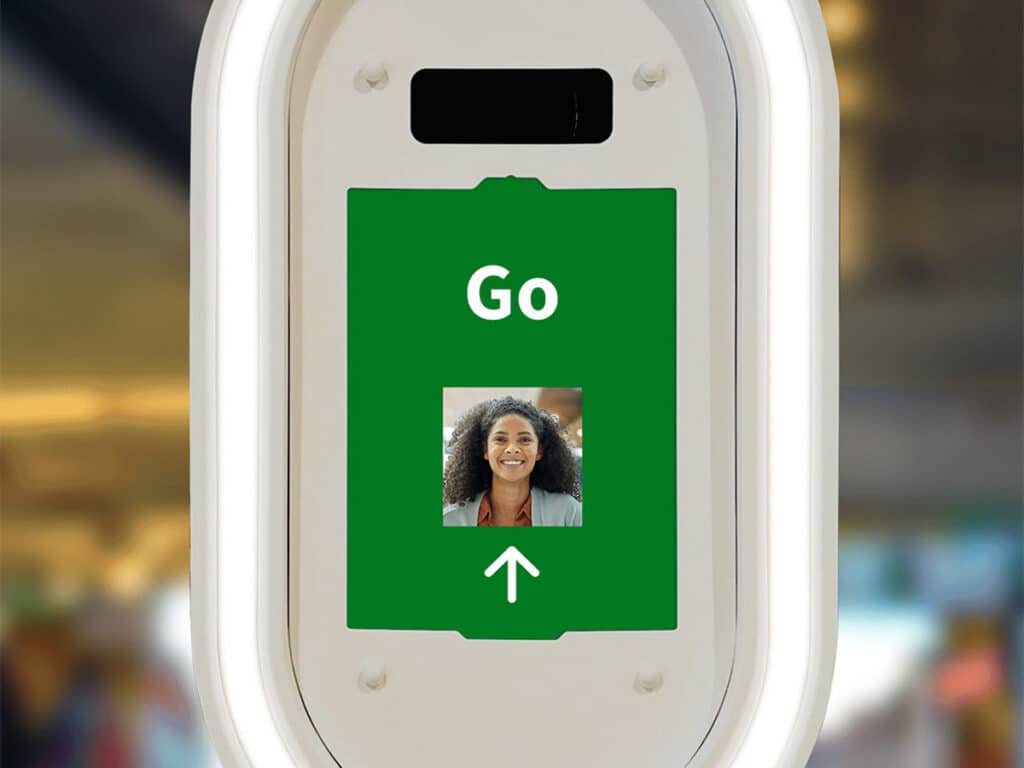
Enhanced passenger processing (EPP) for international arrivals at JFK International Airport’s New Terminal One will be supported by iProov’s biometric identity technology.
A release describes EPP as “a next-generation biometric initiative designed to transform the international arrivals experience,” and says iProov will assist with deployment in coordination with U.S. Customs and Border Protection (CBP).
EPP will be integrated into the massive new airport terminal’s international arrival gates to support real-time biometric identity verification for increased efficiency. It will not require enrollment. However, travelers can opt out and go through the standard CBP inspection process.
“We are delighted to be powering the launch of EPP at New Terminal One,” says Andrew Bud, CEO of iProov. “Our biometrics systems have already delivered outstandingly good results for U.S. border operations at numerous ports of entry, processing millions of on-the-move travelers.”
“Travelers are crossing the border in a few seconds, without needing to wait in long lines or fumble for documentation. Notably, officers can process families and groups together, including those with children or those using wheelchairs. Better traveler experiences, shorter wait times, higher throughput per officer – a win for all stakeholders at New Terminal One.”
New Terminal One to be the anchor for international travel to NY
With a price tag of $9.5 billion, New Terminal One will take over the space occupied by old Terminal 1, as well as the former Terminals 2 and 3. Scheduled for completion in 2030, the terminal will be JFK’s largest, with 23 gates and a total footprint of 2.6 million square feet, home to leading global airlines. Its development is part of a larger overhaul of JFK, which will also add a new ground transportation center and simplified road network.
The first phase of opening, including the new arrivals and departures halls and first set of 14 new gates, is expected in 2026.
In an interview with Tech Travel Monitor, iProov Chief Technology Officer Dominic Forrest outlines the company’s vision for a frictionless border experience, which includes biometrics for travel and the rollout of EPP. Passengers increasingly seek a fast, stress-free immigration experience: Forrest cites IATA research showing that over 70 percent of passengers expect their entire airport journey, from check-in to the gate, to take under 45 minutes.
The primary objective of a system like EPP, he says, “is to ensure legitimate travelers move through quickly while those who are not are stopped.” EPP achieves this through “highly efficient facial capture technology.”
“As a traveller approaches, a camera captures their facial image, which is instantly and securely compared against a trusted government database of passport and visa photos to verify identity.”
Remote onboarding next key to turn for frictionless checkpoints
Forrest says to truly minimize friction in the process requires the wide adoption of remote onboarding before arrival at the airport. “Before travel, a traveler would use their smartphone to securely verify their identity against their ePassport, creating a trusted biometric template,” explains Forrest. “At the border, a brief, passive facial scan then performs an identity check. This process does not simply confirm resemblance to a photo; it verifies that the traveler is the same live individual who completed the secure onboarding.”
As a result, “instead of being a point of friction, the border becomes an invisible, automated checkpoint that welcomes legitimate travelers efficiently while being more effective than ever at identifying risks.”
A recent blog post from the company puts some numbers to the impact of biometrics on seamless travel at Orlando International Airport. With iProov’s biometrics, an average of 14 passengers pass through each EPP lane every minute, and 99 percent complete their biometric image capture successfully on the first try. Average wait times decreased by 65 percent, with passengers able to pass through border control in as little as two minutes.
Related Posts
-
 December 9, 2025
 -
 December 9, 2025
 -
 May 16, 2025
 -
 November 25, 2025
 -
 September 24, 2025
 -
 May 12, 2025
Article Topics
airport biometrics | biometric matching | biometrics | CBP | digital travel | Enhanced Passenger Processing | face biometrics | iProov

Comments