
South Africa digital ID and mDL to launch this year, president promises

President Cyril Ramaphosa of South Africa has given his word that the country’s national digital ID system will be rolled out before 2026 runs out.
Ramaphosa made the announcement in a State of the Nation (SONA) address which he delivered on Thursday February 12 at the Cape Town City hall.
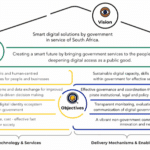
The speech unveiled major plans for the country’s digital transformation, with the president mentioning several areas of specific urgent actions that align with the objectives of the MyMzansi digital public infrastructure (DPI) roadmap and the Medium Term Development Plan (MTDP) 2024-2029. It is described by many as the most technology-focused SONA ever delivered by Ramaphosa.
The president emphasized the importance of the digital ID system, describing it as the foundation for inclusion, efficiency and growth. He also explained that it will support the government’s broader goals of effectively combatting crime, enhancing agriculture, and streamlining public service delivery.
According to the president, action must now be accelerated on the digital ID, which will be accessed through the MyMzansi platform as the only gateway for citizens to digitally access a gamut of public services.
“We will harness digital transformation as a driver of growth, inclusion and effective service delivery. This year, the DHA will launch a Digital ID to enable safe and secure use of digital services for all South Africans,” Ramaphosa announced.
Apart from the digital ID rollout plan, he mentioned that efforts will be ramped up to further digital public services and facilitate access.
“We will digitize driver’s licenses, Matric certificates and services at the Master’s Office. Citizens will be able to fill out police statements online and eligibility for South African Social Security Agency [SASSA] grants can be tested remotely,” he added. Last year, SASSA introduced biometrics for grant beneficiary verification as part of a push to reduce fraud and inefficiency. State broadcaster SABC quoted Social Development Minister Nokuzola Tolashe as saying that SASSA has saved over 300 million Rand (US$18.8 million) since the biometric verification system was introduced.
President Ramaphosa stated that these actions are part of the broader MyMzansI DPI roadmap which spells out South Africa’s digital transformation priorities across sectors in the next few years.
The rollout of the digital ID, which is overseen by the Department of Home Affairs, is a major component of the MyMzansi DPI roadmap. However, its implementation is behind schedule as the government said recently that the legal framework to get the system in place was still being discussed, pending cabinet approval.
“All these services will be made available on the MyMzansi platform. Soon, every South African will be able to access many of the services they need without visiting a government office or filling out manual forms,” the president assured.
“This year alone, hundreds more bank branches will now offer Smart ID and passport services, decreasing queues and waiting times. We will also work with civil society to ensure that citizen’s protections and rights are safeguarded through this digital revolution.”
Going forward, the president announced more investment in digital public infrastructure, including in the area of connectivity, in order to continue to drive the growth of the country’s services sector.
“We are attracting major investment in digital infrastructure, with 55 data centres already built and more than R50 billion [approximately US$ 3.13 billion] of investment expected over the next three years,” he disclosed.
Ramaphosa also mentioned plans to strengthen the use of technology for border control and immigration, with the envisaged extension of the Electronic Travel Authorization (ETA) system to all countries that require a visa, to enable applications for tourists to be processed within a period of 24 hours. The system, launched in October last year, will replace the paper-based visa system still in place.
Ramaphosa equally talked about the further integration of artificial intelligence (AI) and data analytics systems with law enforcement in order to better combat organized crime, which he described as the biggest threat to the South Africa’s democracy.
Related Posts
-
 July 9, 2025
 -
 January 30, 2026
 -
 October 13, 2025
 -
 September 29, 2025
 -
 September 12, 2025
 -
December 2, 2025
Article Topics
digital government | digital ID | digital public infrastructure | mDL (mobile driver's license) | MyMzansi | South Africa

Comments