
Focus on Sahel digital sovereignty gets clearer with Niger’s new biometric ID card

Niger has become the second country of the Alliance of Sahel States (AES) to launch a new biometric national ID card system.
The country’s President, General Abdourahamane Tiani, was the first citizen to enroll for the initiative during a launching ceremony on March 27, according to reporting by Business Insider Africa.
It is an AES regional biometric ID, in line with an agreement on identity credentials between the three countries (Burkina Faso, Mali and Niger) that make up the bloc, not long after they severed all ties with the Economic Community of West African States (ECOWAS) in 2024.
Burkina Faso was the first country to adopt the regional identification document, with President Ibrahim Traore also being the first to register for the ID card at its launch.
The three nations have been pursuing joint actions aimed at asserting their regional independence, and the regional biometric ID initiative is one of them. The card allows passport-free travel between the AES countries.
Niger authorities say they intend to use the national ID system not only to strengthen their digital sovereignty, but also to simplify access to services in the public and private sector.
The government contracted Libyan firm Al Itissan Al-Jadeed last year to upgrade its national ID cards and biometric passports.
According to the government, the biometric ID cards will be issued to citizens who are 15 years old and above, and will be used as the main identification document for citizens seeking access to services.
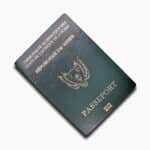
Earlier this month, the Ministry of Interior, Security and Territorial Administration announced that the plan was to introduce not only the new ID system but also a new biometric passport dispensation. Officials say the document meets the security standards of the International Civil Aviation Organization (ICAO).
The effective implementation of the Niger AES-aligned national ID began with the approval of a presidential decree by cabinet last December. It is part of ongoing efforts by the government to modernize its identification infrastructure and bring the nation up to speed with developments in the domain.
As part of the digital infrastructure and sovereignty boost, the Niger government has also mentioned plans of enhancing its national data center capacity and cybersecurity architecture and building up domestic technical expertise to reduce external dependence.
The AES nations also launched a common biometric passport in January 2025.
Related Posts
-
 July 7, 2025
 -
 May 22, 2025
 -
 April 21, 2025
 -
 July 21, 2025
 -
 January 7, 2026
 -
 June 30, 2025
Article Topics
Africa | biometrics | ID card | national ID | Niger | Sahel

Comments