
ICE surveillance app comes under scrutiny in Oregon court fight
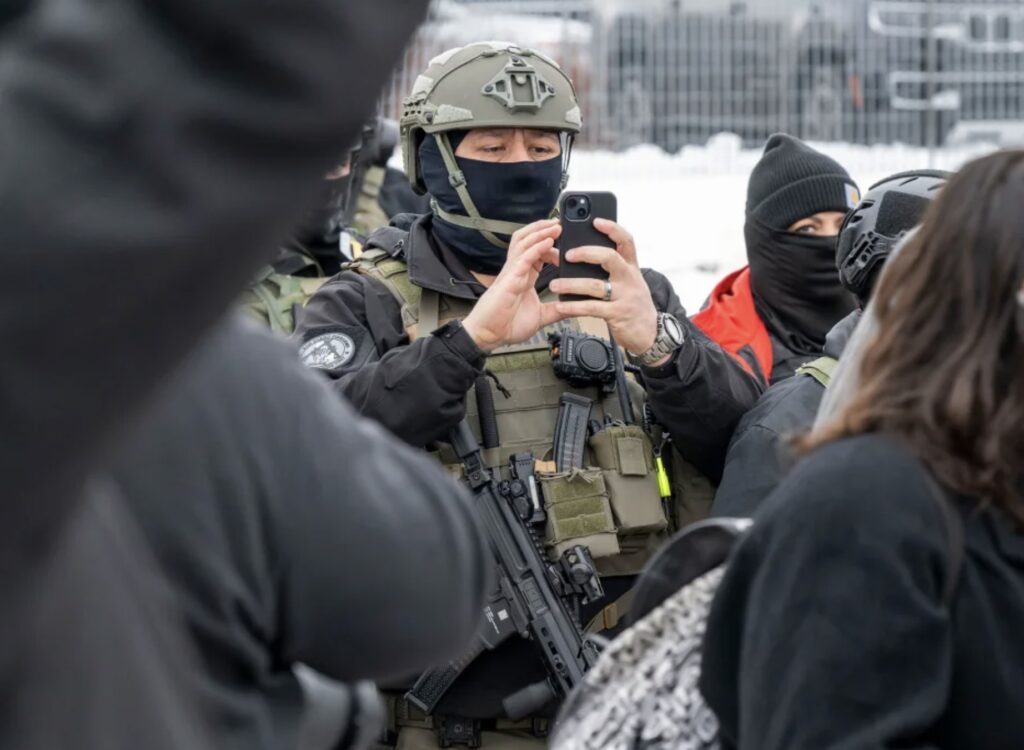
A federal court case in Oregon has put a new light on how Immigration and Customs Enforcement (ICE) officers used digital tools during late 2025 enforcement operations, with testimony and court findings pointing to a map-based surveillance app and a facial recognition tool that helped drive street level arrests in communities the government considered ripe for targeting.
According to sworn testimony in the case, ICE agents described using an app called Elite during operations in Oregon, while the court record and the judge’s preliminary injunction order provide the clearest documentary account yet of how that technology fit into the arrests now being challenged in court.
The case, M-J-M-A- v. Wamsley, centers on claims that ICE engaged in warrantless civil immigration arrests without first making the individualized legal determinations required by federal law.
In a February 27 opinion granting a preliminary injunction, U.S. District Judge Mustafa Kasubhai wrote that officers had been “casting dragnets” over Oregon towns they believed were home to agricultural workers, surveilling apartment complexes before dawn, scanning license plates, stopping vehicles, and transporting detainees out of state to Tacoma.
Kasubhai concluded that the plaintiffs were likely to succeed in showing ICE had carried out unlawful warrantless arrests in Oregon without properly assessing whether a person was likely to escape before a warrant could be obtained.
What makes the case especially significant is the detail it provides about the surveillance tools behind those operations. In the court’s opinion, testimony showed officers used “a newer app” called Elite, described by one officer as essentially a map of the United States, “kind of like Google Maps,” that plotted people with what officers called an “immigration nexus.”
That term turned out to be remarkably broad. The judge’s opinion says testimony established that an immigration nexus could mean little more than some prior interaction with immigration authorities and could apply even to people who immigrated lawfully and later naturalized. The judge also highlighted testimony that Elite leads were, “generally speaking,” “not accurate.”
That matters because the app was not described as a tool for locating known fugitives alone. Instead, the court record indicates it was used to identify areas with denser populations of people thought to have some connection to the immigration system.
In the operation at the center of the case, testimony described ICE agents being directed to an apartment complex after “intelligence” from the Portland field office.
Team members discussed the site in a group thread, where one officer called it “target rich,” meaning, according to testimony cited by the court, that several vehicles there were linked to owners with either a criminal or immigration nexus.
ICE agents then relayed license plate numbers at random to another officer, who ran them through a database to tie a vehicle to a potential target.
The judge’s opinion is especially sharp in how it treats the leap from digital lead generation to street enforcement. In the Woodburn episode, officers saw a man get into a white van, ran the plate, and concluded the registered owner was a person on a target list.
However, they had not confirmed the identity of the driver before following the vehicle. The opinion says the team later relied on speculative claims about possible smuggling or trafficking, claims the judge called unfounded and pretextual.
Kasubhai wrote that the evidence instead showed officers targeted Woodburn and similar communities because large numbers of agricultural workers lived there.
Biometric Update previously reported that federal agents have constructed an enforcement model in which proximity replaces suspicion, probability substitutes for proof, and constitutional protections erode not through open defiance, but through algorithmic indirection.
The result is a growing pattern of seemingly arbitrary arrests and detentions that has swept up undocumented workers, lawful visa holders, and U.S. citizens, while quietly expanding into the monitoring of political protest and dissent.
The Oregon case also exposed the use of a second surveillance tool, Mobile Fortify, during the arrests themselves. The opinion says another officer photographed lead plaintiff M-J-M-A- and ran her image through Mobile Fortify, producing only a “similar person,” though the officer “wasn’t sure if it was her or not.”
A second image search returned someone else. The court noted that officers knew only that she was a possible match to people whose photos were already in the system and emphasized that image searching could not definitively establish identity. As the opinion put it, nothing would provide certainty short of fingerprinting.
That detail undercuts any claim that the technology provided firm confirmation before the arrest. Instead, the court record suggests the tools functioned as probabilistic intelligence systems that surfaced leads, neighborhoods and possible matches, leaving officers to act on incomplete information in the field.
Judge Kasubhai explicitly warned that the underlying data could be inaccurate and could point ICE agents toward people who were lawfully present in the U.S.
The oral argument transcript in the case adds another important dimension. Plaintiffs’ lawyers argued that the government was operating under an “arrest first, justify later” practice, and used witness testimony and videos to portray a system in which warrantless arrests were being carried out first, with justification and documentation assembled after the fact.
Government lawyers countered that a January memo by Acting ICE Director Todd Lyons resolved the issue by directing agents to make and document “likelihood of escape” determinations for every warrantless arrest.
But Judge Kasubhai pushed back, suggesting what the memo described did not match what had been happening on the street and in the courtroom record before him.
That dispute is legally important, but the surveillance issue runs deeper. The record suggests Elite was not a passive database. It appears to have been used to create a geographic theory of enforcement, one that mapped concentrations of people with some prior immigration history and translated that information into tactical field operations.
Once ICE agents arrived, the process moved from geospatial targeting to vehicle screening, then to face matching and detention. The resulting system looks less like individualized law enforcement and more like population level sorting, with digital tools narrowing the field before agents made quick decisions on the ground.
Testimony in the case may be the first time ICE has disclosed the use of Elite in court, and that one officer said the app drew from multiple sources while offering only probabilities rather than certainty.
That description aligns closely with the judge’s concern that the system could sweep in people who were lawfully present and that its leads were not reliably accurate.
A separate ICE agent testified that his team had verbal orders to aim for eight arrests per day, adding another layer to concerns that surveillance tools were being used in a high pressure environment where volume could eclipse individualized legal review.
Trump homeland security adviser Stephen Miller has publicly said the administration’s target was 3,000 daily arrests.
Taken together, the court documents depict an enforcement model in which surveillance technology helped to set the stage for aggressive warrantless arrests in Oregon.
Elite appears to have been used to identify where officers should go and who might be worth investigating, and Mobile Fortify was then used in the field to try to match faces to existing records.
The court’s opinion suggests neither tool supplied the kind of individualized certainty federal law requires before a warrantless civil immigration arrest. Instead, in the judge’s telling, they helped facilitate broad dragnets aimed at communities where officers expected to find immigrant workers.
The case is still moving forward, but the preliminary injunction already marks an important rebuke. At least for now, the court has concluded that ICE’s Oregon practices likely crossed legal lines.
Just as important, the litigation has offered a rare public window into how digital targeting and facial recognition tools can be woven into everyday immigration enforcement. That makes the surveillance app issue more than a side detail in the case. It is central to understanding how these arrests were planned, who got caught up in them, and why the court found the government’s methods so troubling.
Related Posts
-
 February 26, 2026
 -
 June 26, 2025
 -
 November 4, 2025
 -
February 24, 2026
-
January 20, 2026
-
 November 4, 2025
Article Topics
biometric matching | biometrics | ELITE | face biometrics | false arrest | ICE - U.S. Immigration and Customs Enforcement | mobile app | Mobile Fortify

Comments