
ICE’s facial recognition app is new, but the NEC tech behind it is well known
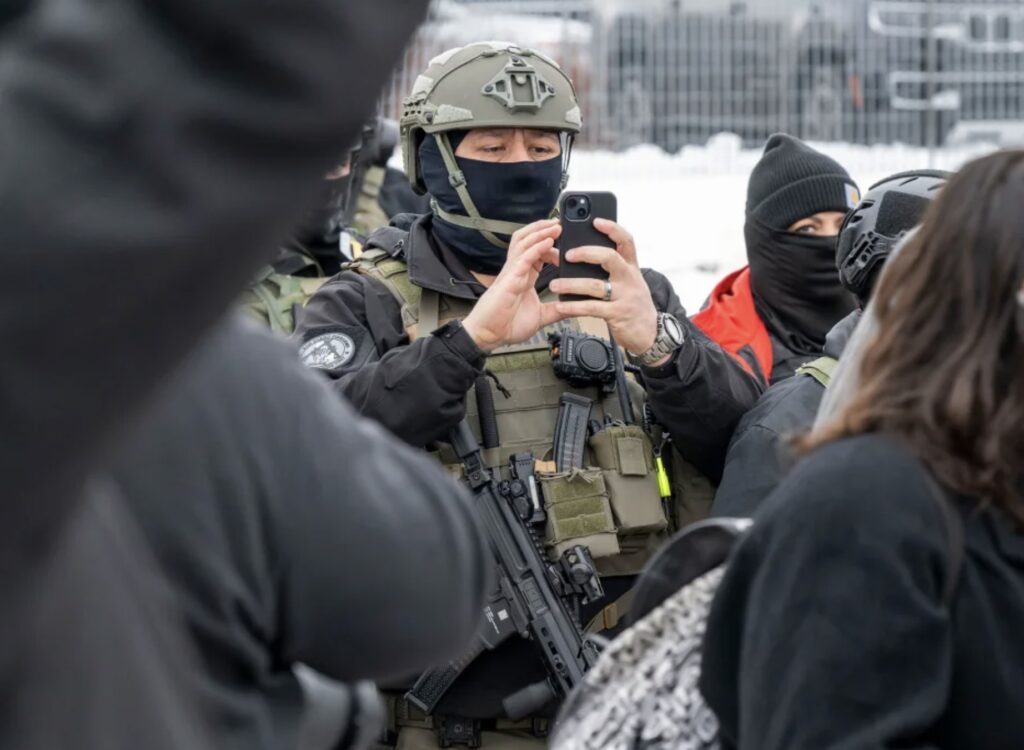
The revelation that the Mobile Fortify app used by ICE to identify suspected immigration procedure violators, and increasingly protestors, uses face biometrics capabilities supplied by NEC has sparked renewed interest in how well the technology works, and where else it is used.
NEC introduced its NeoFace system well over a decade ago, and it gained notoriety (in some circles at least) when it was used to identify Boston Marathon terrorist Dzhokhar Tsarnaev in 2013.
NEC’s NeoFace has been used by police in the UK for operator initiated facial recognition (OIFR), the same kind of system as Mobile Fortify since 2023. UK police also use the software for mobile public deployments of live facial recognition.
The company’s facial recognition algorithms have consistently placed among the most accurate tested in NIST’s Face Recognition Vendor Evaluation (FRTE) for identification (1:N).
In 2023 testing by the UK’s National Physical Laboratory (NPL) conducted for London’s Metropolitan Police, NeoFace had a false match rate of one in 6,000 and “no statistically significant race and gender bias” at specified thresholds with a reference database of 10,000 records. The finding about lack of bias has been disputed, however, on grounds that at lower confidence thresholds the technology shows uneven error rate between groups of people based on how dark their skin is.
The UK deployments remain controversial in their home country, The Conversation reports, and public understanding of the technology’s use is low. Only 55 percent of those surveyed in the UK trust police to use the technology responsibly, and only 10 percent say they know much about how and when it is used.
The controversy sparked in America by Mobile Fortify is partly related to the way it is being used, and partly to the processes behind that use. The facial recognition algorithm is not licensed directly by ICE, according to the Inventory, but rather through CBP’s TVS.
In the U.S., NeoFace has previously been piloted at Dulles Airport in Washington, used at sporting events and in fast-food restaurants.
NeoFace is also used by police in Canada, airport checks for flydubai crew, and for biometric passport checks in New Zealand and Kenya, amongst dozens of other implementations.
Related Posts
-
 September 12, 2025
 -
 October 2, 2025
 -
 November 27, 2025
 -
 April 1, 2025
 -
 October 15, 2025
 -
March 21, 2025
Article Topics
biometrics | facial recognition | ICE - U.S. Immigration and Customs Enforcement | live facial recognition | mobile biometrics | Mobile Fortify | NEC | NEC America | NeoFace | Operator Initiated Facial Recognition (OIFR)

Comments