
McDonald’s pauses AI voice ordering system developed with IBM
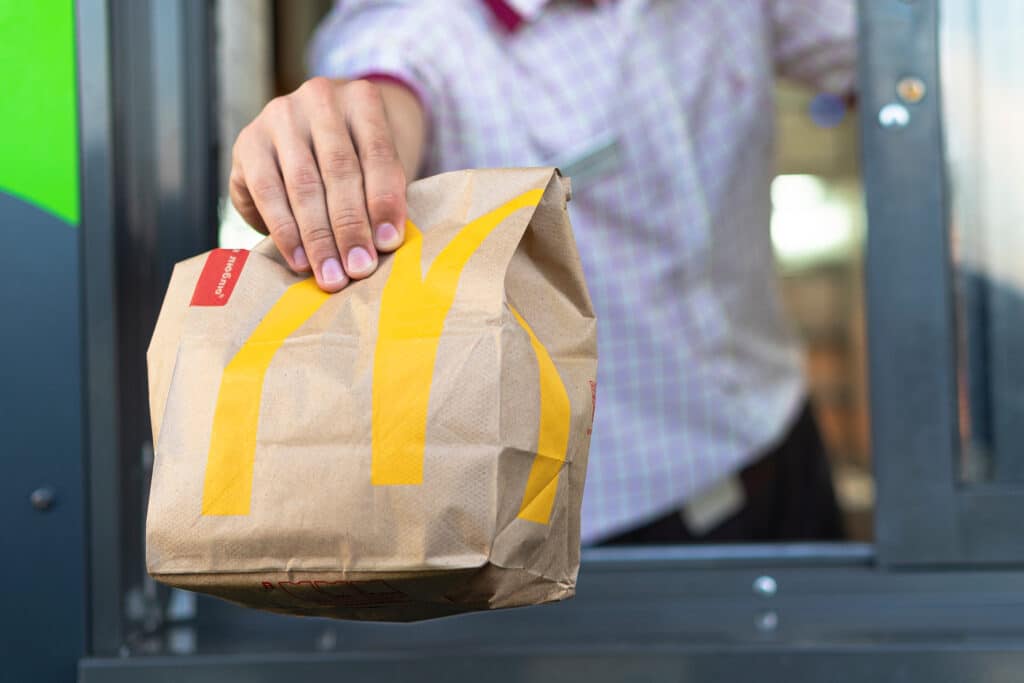
Despite claims that AI is infiltrating every corner of our lives, it will not be at the McDonald’s drive-through for the time being. The fast food chain has called off its two-year test of algorithmic, voice-activated automated order taking (AOT), which it ran in partnership with IBM. CNBC reports on an email memo sent to franchisees announcing its plan to halt AOT at all 100 McDonald’s drive-throughs using it by July 26, 2024.
Despite the shuttering of the IBM initiative, a statement from McDonald’s to CNBC makes it clear that voice-based ordering technology will be back under the golden arches soon enough.
“As we move forward, our work with IBM has given us the confidence that a voice ordering solution for drive-thru will be part of our restaurants’ future,” says the statement. “We see tremendous opportunity in advancing our restaurant technology and will continue to evaluate long-term, scalable solutions that will help us make an informed decision on a future voice ordering solution by the end of the year.”
As such, the cancellation of AOT looks more like a pause to evaluate and re-arm ahead of a broader launch of automated AI ordering technology. IBM also indicates that it will take its AOT system to other interested parties in the quick-serve sector. But performance issues with IBM’s tech may have been part of the problem: CNBC quotes unnamed sources who say the system had trouble getting orders right when spoken in different accents and dialects. Problems with accuracy and high operating costs have caused frustration among franchisees.
In December 2023, McDonald’s announced a new strategic partnership with Google Cloud, which is likely to figure into its future plans for voice-activated AI ordering systems. In a statement released at the time, McDonald’s Executive Vice President and Global Chief Information Officer Brian Rice says “connecting our restaurants worldwide to millions of data points across our digital ecosystem means tools get sharper, models get smarter, restaurants become easier to operate, and most importantly, the overall experience for our customers and crew gets even better.”
The Google deal could easily eclipse any previous development in terms of scale and capacity.
That said, McDonald’s CEO Chris Kempczinski has said IBM’s AOT will continue to be integrated into its technology systems in some form.
Having bought and rebranded AI-based voice recognition firm Apprente in 2019, McDonald’s sold its McD Tech Labs to IBM in 2021, as part of the deal to accelerate the deployment of AI voice ordering at its restaurants. That year also saw McDonald’s sell its Dynamic Yield dynamic ordering technology to Mastercard.
Following the sale of McD Labs to IBM, Kempczinski told investors that the fast food company did not have the capacity to innovate at the leading edge of technology while also selling billions of cheeseburgers.
Previous run-ins with BIPA over voice biometrics and consent
Regulatory pains may have played a role in the decision to kill AOT at McDonald’s drive-throughs. The company, which is based in Chicago, has run afoul of Illinois’ Biometric Information Privacy Act (BIPA) before.
In 2021, it faced a $5 million class action alleging that it violated BIPA by deploying voice recognition software that collected user’s orders without their express consent. That suit accused McDonald’s of planning to monetize the data collected by identifying repeat customers and offering them special deals or upsells.
Another BIPA class action suit followed in 2023, with similar complaints about the lack of consent to collect data in McDonald’s’ system. In response, the chain denied collecting identifying demographic data to attach to biometric data, and said no voiceprint was involved in its automated transactions.
The question is likely to resurface in the future, as a gaggle of fast food chains integrates AI and voice recognition into their ordering systems. Panera, Del Taco, Checkers and Rally’s, Hardee’s, Carl’s Jr., Krystal, Wendy’s, Steak n Shake, Dunkin, Chipotle, and Taco Johns have all tested AI technology in their drive-throughs, as has Yum Brands, which owns KFC, Taco Bell, Pizza Hut and The Habit Burger Grill.
Related Posts
-
 January 19, 2024
 -
 October 19, 2023
 -
 September 5, 2023
 -
 February 27, 2024
 -
 July 20, 2023
 -
 August 18, 2023
Article Topics
AI | biometrics | data privacy | IBM | McDonald’s | research and development | voice analysis | voice biometrics

Comments