
Trump’s revival of WWII era alien registration law sparks privacy, legal battles
The Trump administration’s unexpected reactivation of a forgotten wartime law requiring noncitizens to register with the U.S. government and carry registration documents has launched intense controversy. What began as a little‑known provision from the early 1940s has quickly morphed into a flashpoint of fear, legal challenge, and civil liberties debate.
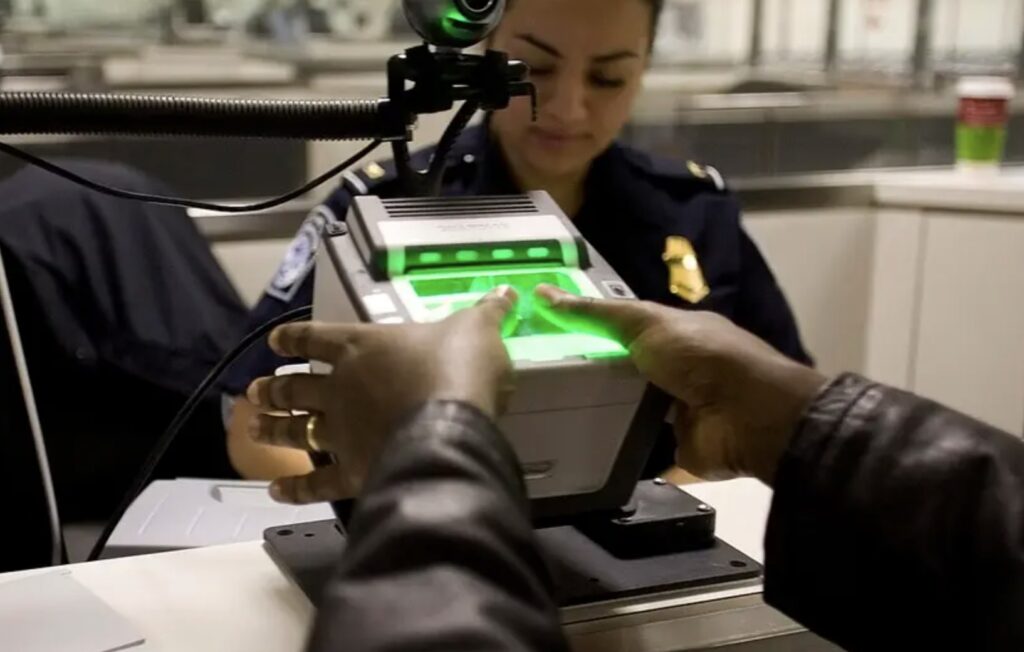
The move has triggered significant alarm about privacy and the potential for expanded government surveillance. The centralized collection of biometric and personal data – including fingerprints, addresses, and travel histories – has raised red flags among privacy advocates. There are growing concerns about how securely this data will be stored, what limits exist on its dissemination across federal agencies, and whether such a system could be used to justify future surveillance of immigrant communities far beyond its original scope.
With lawsuits testing both the transparency and constitutionality of the move, the registration rule is shaping up as a major test of American legal norms, privacy protections, and the balance of power in immigration enforcement.
It all erupted on January 20 when President Donald Trump issued Executive Order 14159 (EO), Protecting the American People Against Invasion, directing the Department of Homeland Security (DHS) to enforce the long-dormant immigrant registration requirement under Section 262 of the Immigration and Nationality Act (INA), which was codified in the 1940 Alien Registration Act.
The law originally required noncitizens aged 14 and older to register, be fingerprinted, and to carry what used to be known as an “alien registration” document. This requirement continued through the mid-20th century, with physical documents like the AR-3 form and later the Form I‑151 (Green Card) serving as proof of registration.
Although registration and fingerprinting remained part of the immigration process, by the late 1970s and early 1980s the requirement to always carry alien registration documents and the penal enforcement of that mandate were largely abandoned as a matter of federal policy and practice.
While the INA still technically makes it a misdemeanor for a noncitizen to willfully fail to carry their registration document, this provision has rarely been invoked in modern times and the government had not required routine re-registration or re-fingerprinting of already-present immigrants since the mid-20th century.
All that changed in March when DHS published an interim final rule mandating that virtually all noncitizens over age 14, including undocumented immigrants, to register within 30 days of arrival, submit to fingerprinting, and always carry evidence of registration. Noncitizens who register must submit personal data while those who refuse to register face criminal consequences under the revived statute, punishable by up to six months in prison and fines of up to $5,000.
The Congressional Research Service (CRS) pointed out in May that Trump’s EO “directs agencies to treat alien registration requirements ‘as a civil and criminal enforcement priority.’” CRS also noted that, “Despite the seemingly broad reach of Sections 262 and 264 [of the INR], U.S. Department of Justice data show that prosecutions under them have been rare.”
Not anymore. As of May 31, the Washington Post reported that dozens of individuals have been criminally charged under INA § 262 for failure to register. Of those cases, at least six prosecutions were either dismissed by courts or withdrawn by prosecutors. Meanwhile, over a dozen individuals had already pleaded guilty to § 262-related charges by that date. While still in the early stage and involving misdemeanor-level charges, these actions mark a significant shift from prior enforcement and reflect the real impact of EO 14159.
Civil rights advocates warn that the policy effectively forces immigrants into a “lose‑lose” decision by either exposing themselves to deportation or facing criminal penalties for noncompliance, even those undergoing immigration benefit applications.
Critics argue it may amplify racial profiling and deter cooperation between immigrant communities and police, noting parallels to historical “freedom papers” and Japanese American registration during World War II. The rule’s vague enforcement provisions have reportedly disrupted even U.S.–born citizens, who faced delays or cancellations of immigration-related documents.
American Oversight, a government accountability nonprofit group, filed a Freedom of Information Act (FOIA) lawsuit on July 24 against DHS, Customs and Border Protection (CBP), Immigration and Customs Enforcement (ICE), and U.S. Citizenship and Immigration Services seeking internal documents regarding the policy’s conception, implementation, expected impacts, and whether it is being used to facilitate mass detentions.
American Oversight Executive Director Chioma Chukwu described the revival of the law as “a deliberate and dangerous attack on the rights of undocumented immigrants and U.S. citizens alike,” stating that it turns families and neighborhoods into “living in fear” and strips away due process and dignity.
“This administration’s revival of a discredited, 85-year-old wartime law isn’t just a policy decision, it’s a deliberate and dangerous attack on the rights of undocumented immigrants and U.S. citizens alike,” Chukwu said.
In a separate lawsuit filed in March by the American Immigration Council, American Civil Liberties Union (ACLU), National Immigration Law Center, and allied nonprofits challenged the rule itself. The groups argued that the Trump administration did not abide by the required public notice and comment process before implementation, and that it violates due process and civil rights protections.
The lawsuit asserted that the decision to classify the regulation as a “procedural” rule bypasses standard rulemaking and deprives millions of people of formal public input. American Immigration Council Executive Director Jeremy Robbins said the Trump administration is attempting to create a “show me your papers state” in which law enforcement may harass individuals based on language, race, or neighborhood.
On April 10, however, federal Judge Trevor N. McFadden, a Trump appointee to the U.S. District Court for the District of Columbia, denied the coalitions’ request for a preliminary injunction, allowing the Interim Final Rule on immigrant registration to go into effect as planned. He concluded that the plaintiffs lacked legal standing as they failed to demonstrate concrete injury from the registry policy. He also reasoned that modern enforcement is simply reviving statutory obligations that have existed for decades, and that historical precedent legitimizes the rule.
Meanwhile, privacy advocates continue to voice grave objections over the massive data collection that’s involved under Trump’s EO, which includes biometrics, address histories, country of origin, employer details, and travel histories being centralized in DHS databases with potential cross-agency access, including ICE and CBP.
Under the federal Privacy Act, agencies are generally prohibited from disclosing personal records without consent, except under narrow exceptions like FOIA, court orders, or law enforcement requests, giving rise to concerns about how DHS will share, store, and guard this sensitive information.
Observers draw uneasy comparisons to earlier eras of state surveillance and internment. The original 1940 Alien Registration Act powered mass registration of millions of noncitizens, notably Japanese Americans who were later interned after Pearl Harbor. Critics argue that Trump’s Executive Order echoes those dark precedents, creating a registry with unclear limits, potential racial targeting, and punitive enforcement for non‑compliance.
Legal scholars note that invoking wartime authorities like the Alien Enemies Act and potentially the Insurrection Act, represents a sweeping expansion of executive power over immigration enforcement beyond norms established over decades.
Policy takeaways and ongoing questions surrounding the revived registration provision reveal a host of legal, procedural, and ethical concerns.
At the heart of the transparency issue is American Oversight’s lawsuit, which seeks to uncover the origins of the policy, including how it was conceived, whether any internal impact assessments were conducted, and whether the registration directive is part of a broader effort to facilitate mass deportations. The organization has repeatedly emphasized the urgent need for public access to records that could clarify the administration’s intentions and implementation strategy.
On the matter of procedural validity, several civil rights groups, including the American Immigration Council, argue that the rule is fundamentally flawed. They contend that it was enacted without following the standard notice-and-comment rulemaking procedures required under the Administrative Procedure Act and further point out that the regulation lacks clarity regarding who it applies to and how it will be enforced. This ambiguity, they say, creates a dangerous climate of legal uncertainty for millions of noncitizens.
From a constitutional perspective, legal challenges are expected to continue to examine and question whether the enforcement of a rarely used immigration statute from over 70 years ago can survive contemporary scrutiny. Courts will likely be asked to determine if the policy complies with modern standards of due process, the protections guaranteed under the Fourth Amendment, and principles of equal protection under the law.
Related Posts
-
 April 17, 2025
 -
 November 28, 2024
 -
 November 19, 2024
 -
 December 17, 2024
 -
 November 22, 2024
 -
 September 2, 2024
Article Topics
biometric enrollment | biometric identification | biometrics | border security | data collection | DHS | identity management | immigration | U.S. Government | United States

Comments