
France alters process at EES biometric kiosks in UK to speed up registrations
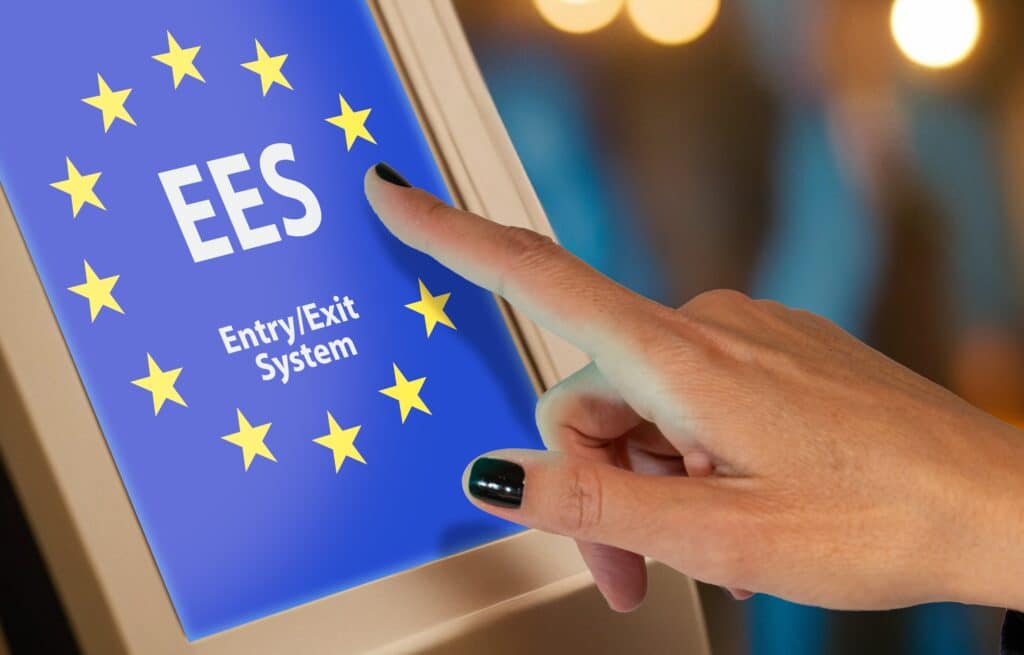
The Entry-Exit System (EES) kiosks at London’s St Pancras railway station have temporarily removed certain questions in order to speed up traveler registration for the European Union’s biometric-based border scheme, launched last Sunday.
International railway service Eurostar has installed 49 self-serve biometric kiosks for EES pre-registration at St Pancras station, which connects London to Belgium, France and the Netherlands. Aside from submitting biographical data, fingerprints and facial images, the kiosks also required third-country nationals travelling to the Schengen area, including British citizens, to answer four “admissibility” questions.
The questions ask whether the passenger has a return ticket, sufficient funds for their stay, booked accommodation and medical insurance. The first two were requirements for entering the Schengen area, while the second two are conditions imposed by France.
According to the rules, Eurostar passengers who answered truthfully that they did not meet the conditions are to be sent for closer inspection by border police. The procedure, however, has sparked concerns that Eurostar passengers will face long delays or even be turned away, The Independent reports.
“We know those questions have caused significant confusion, particularly within the kiosk process,” says Simon Lejeune, chief stations and safety officer for Eurostar.
“We’re very pleased that, through discussions with the French ministry and our colleagues, it’s been agreed that those questions can be technically removed from the kiosks during the initial six-month introduction phase of the new system,” he adds.
EES kiosks have also been installed at other UK checkpoints connecting the country with the European continent, including the Port of Dover and the Eurotunnel terminal in Folkestone (supplied by IN Groupe). The Port of Dover has confirmed it will not introduce admissibility questions until at least April 2026, which is the deadline for the full EES rollout. Folkestone is also not including the questions.
The Travel to Europe app from iProov and Inverid has launched to ease the process with biometric pre-enrollment, but needs to be integrated into the various national solutions for EES.
The EES tracks non-EU, non-EEA and non-Swiss nationals crossing the borders of Schengen countries. The digital border management scheme captures face and fingerprint biometrics and passport data, recording dates and locations of travel to enhance security and curb overstays.
As of Thursday, the system has recorded over 300,000 movements across participating countries despite struggling with slowdowns and rule infractions.
French border authorities have taken a strict approach to implementing the EES requirements. The questioning, however, has become less systematic and more targeted, as France takes a more pragmatic approach, Lejeune told the UK Justice and Home Affairs Committee earlier this week.
Border officers at the London St Pancras and Paris Gare du Nord railway stations are currently only selecting a few passengers to undergo EES procedures. The travelers are being inspected manually by officers equipped with fingerprint panels and cameras instead of the biometric kiosks.
Eurostar has observed transaction times of 50 seconds, including biometrics registration, passport checks and stamping, according to Lejeune.
“So quite encouraging, and that’s without the kiosks that do that pre-registration, which we’ll be introducing over the next few weeks,” he says.
Related Posts
-
 July 7, 2025
 -
 April 17, 2025
 -
 December 3, 2024
 -
 November 19, 2024
 -
 November 28, 2024
 -
 December 17, 2024
Article Topics
biometrics | border security | digital travel | Entry/Exit System (EES) | Europe | Eurostar | Eurotunnel | face biometrics | fingerprint biometrics | kiosk | Travel to Europe

Comments