
Suggestion of live facial recognition for UK trains meets practical limitations
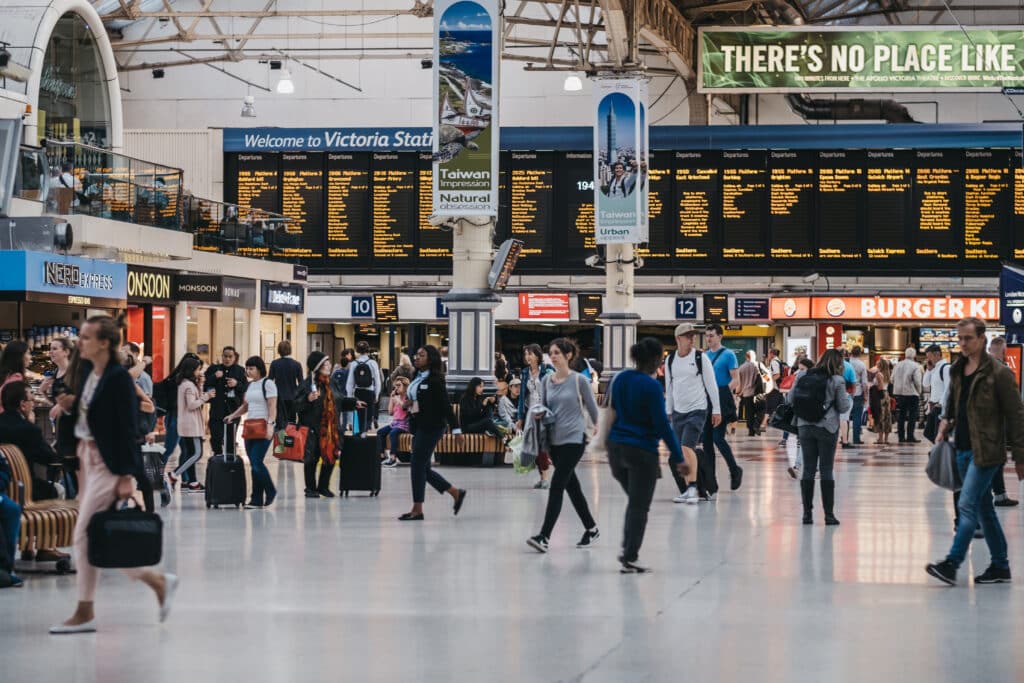
A horrific stabbing incident on a passenger train in the UK has led a prominent opposition politician and former policing minister to argue that live facial recognition should be deployed as one of several measures to make the Kingdom’s rail network safer. A government minister, a former Biometrics and Surveillance Camera Commissioner and a government audit identify several flaws in that argument.
Triple stop and search, roll out LFR nationally
Shadow Home Secretary Chis Philp argues in an editorial for ConservativeHome that live facial recognition is one of several tools that will reduce knife crime if liberally deployed.
Philp ratchets up the hyperbole to suggest that the current government is soft on crime, and would rather let dangerous criminals roam the streets than keep them incarcerated through the end of their sentences. Figures are not provided.
“We will back S60 suspicion-less stop and search in the crime hotspot areas, too,” Philp adds. “People will be less likely to carry weapons in town centres they see police around them who can stop and search them.”
Whether those people include the perpetrator of the train attack is left unaddressed.
Stop and search should be tripled, Philp said during debate in the House of Commons. He also wants an update on technology Home Office has been working on to detect knives at a distance.
Philp attributed a drop in knife-related and other crime in Croydon Town Center to the use of live facial recognition in the area, and expressed hope that Home Secretary Shabana Mahmood and Police Minister Sarah Jones agree with him that rolling out the technology across the nation will improve public safety. Philp held the same position as Jones from October of 2022 until last July.
Perspective and patience
Mahmood responded that the government is moving forward with its plans to open consultations on a new legal framework for live facial recognition “so that all police forces across the country can use live facial recognition technology confident that they will not find themselves defending those decisions in courts in the future.
She also noted the rollout of 10 more LFR vans. An update on the knife detection technology will be provided in writing.
Transport Minister Heidi Alexander said that police are increasing physical patrols for “the next few days.” But overall, crime on the rail system is low, she said, citing 27 crimes for every million passenger journeys.
“I don’t think airport style scanners would be the way to go,” Alexander told Sky News, though she expressed sympathy for the idea.
The Telegraph notes that tests of security screening similar to that in airports was announced by Tony Blair’s government following the 7/7 bombings, but rejected on grounds people would not accept the consequent delays and privacy concerns.
The Sky News interviewer suggested a relation between fare dodging and people listening to music without headphones and the safety reputation of the rail network.
Not a simple task
Former UK Biometrics and Surveillance Camera Commissioner Fraser Sampson tells Biometric Update in an email that the prospect of deploying LFR to the rail network is not as straightforward as it may seem.
“Consent could be made one of the conditions of travel when you buy a ticket but it has problems, not least because there are so many different ticketing outlets, different train companies using the same routes and no options for offering an alternative for those who don’t want to have their face matched,” Sampson explains. “If there’s a compelling case to install them on a particular route, why wouldn’t the same case apply to the station where the train starts/stops/ends? That would mean covering the whole station and all entry, exit and barrier points which would also cover a lot of people who are either not travelling but shopping or meeting people etc. or are using the station to get onto a different transport system like the Tube.”
Then there are concerns around people re-routed onto different trains than they planned to be on, such as due to a cancellation, and the ease with which people can simply cover their faces. And determining the composition of watchlists introduces a whole set of additional complications.
Resources limited
A report from the UK’s National Audit Office on police productivity paints a picture of a system constantly re-allocating money to meet shortfalls. Some of those re-allocations may now be reconsidered.
“In 2024-25 the Home Office’s National Police Capabilities Unit allocated £105 million to programmes aimed at improving police productivity, including facial recognition, forensics, knife detection and AI,” the NAO says.
Following the 2024 general election, Home Office budgeted £50 million (approximately US$65.2 million) for those programs in 2025-2026.
Home Office allocated £3.35 million ($4.37 million) to fund live facial recognition in 2024-2025, but nothing for 2025-2026, the report says. An additional £3.9 million ($5.1 million) was allocated to the strategic facial matching service and an evaluation of facial recognition’s benefits, however. Funding has also been reduced for other technology investments, including knife detection technology, according to the audit.
Related Posts
-
 January 13, 2025
 -
 October 30, 2025
 -
 August 27, 2025
 -
 October 2, 2025
 -
 December 2, 2024
 -
 October 15, 2025
Article Topics
biometric matching | biometrics | criminal ID | facial recognition | law enforcement | live facial recognition | real-time biometrics | transportation | UK

Comments