
Congress moves to confront the rise of deepfake fraud
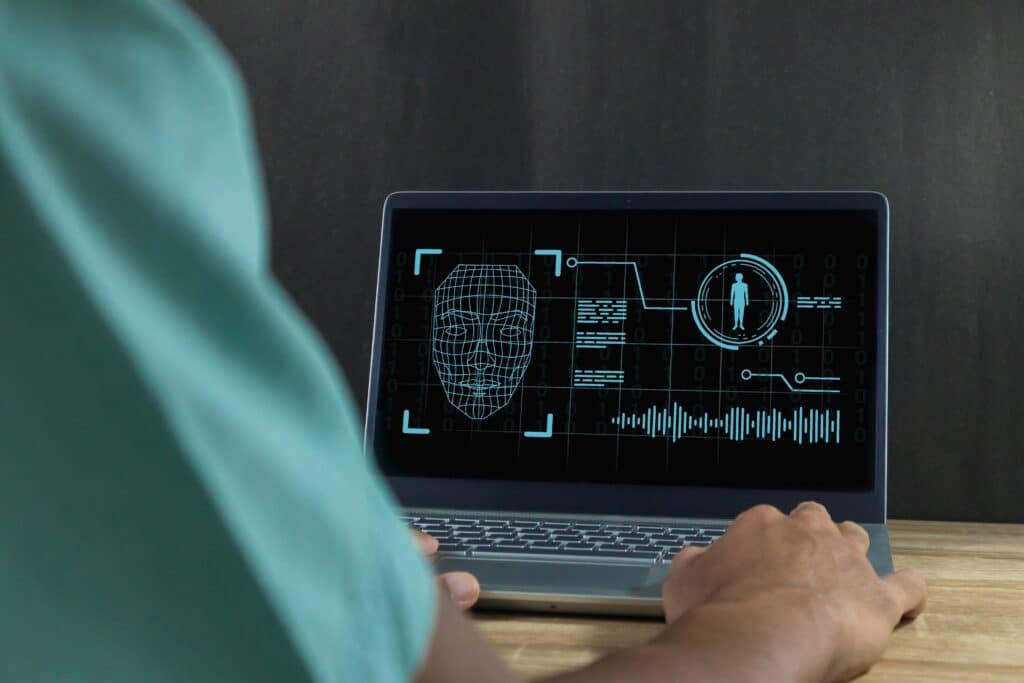
The newly introduced AI Fraud Deterrence Act, a bipartisan bill introduced by Reps. Ted Lieu and Neal Dunn, seeks to amend longstanding federal fraud statutes so that AI-assisted crimes, including deepfake impersonations of federal officials, carry stiff penalties.
The bill reflects intensifying concern in Washington that traditional fraud laws no longer match the speed, sophistication, and reach of AI-enabled scams that can convincingly mimic voices, faces, and identities in ways that were impossible just a few years ago.
“As AI technology advances at a rapid pace, our laws must keep up,” Dunn said in a statement. “When criminals use AI to steal identities or defraud Americans, the consequences should be severe to match the crime. The AI Fraud Deterrence Act strengthens penalties for crimes related to fraud committed with the help of AI.”
Lieu added that “AI has lowered the barrier of entry for scammers, which can have devastating effects. Both everyday Americans and government officials have been victims of fraud and scams using AI, and that can be ruinous for people who fall prey to financial scams and can be disastrous for our national security if government officials are impersonated by bad actors.”
Under the two lawmakers’ legislation, criminals who use AI to commit mail, wire, or bank fraud would face significantly steeper fines and prison sentences.
The legislation also would create a new offense for using AI to impersonate federal officials, a nod to recent incidents in which deepfake audio and video have been used to spoof high-level government officials to mislead agencies, private companies or the public.
Lawmakers describe the measure as a modernization effort to update decades-old statutes to address contemporary tools of deception that can be deployed by anyone with a laptop, an Internet connection and freely available generative-AI software.
Experts say the shift is overdue. Joe Kaufmann, head of global privacy at Jumio, has spent more than a decade navigating the intersection of fraud prevention, privacy regulation, and digital identity systems, and says the intent of the legislation reflects a basic but increasingly urgent reality, which is AI has made fraud easier, faster, and far cheaper to execute.
“The intent of the AI Fraud Deterrence Act makes good sense in aiming to counterbalance the ease and speed with which fraud can be committed with AI technology,” Kaufmann said. “Deepfake attacks and other malicious activities take relatively little effort or cost with the current advancements of AI capabilities. The bipartisan effort is ultimately a step forward in protecting public trust in digital interactions.”
That public-trust dimension has become central as AI-driven impersonation schemes proliferate. In the past year, investigators have documented AI-generated voice clones being deployed in high-pressure financial scams, realistic deepfake videos used to manipulate corporate employees into wiring funds, and synthetic impersonations that convincingly mimic government officials.
The FBI has warned that deepfake-enabled fraud has now become “accessible at scale,” blurring the line between legitimate and synthetic communications.
For companies on the front lines of identity verification and fraud detection, the bill’s deterrence strategy is only part of the solution. Kaufmann argues that while stronger penalties help signal the seriousness of AI-enabled crimes, organizations must also adapt responsibly and avoid overcorrecting in ways that could compromise consumer privacy.
“As we continue in this AI-fraud arms race, more effectively deterring bad actors from carrying out AI-powered fraud is a good start,” Kaufmann said. “But it’s equally important for companies to remain pragmatic and privacy-centric when taking the proactive approach to preventing fraud. Trust is a two-way street, because a victim of a data breach and a victim of fraud have at least one thing in common: they both have lost trust in the protection of their personal information.”
That two-way trust point captures one of the broader tensions the bill does not directly address.
As federal agencies and private companies invest in more advanced identity-verification systems, many of which incorporate AI themselves, the challenge is preventing misuse without building invasive or opaque surveillance architectures that create new risks of their own.
Industry leaders say the public is already wary after years of high-profile data breaches, algorithmic-bias controversies, and expanding biometric programs, and that consumers increasingly question how their personal information is collected, analyzed, and stored.
The AI Fraud Deterrence Act does not regulate how companies deploy AI tools or set standards for digital identity systems, but it signals a growing appetite in Congress to draw clearer boundaries around harmful AI uses.
The deepfake provisions in the bill reflect bipartisan agreement that impersonation of federal officials is not merely a nuisance, but also a national-security concern, one that could disrupt communications, trigger operational mistakes, or undermine faith in government institutions.
As lawmakers push forward, the debate is likely to expand. Civil liberties groups have already raised questions about how prosecutors will prove AI involvement in a crime, whether the definition of “artificial intelligence” is sufficiently narrow, and how courts will handle cases involving synthetic media that blends real and artificial content.
Others argue that harsher penalties may do little to stop overseas fraud networks that operate beyond U.S. jurisdiction.
Still, for privacy and fraud prevention specialists like Kaufmann, the bill represents a meaningful signal that policymakers are beginning to take the AI-fraud ecosystem seriously. It also underscores the stakes. Deterring malicious actors is essential, but so, too, is ensuring that companies remain accountable for how they use consumer data to fight fraud.
“As the U.S. looks to regulate AI,” Kaufmann said, “the delicate balance between compliance and privacy will be central to restoring consumer trust in digital interactions.”
Whether the AI Fraud Deterrence Act becomes law remains to be seen, but its introduction marks a turning point. For the first time, Congress is directly confronting the criminal consequences of deepfake technologies and attempting to align legal penalties with the rapidly changing mechanics of deception.
In a landscape where a cloned voice or fabricated video can spark financial loss, manipulate public opinion, or compromise government communications, the question is no longer whether to update fraud laws, but how quickly lawmakers can keep pace with the technology reshaping them.
Related Posts
-
 February 24, 2025
 -
 July 17, 2025
 -
 February 21, 2025
 -
 July 18, 2025
 -
 July 16, 2025
 -
January 7, 2025
Article Topics
biometrics | deepfake detection | deepfakes | digital trust | fraud prevention | generative AI | Jumio | legislation | U.S. AI policy | U.S. Government

Comments