
Edmonton police failed to get approval for FRT trial: Alberta privacy commissioner
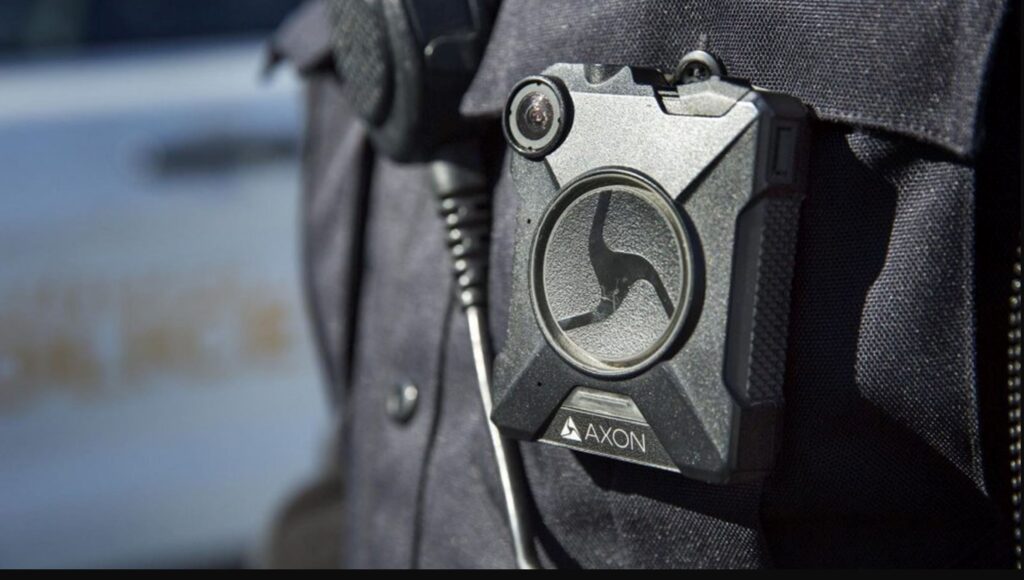
Whoa there, buds: that’s the message Alberta’s information and privacy commissioner has for Edmonton Police Services (EPS), after the announcement that the force would be trialing body-worm cameras integrated with facial recognition tech from Axon Industries.
Commissioner Diane McLeod says the force failed to get her approval before moving ahead with the pilot, which is already live, having put Axon’s FRT body cams on 50 officers as of Wednesday. EPS says they don’t need her approval at the trial stage. She disagrees.
Quoted by the CBC, McLeod insists that “when you assess the pilot, it still has to go through the same process of privacy assessment.”
“There is no exception in the act for pilots. The law applies if you’re collecting, using or disclosing personal information. You’re subject to the law, no matter what phase of your technology testing you’re in.”
Axon chooses Edmonton as first testing ground for FRT body cameras
Edmonton’s police are the first in the world to test the biometric product from Axon, the law enforcement tech firm formerly called Taser International, after its signature product. The force submitted a privacy impact assessment to the commissioner’s office this week regarding the facial recognition trial, which it says demonstrates its commitment to transparency. It maintains that EPS is within its rights under the Protection of Privacy Act and protection of privacy regulations.
“In particular, section 7 of the regulations requires the ‘submission’ of a privacy impact assessment in cases like these,” says an EPS spokesperson. “It does not specify a need to await feedback before engaging in a proof of concept.”
McLeod is declining to comment further until the review of the privacy impact assessment is complete. She also says, however, that it may take some time – and that the pilot, which scheduled to run for the month of December, could end before the assessment is finished.
System ‘flips an accountability tool into a surveillance tool,’ says professor
While the EPS’ noodling with facial recognition has raised the usual privacy and surveillance concerns, the trial is largely technical in nature, testing hardware and software functionality rather than practical uses for identifying criminals.
Still, it should alarm Edmontonians, says Gideon Christian, associate professor and university research chair (AI and Law) at the University of Calgary. In an opinion piece for the Edmonton Journal, Christian says the manner in which EPS is conducting the trial re-writes the social contract that says body-worn cameras are intended to keep police accountable.
“Instead of primarily watching the police on the public’s behalf, the cameras are being retrofitted to watch the public on the police’s behalf,” Christian writes. “Flipping an accountability tool into a surveillance tool is a serious breach of public trust.”
“Anyone who walks past a participating officer may be scanned and compared to police databases, without knowledge or consent.”
Christian points specifically to a prior commitment from Axon not to use facial recognition in its body cams. In 2019, “Axon’s independent AI Ethics Board concluded that facial recognition was too flawed and too biased to be ethically deployed on body-worn cameras and recommended that it not be used in that way.”
“For Edmonton now to trial the very thing Axon’s experts warned against is baffling and risky, and suggests an eagerness within EPS to embrace controversial surveillance technology without fully weighing the consequences.”
On Axon’s website, a statement from CEO Rick Smith acknowledges that “Axon paused facial recognition efforts in 2019 because the technology was not ready for responsible use,” but says that “as we resume evaluation, our core commitment remains unchanged: to put ethics before deployment.”
“The technology has become significantly more accurate, oversight frameworks are clearer, and law enforcement continues to express a need for tools that help solve crimes efficiently and safely.”
Related Posts
-
 December 3, 2025
 -
 December 13, 2024
 -
 July 4, 2025
 -
 October 15, 2025
 -
 July 4, 2025
 -
 August 26, 2025
Article Topics
Alberta | Axon | biometrics | body cam | data privacy | Edmonton police | facial recognition

Even before GDPR and other recent efforts, Canada has been a stickler for privacy protection.