
UK tackles threat of generative AI with new Deepfake Detection Challenge
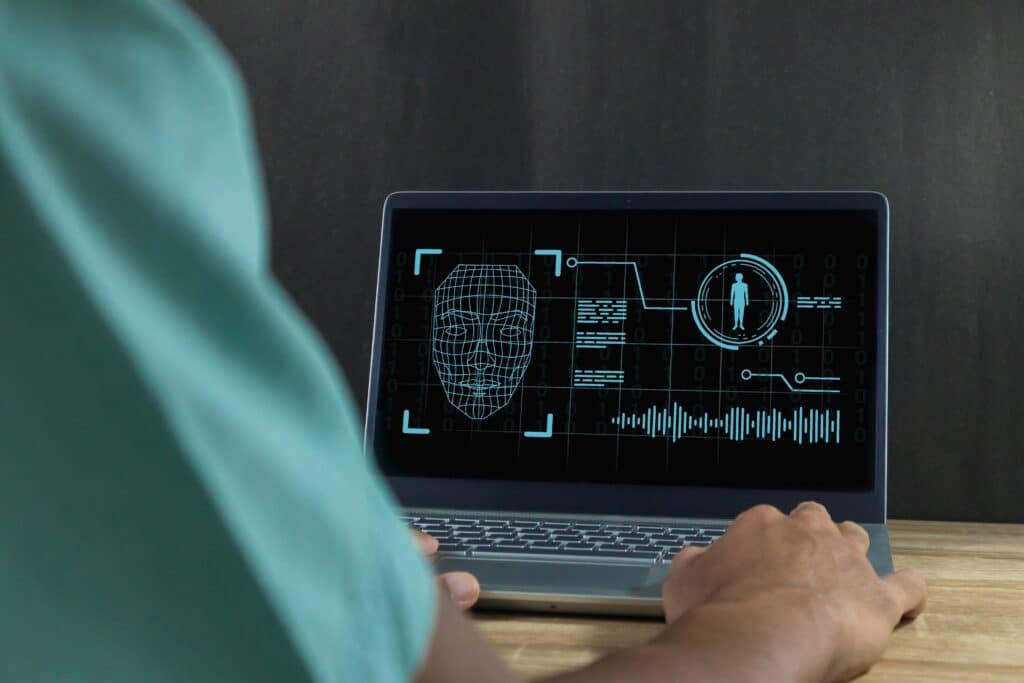
The UK Home Office is kicking off a new Deepfake Detection Challenge that will bring together experts from across government, academia and industry.
The UK Home Office Deepfake Detection Challenge 2026 is aimed at tackling the threat of deepfake material as it is employed for various harmful activities. These range from disinformation to financial crime to policing risks.
A case study published earlier this year by the UK government pointed to the rise in deepfakes as an “urgent national priority” that requires finding ways to quickly detect and mitigate the threat. The government launched a scheme to find practical solutions to what it called the “greatest challenge of the online age.”
Through benchmarking testing and a “scenario-based live hack event” to take place in January 2026, the challenge is designed to accelerate collaboration and knowledge sharing, with effective approaches to deepfake detection conveyed to public and private stakeholders.
Those interested can register their interest in the UK Home Office Deepfake Detection Challenge 2026 here.
The initiative is run in collaboration between the UK government’s Accelerated Capability Environment (ACE), the Home Office, the Department for Science, Innovation and Technology (DSIT), and the Alan Turing Institute.
The 2024 challenge saw participants responding to five challenge statements pushing the boundaries of current deepfake detection capabilities. Participants used a custom platform hosting around two million assets of real and synthetic biometric data for training.
Out of 17 resulting submissions, a few were highlighted as having strong proof-of-concepts and potential operational value, and are now in benchmark testing and user trials. These include submissions from Frazer-Nash, Oxford Wave, the University of Southampton and Naimuri.
The challenge yielded a couple of key takeaways. First, for the most effective and efficient deepfake detection, it is crucial to use curated training datasets that reflect real-world use cases. Second, collaboration and sharing data is critical to the larger effort.
Related Posts
-
 December 4, 2025
 -
November 14, 2025
-
 October 17, 2025
 -
 January 8, 2025
 -
 September 12, 2025
 -
 November 20, 2025
Article Topics
biometrics | deepfake detection | deepfakes | Department for Science Innovation and Technology (DSIT) | research and development | Turing Institute

Comments