
Africa’s DPI push to focus on healthcare, education, climate in next four years
The momentum that currently characterizes Africa’s Digital Public Infrastructure (DPI) efforts is increasingly palpable, but a lot more of the energy is expected to be directed to the health, education and climate sectors in the next four years where access to services will to be made easier for hundreds of millions of people.
According to the projections, Africa is done with the foundational phase of DPI development which mostly had to do with putting in place identity and payments rails. Now, that focus is clearly moving to how these blocks can be used in an innovative manner to transform how governments deliver services to their people.
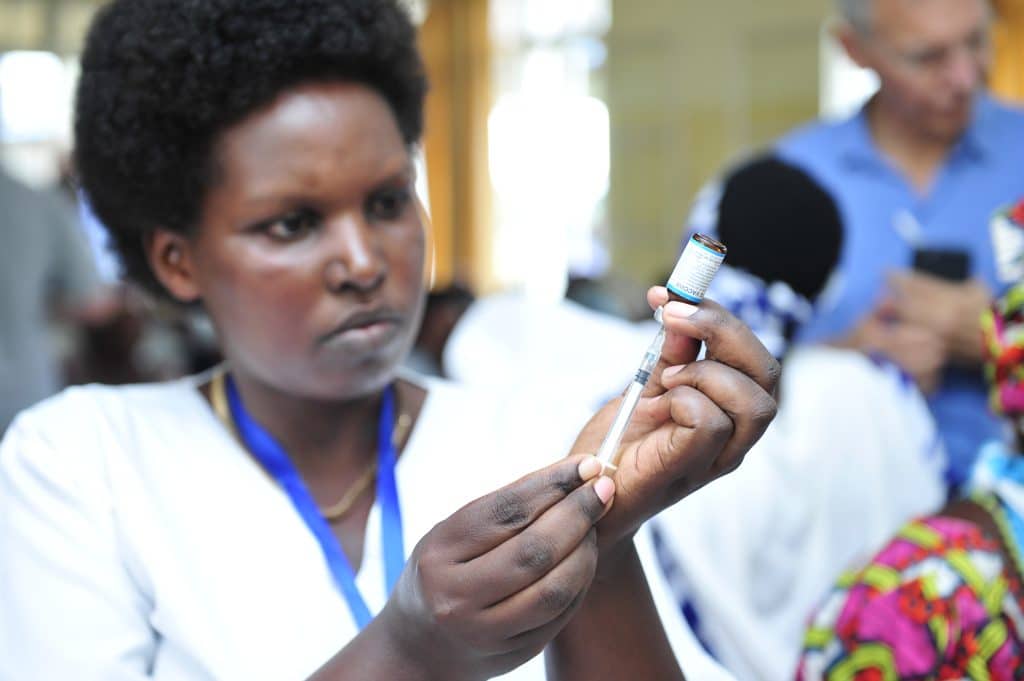
As demonstrated in a DPI Africa blog write-up, many countries in Africa are at different levels of DPI implementation for healthcare, with many strongly pursuing the idea of moving from digital health certificates to health wallets where patient information can be better managed. Rwanda is cited as an example where citizens have a lifelong wallet which is linked to their national ID, and helps store their health information.
As of last year, 12 African countries were reported to have interoperable digital health pass systems, but it is projected that by 2030, 18 of them will have systems that enable patients to control their health records. The objective is fix the problem of fragmented health records, limited access in rural areas, and inefficiencies in public health systems.
In rural Zambia, for example, testimonies exist of how DPI is helping people in those communities to prove their identity and to easily access healthcare services, according to Africa.com. The report notes that patients like 90-year-old Isaac Makonko, who have faced years of ordeal grappling with paper-based records, can now easily get care thanks to a digital ID that registers them once and makes them recognizable across facilities. Zambia has support from the UNDP and the Tony Blair Institute in the implementation of its DPI agenda.
In the domain of education, according to the blog, many countries have taken measures to move from paper-based to verifiable credential systems, with ongoing projects in Rwanda, Ghana, Benin and Nigeria. In the next four years, the paper certificate is projected to become a relic in about 15 countries, as results or certificates can be easily shared without any room for delays or fraud.
With regard to climate, the expectation is that Africa’s DPI should be tailored towards facilitating access to climate adaptation funding especially for farmers who are bearing much of the brunt. DPI is expected to play an important role in meeting the objectives of the African Risk Capacity Group which looks forward to insuring 100 million people by 2030, as well as facilitate access to the African Development Bank’s Climate Risk Insurance Facility worth $1.5 billion. To access these funds means that farmers and other beneficiaries must have access to digital ID and digital payment systems.
Per the experts, the results to be obtained in these sectors shall be driven by a steady shift from centralized DPI databases controlled by governments or private providers, to citizen-managed and privacy-preserving systems underpinned by digital wallets.
If the progress continues steadily, it is estimated that up to about 25 African countries could have interoperable DPI systems that facilitate access to several use cases across health, education, social protection and climate finance by 2030.
Related Posts
-
 February 28, 2025
 -
 May 12, 2025
 -
August 26, 2025
-
January 23, 2025
-
 February 28, 2025
 -
 August 20, 2025
Article Topics
Africa | digital public infrastructure | digital wallets | education | healthcare | national ID

Comments