
Somalia urged to make access to eAqoonsi digital ID app more inclusive
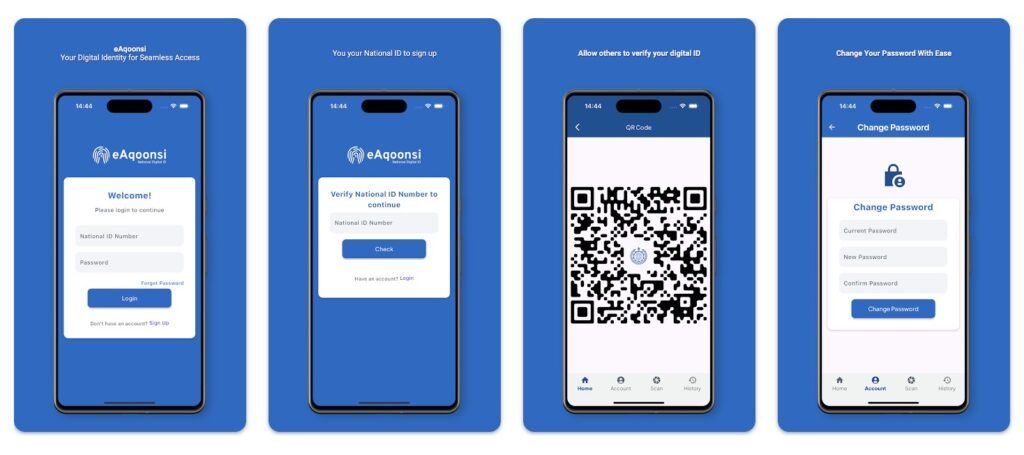
The eAqoonsi mobile application that was created to facilitate access to Somalia’s national digital ID is still not being accessed in an inclusive manner due to a number of challenges such as poor connectivity and digital illiteracy.
According to testimonies in a feature report by Hiiraan Online, some Somali citizens find it difficult accessing the digital version of their ID card via the app. For some, it’s due to weak or inexistent internet connection, while for others, it’s as a result of lack of knowledge about how the app or the entire digital ID system works.
The eAqoonsi, which was launched alongside the HUBIYE verification platform last May, is an app designed to facilitate digital transactions for Somalis and legal residents. The ID authority describes it as “a modern, secure, and efficient alternative to the physical national ID card.”
Since 2023, Somalia has been implementing a World Bank-funded biometric national ID project which aims to strengthen the country’s legal identification system and to revolutionize the way citizens get public and private sector services delivered to them.
In the last few years, efforts led by the National Identification and Registration Authority (NIRA), have yielded some fruits with more than one million digital IDs already issued as of November last year.
However, so much remains to be done in order to accelerate the pace of coverage, especially as the government, through NIRA, has set a target of reaching at least 15 million people with a digital ID by 2029.
Hiiraan quotes a technology expert, Prof. Yahye Abukar Ahmed, as suggesting that the government has to adopt what he calls a “5A” approach if it must strengthen national digital ID inclusion.
This, he says, has to do with “availability, affordability, awareness, ability, and accessibility.” He also calls on Somali authorities to make available several channels that can allow citizens in remote communities, those who do not have smartphones, as well as those with physical disabilities, to be able to access digital ID services.
Another official quoted by the outlet raised the gender perspective: “Not every woman has a smartphone, internet access, or the knowledge to use digital services. If the system is not made simple and inclusive, it will exclude many women.”
There is also a call for greater transparency and stronger communication as officials work to drive adoption of the digital ID which is increasingly being integrated with government services.
Recently, as part of efforts to reach every sector of the country, NIRA conducted a special registration exercise for Danab Commando military personnel at their operations base. The ID authority said that the move would make it easier for the concerned military officers to access a wide range of services.
Related Posts
-
 August 7, 2025
 -
 November 13, 2025
 -
 October 6, 2025
 -
 June 2, 2025
 -
January 12, 2026
-
 November 21, 2025
Article Topics
Africa | digital ID | digital inclusion | eAqoonsi app | mobile app | NIRA Somalia | Somalia

Comments