
US grocery store chain faces backlash over its use of facial recognition
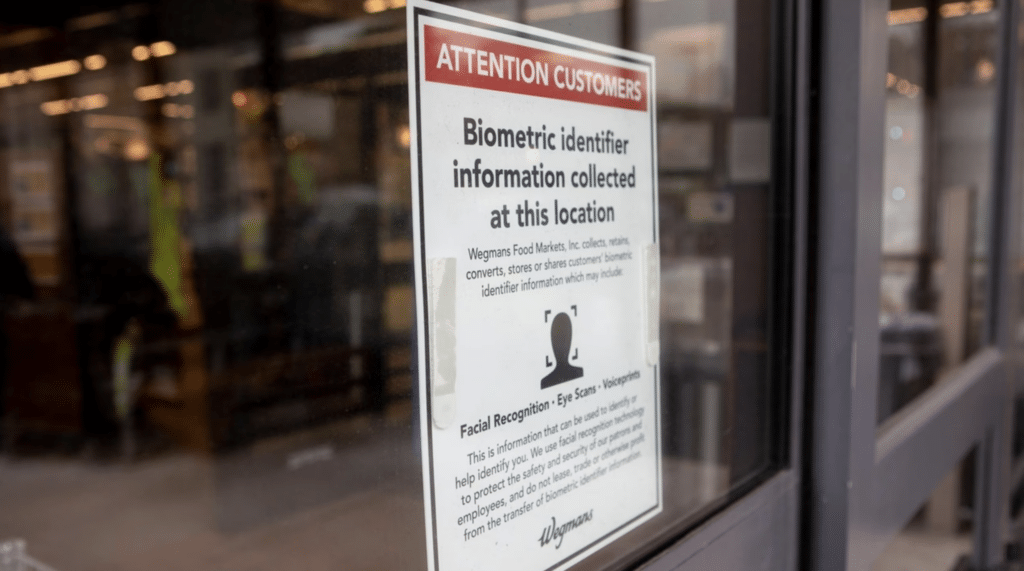
U.S.-based supermarket chain Wegmans Food Markets has found itself at the center of a rapidly widening privacy controversy over its use of facial recognition technology in some stores, reigniting a national debate about whether biometric surveillance belongs in everyday retail spaces where customers have little practical choice but to submit or walk away.
Wegmans Food Markets is a regional supermarket chain primarily concentrated on the East Coast of the U.S., with its largest presence in the Northeast and Mid-Atlantic regions.
The dispute flared after shoppers and reporters in New York City noticed signage at Wegmans entrances warning that biometric information could be collected upon entering the store. The notices stated that a person’s face, eyes, or voice biometrics might be captured and stored for security purposes.
Because New York City law requires businesses to disclose when biometric identifiers are being collected or retained, the signs were legally mandated, but their wording immediately raised alarms among privacy advocates and lawmakers.
Wegmans responded by disputing the scope implied by the signage. In public statements, the company said it uses only facial recognition technology, not voiceprints or retinal scans, and only at a small number of stores it describes as having “elevated risk.”
According to the company, the system is designed to identify individuals who have previously been flagged for misconduct on Wegmans property, such as theft or threatening behavior, and to alert staff when those individuals reenter a store.
Wegmans has said facial recognition is used as one investigative tool rather than a sole basis for action, and that any response involves human review. But the mismatch between the broad language on the signs and the narrower description offered by the company has become one of the central sources of distrust.
Privacy advocates argue that signage is the only information most customers see and that it suggests far more extensive biometric surveillance than Wegmans acknowledges.
The company has said the wording reflects legal caution and evolving technology definitions rather than actual practices, but it has not publicly revised the notices or explained why they mention eyes and voice if those data are not collected.
Beyond signage, critics point to deeper structural concerns. Wegmans has declined to specify how long biometric data are retained, saying only that images and related information are kept as long as necessary for security purposes and in line with industry standards.
The grocery chain has also declined to detail how individuals are added to its internal watchlist, what qualifies as misconduct severe enough to warrant enrollment, or how a person can find out if they have been flagged and seek removal.
Civil liberties groups argue that without those details, the system amounts to a private watchlist with limited transparency or accountability.
The controversy has drawn comparisons to recent federal enforcement actions against retailers. In 2023, the Federal Trade Commission (FTC) barred Rite Aid from using facial recognition technology for five years after finding that its system produced false positives that led to customers being wrongly accused of theft, followed through stores, or confronted by police.
The FTC emphasized the heightened risk of bias and error in retail facial recognition systems, particularly for people of color.
“Rite Aid’s reckless use of facial surveillance systems left its customers facing humiliation and other harms, and its order violations put consumers’ sensitive information at risk,” an FTC official said at the time.
Although Wegmans insists its program is narrower and more carefully managed, critics say the same structural risks remain whenever automated identification tools are deployed in fast-paced retail environments.
Wegmans has also sought to reassure customers that it does not share facial recognition data with third parties.
Still, the company has acknowledged that, in limited circumstances such as serious criminal investigations or missing person cases, it may consider information from law enforcement when determining who should be flagged.
Privacy experts note that even without formal data sharing, the presence of biometric surveillance can pull retailers into quasi-policing roles, normalizing identification checks in spaces traditionally open to the public.
The fallout is not confined to New York. In Connecticut, where Wegmans is planning a new store in Norwalk, state lawmakers cited reporting as they announced plans to introduce legislation in the 2026 session under which retail establishments would be prohibited from using facial recognition technology on customers.
The proposal will be part of a broader consumer protection and data privacy package the senators will introduce that are aimed at strengthening Connecticut’s regulations governing the collection, use, storage, and sharing of personal data.
Lawmakers there argue that existing state privacy laws, which generally require affirmative consent for sensitive data, contain loopholes for fraud and crime prevention that allow biometric surveillance to expand with little public oversight.
“Facial recognition systems can capture, store, and analyze uniquely identifying biometric data without a customer’s knowledge or meaningful consent, raising serious questions about data security, misuse, and civil liberties,” said Connecticut Senate Majority Leader Bob Duff, who, along with state Senator James Maroney, will introduce legislation this year.
“Connecticut residents shouldn’t have to worry about giving up information about themselves while grocery shopping,” Duff continued, adding that “facial recognition technology is highly invasive and poses real risks to privacy and trust. This bill will put people first and ensure retailers cannot collect or store personal biometric information about someone just because they walked into a store.”
For consumers, the debate highlights a growing tension between security measures and meaningful consent. Grocery shopping is an essential activity, and critics say a notice posted at the door does not offer a real choice when the alternative is to leave without food.
Supporters of stricter regulation argue that biometric technologies should be limited to truly exceptional circumstances and governed by clear rules on accuracy testing, retention limits, and redress for mistakes.
Wegmans said it is reviewing feedback and remains committed to balancing safety with customer trust. For now, however, the company’s reluctance to disclose operational details has left unanswered questions about how biometric surveillance is being used, how far it may expand, and whether shoppers can ever realistically opt out.
As lawmakers in multiple states signal interest in tighter controls, the Wegmans dispute is shaping up as an early test case for how far biometric monitoring will be allowed to creep into ordinary commercial life.
Related Posts
-
 March 31, 2025
 -
 August 25, 2025
 -
 July 3, 2025
 -
 October 6, 2025
 -
 January 29, 2025
 -
 March 31, 2025
Article Topics
biometrics | data privacy | facial recognition | New York City | retail biometrics | video surveillance

Comments