
UK digital ID sector warns of legal action if mDL limited to GOV.UK Wallet
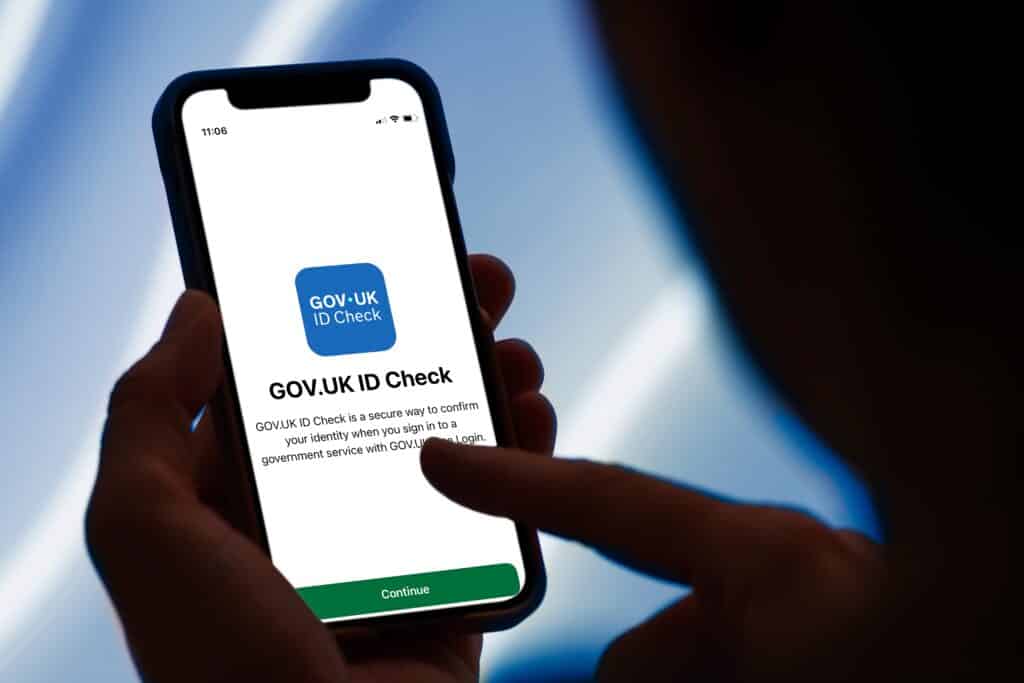
A spat is brewing in the UK between private sector digital identity providers and a government they fear is intent on pushing them out of the ecosystem. The current question from companies certified as digital verification services (DVS) is, in effect, what exactly does the government intend to do with its forthcoming mobile driver’s license (mDL)?
In a post on LinkedIn, legal and digital identity consultant Richard Oliphant continues to broadcast warnings that digital ID and biometrics providers are at risk of being shut out of the market by a national digital identity system designed to make the private sector commercially unviable.
“The GOV.UK wallet will host government-issued verifiable credentials (VCs),” Oliphant says, “most notably mDLs that are digitally signed and issued by the Driver and Vehicle Licensing Agency (DVLA).”
Oliphant says the Government Digital Service (GDS) “has said that the mDL and other VCs will only be made available to the GOV.UK wallet. DVS providers will be responsible for ‘orchestration’ – providing the technical plumbing to connect the GOV.UK wallet with private sector service providers like pubs, banks and telcos so the holder can use their mDL and VCs as a digital proof of age and identity.”
Derived credentials don’t fulfil the deal: Oliphant
Oliphant calls foul on the news that “DVS providers have also been told that they will – at some point in the future – be permitted to create a ‘derived credential’ from the mDL (and other VCs).”
“This is not a level playing field. A credential which has been derived by a DVS provider from an mDL is not signed by the DVLA’s cryptographic key and it is NOT proof of driving entitlement. So, not much use if you want to renew your insurance or hire a car.”
Oliphant says that kind of treatment could trigger a complaint to the Competition and Markets Authority (CMA). The thinking is based on arguments rooted in the Data (Use and Access) Act 2025. The Act, he says, “would appear to entitle DVS providers to host the mDL and VCs in their certified digital wallets – and not just create a derived credential.” Moreover, limiting the mDL to the GOV.UK Wallet would create an “unlawful monopoly over DVS,” undermine the core aims of the UK Digital Identity and Attributes Trust Framework (DIATF), and create a structural conflict with OfDIA.
“It’s really quite simple. If the GOV.UK wallet is certified against the UK DIATF, it cannot be treated more favorably than any other certified digital wallet.”
AVPA makes subsidy argument, ADVP continues vocal advocacy
In response to the post, David Crack, chair of the Association of Digital Verification Professionals (ADVP), says that if the government restricts access to the credentials such that they are not interoperable with UK DIATF, “this is something that the Association of Digital Verification Professionals would have to consider very seriously.”
The Age Verification Providers Association (AVPA) also chimes in, pointing to “persuasive arguments that the government – and particularly the HM Treasury – should be keen to avoid ‘crowding out’ a burgeoning private sector market.”
“Stifling the investment, innovation, and export potential of 50+ certified DVS providers would be a significant strategic error, and we intend to make these points in the consultation,” it says. “Hopefully legal options will not be required. If they are, then subsidy control or public-sector competition neutrality rules apply.” Specifically, AVPA says, “the arrangement falls foul of the Subsidy Control Act 2022,” in that “providing exclusive access to ‘Master’ VCs confers a ‘specific economic advantage’ that is clearly capable of distorting competition.”
In this context, then, a government wallet not subject to the same rules as everyone else “isn’t just a monopoly,” AVPA says – “it’s an unlawful subsidy of a state product.”
Related Posts
-
 February 26, 2025
 -
 January 19, 2026
 -
 April 1, 2025
 -
 May 30, 2025
 -
August 7, 2025
-
March 11, 2025
Article Topics
AVPA | biometrics | DIATF certification | digital identity | digital verification service (DVS) | digital wallets | GOV.UK Wallet | mDL (mobile driver's license) | Richard Oliphant | UK digital ID

Comments