
US, EU move toward landmark biometric data sharing deal
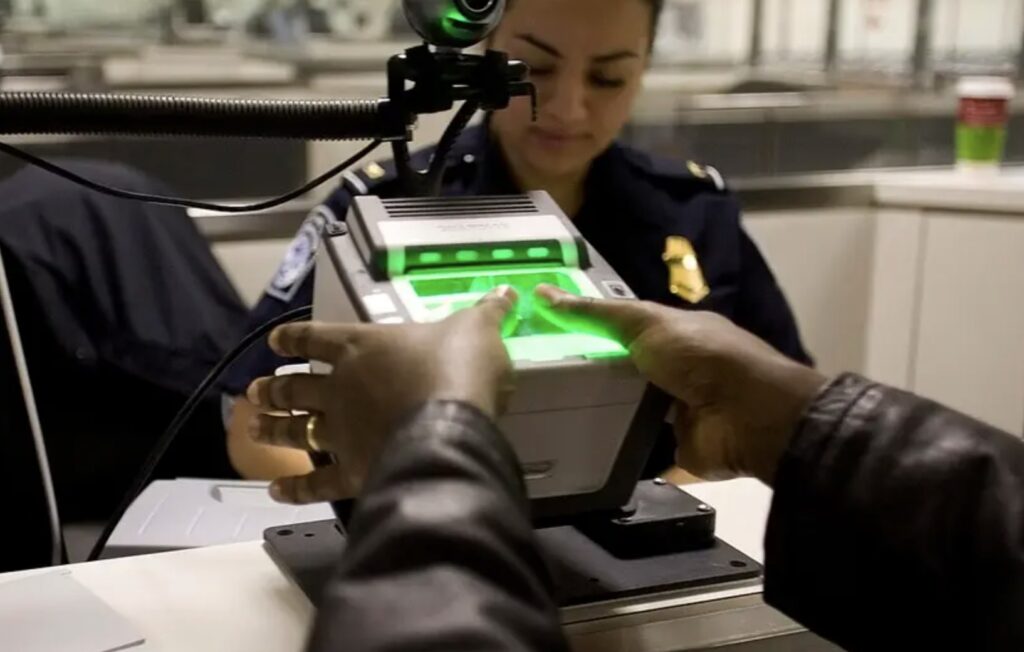
The U.S. and European Union are in formal talks over a biometric data-sharing arrangement that could give the Department of Homeland Security (DHS) access to fingerprint and other biometric records held by EU member states.
Brussels has never granted this type of data access to a non-EU country for border security purposes.
The proposed arrangement would support DHS’s Enhanced Border Security Partnership program, under which countries in the Visa Waiver Program are expected to let the U.S. screen biometric records for immigration and border security purposes.
In practice, DHS would be able to query participating countries’ databases when screening travelers, asylum seekers, visa applicants, irregular migrants and others encountered in immigration or border contexts.
When a match is found, responsive biometric and related identity data could be sent to DHS.
For Europe, the negotiations are significant because they sit at the intersection of EU-level authority over data protection and border policy and member states’ control over their own national biometric databases.
After internal debate, the EU moved in 2024 and 2025 toward a collective approach, with the Council authorizing negotiation of an EU-level framework agreement in December 2025.
That framework would establish the legal conditions for transfers to DHS, while individual member states would later conclude implementing arrangements identifying the databases involved and setting the operational terms.
The negotiations are also exposing the main fault lines that could determine whether a final deal is possible.
European officials want strict limits on bulk or routine data collection, meaningful human oversight of decisions with adverse effects, restrictions on the handling of sensitive personal data, tight controls on onward transfers to third countries, and some form of effective remedy for individuals whose data is misused.
The EU also wants reciprocity, meaning member states’ authorities would be able to query corresponding U.S. databases rather than simply supplying data to Washington.
Those demands may prove difficult to reconcile with DHS’s broader vision for routine biometric screening tied to border encounters and related immigration or law enforcement matters.
Tensions also remain over how long transferred data could be retained, whether the agreement would cover only targeted border checks or something closer to systematic screening, and what kind of legal redress Europeans could realistically obtain under U.S. law.
Even so, both sides appear motivated by the same broad objective of tighter border control, which has made this one of the more consequential transatlantic data negotiations now underway.
If concluded, the agreement would mark a major expansion of U.S.-EU cooperation on biometric information sharing and could become a model for future border security arrangements.
But it will also test whether Washington and Brussels can strike a deal that satisfies Europe’s legal standards on privacy and proportionality while still delivering the operational access DHS wants.
Related Posts
-
 January 9, 2026
 -
 November 7, 2025
 -
 March 31, 2025
 -
 February 3, 2026
 -
 January 27, 2026
 -
 April 17, 2025
Article Topics
biometric data | biometrics | border security | data sharing | DHS | Enhanced Border Security Partnership (EBSP) | EU | U.S. Government | United States

Comments