
Thailand advances Digital ID 2.0 with expanded digital trust framework
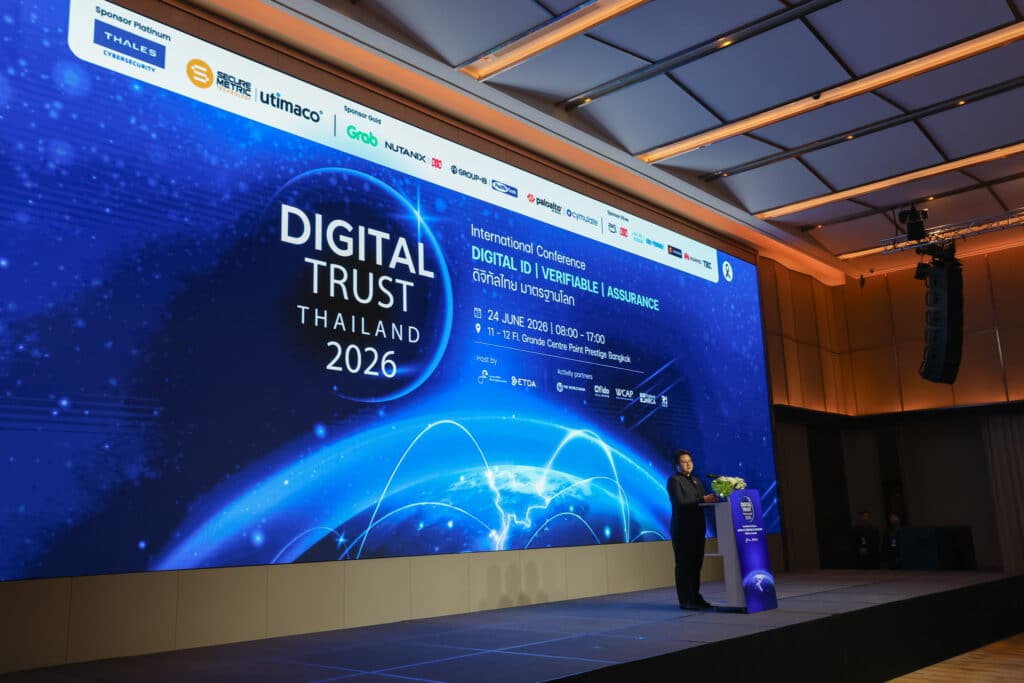
Thailand is pushing digital identity forward with a physical gathering centered on talks and cooperation advancing digital trust.
Thailand’s Electronic Transactions Development Agency (ETDA) is accelerating work on the country’s digital trust framework. The “Digital Trust Thailand 2026 – Digital Thailand, World Standard” conference outlined plans for Digital ID 2.0 and expanded trust services across government and industry.
The Bangkok event is attended by more than 300 participants from Thai and international organizations. The conference, which kicked off Monday, brings together policymakers, regulators, trust service providers and technology experts to discuss the next phase of Thailand’s digital trust ecosystem. A business‑matching zone enabled government agencies, private companies and trust service providers to explore collaboration opportunities.
ETDA said the goal is to ensure Thailand’s digital trust infrastructure meets ASEAN and global standards and is prepared for future cross‑border digital ID requirements. ETDA is scaling Thailand’s national digital identity infrastructure through a combination of regulation, standards and interoperability frameworks, with the plan falling under the Digital ID Framework Phase 2 for 2025 to 2027.
Thailand’s Deputy Minister of Digital Economy and Society Nan Bunthida Somchai said digital trust is becoming a national level infrastructure. She noted that the government’s Digital ID Framework Phase 2 aims to expand digital identity use across all sectors and strengthen Thailand’s competitiveness. The plan includes the “One ID” initiative, which links individual data across government agencies to support seamless public‑service delivery and reduce paperwork.
Thailand has already connected Digital ID systems to more than 1,797 government e‑services, covering tax, household registration and healthcare. As of April 2026, cumulative usage across platforms such as ThaID, Tangrat, Mor Prom, Paotang and NDID exceeded 162 million accounts.
ETDA is now preparing Digital ID 2.0, which will extend identity services to legal entities, foreigners and vulnerable groups. The Ministry is also promoting electronic transactions for businesses through the Integrated Document Signing Platform (IDSP),which would enable verifiable e‑contracts and corporate signatures.
Additional initiatives include e‑signatures, verifiable credentials and digital document wallets to support secure document storage and cross‑agency service integration. ETDA Director Dr. Chaichana Mitrphan presented updated statistics on e‑signature growth and outlined the roadmap for Digital ID 2.0, emphasizing improved security, interoperability and user convenience.
The conference featured contributions from the World Bank, FIDO Alliance, WCAP, Thales and SecureMetric, alongside trust‑service providers and cybersecurity specialists. Sessions covered verifiable credentials, digital wallets, corporate signing platforms, passkey‑based authentication, decentralised identity models, AI‑enabled trust systems and post‑quantum cryptography.
Related Posts
-
 December 8, 2025
 -
 August 7, 2025
 -
 November 25, 2025
 -
 August 19, 2025
 -
 September 29, 2025
 -
 July 16, 2025
Article Topics
digital government | digital identity | government services | Thailand | trust framework

Comments