
Allegations of procurement flaws, bribery rock Liberia’s biometric ID contract
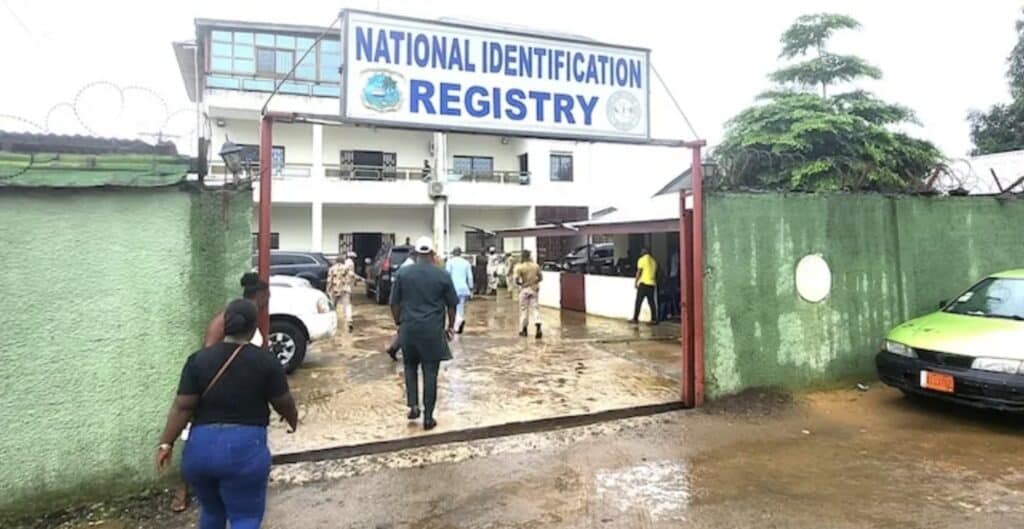
There’s some controversy around a national biometric ID contract which the Liberian government has awarded to Austrian security printing firm OSD International.
Some local reports in the country suggest that the contract was awarded despite an unfavourable opinion from the Public Procurement and Concessions Commission (PPCC), the country’s public procurement oversight body.
Front Page Africa recently published leaked documents that show the PPCC’s recommendations were against the award of the contract whose details were submitted to it by the National Identification Registry (NIR).
NIR had sought approval from the PPCC to use a restricted bidding method to contract a consultant for the Design, Installation, and Maintenance of a National Biometric Identification System (NBIS) in Liberia.
But the oversight body refused to grant the “no objection” request, according to the leaked letter dated July 7. Instead, it asked NIR to make use of the International Competitive Bidding Method and submit a concession plan for the activity, respectively in line with Sections 97 and 79 of Liberia’s Public Procurement Concessions Act, 2010 (PPCA, 2010).
The PPCC also strongly advised NIR to adhere to procurement procedures outlined in the PPCA, 2010.
But despite these recommendations, President Boakai, in a presidential memo in early July, went ahead to ask that OSD, already chosen by NIR following a restricted bidding process, be maintained in order to avoid legal implications and to ensure timely implementation of the project.
The president’s instructions in this regard were communicated by presidential press secretary, Kula Bonah Nyei Fofana, in a statement in which he also announced the putting in place of a Steering Committee directed by the president to oversee the management of Liberia’s national ID system.
Questions are now being asked if the president was aware of the PPCC’s concerns and recommendations, or he was misled by some officials with vested interest around the contract estimated at $9.8 million.
Allegations of bribery
While some sources blame the contract controversy on breach of procedure, others point to bribery and corruption.
A report by Liberian Investigator claims the contract was stalled not because it fell short of procedural requirements, but because the chosen supplier, OSD, refused to succumb to demands for bribes by some officials within the government.
The outlet quotes an anonymous source as saying that the NIR had actually obtained the PPCC’s clearance for the contract, but some individuals had to push for a re-do at the level of the procurement oversight body after they failed to get a $120,000 bribe.
The source was quoted as saying that “the technical justifications were clear, and national security was part of the reason” for selecting OSD. The MoU for the contract was actually signed in 2024, as the Liberian Investigator confirms.
The source is further quoted as saying that the contract controversy is what partly let to the suspension of ID issuance in Liberia recently, prompting the president to set up a Steering Committee to manage affairs.
Liberia’s tail of biometric contracts controversies
Liberia is not new to controversy regarding biometrics contracts. In 2022, the country was rocked by procurement irregularities around a biometric voter registration deal which dragged on for many month.
The same year, there was also a major procurement saga over facial recognition thermometers.
In 2023, a contract for the issuance of biometric residence permits also faced criticisms after it was reportedly awarded in a covert and restricted manner.
Liberia hopes to begin issuing new national ID cards by April next year, and the country considers the system as a key aspect of digital transformation and digital economy plans.
Related Posts
-
 February 24, 2025
 -
 October 8, 2024
 -
 July 14, 2025
 -
 September 16, 2024
 -
 September 26, 2024
 -
 January 6, 2025
Article Topics
Africa | Austrian State Printing House (OSD) | biometrics | digital ID | government purchasing | identity management | Liberia | National Identification Registry (NIR) | procurement

Comments