
Gait, body structure biometrics accepted as court evidence in EU murder case
Gait recognition has reached a significant milestone as a forensic identification method with the recognition of the biometric modality as admissible evidence in a murder case in an EU country.
A combination of traditional gait biometrics with 3D body dimension analysis delivers stronger accuracy than fingerprint, voice, iris or face biometrics, Cursor Insight Marketing Manager Ákos Molnár explained in an interview with Biometric Update. The technology developed by the company has an equal error rate (EER) below 0.1 percent, he says. As a combination of movement and 3D body analysis, Cursor Insight considers the technology to be a hybrid of physical and behavioral biometrics.
One dark night in Europe…
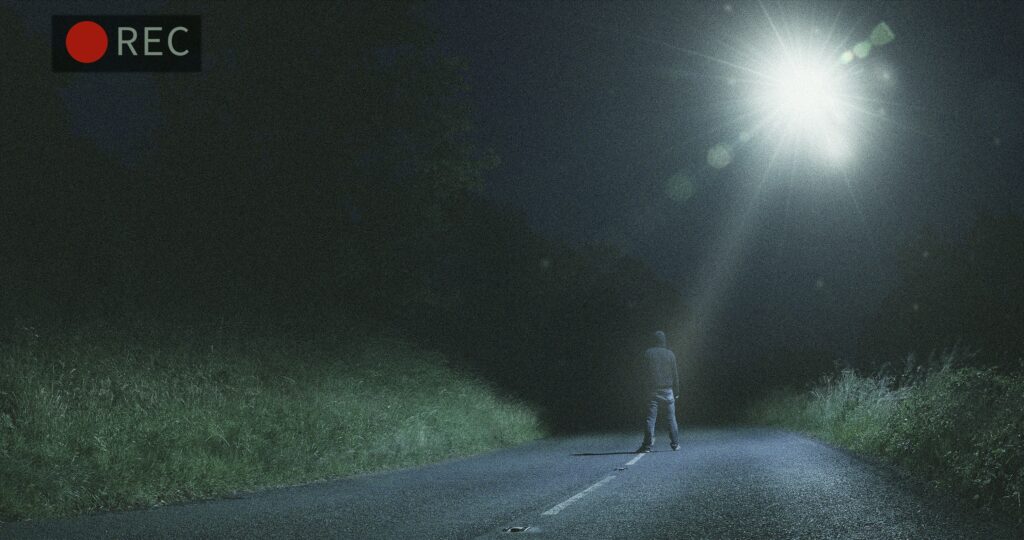
A murder committed on a dark night in a European country was caught on a pair of unsynchronized night-vision cameras. The cameras were approximately 30 meters away from the subject, however, so the perpetrator’s face provided only 10-by-5 pixels worth of data. Worse, the lighting, angle, and facial occlusions made forensic facial recognition impractical for suspect identification.
Police identified two suspects, with footage of both captured while walking and one of them captured while running. One of them fired the gun in question, but which? Cursor Insight obtained reference recordings of each suspect that allowed the company to build biometric profiles of them.
Gait biometrics can use more than 100 dynamic parameters and more than 50 static ones “in lab conditions,” Molnár says. But the low quality of the footage available limited Cursor Insight to 31 parameters, in this case.
“The previous recordings were also not the best quality,” he says. “One of them was recorded in a shop with a CCTV camera, and you cannot see the whole body and so on.”
One of the thirty-one metrics gave an equal indication of which suspect was the gunman. The other 30 all indicated the same individual pulled the trigger. Cursor Insight submitted a forensic report when the case was filed, which was accepted as evidence by the court. The case is now headed to trial. Two of Molnár’s colleagues will travel to give expert testimony during the proceedings.
From the cutting edge to the forensic toolkit
In theory, gait and body structure biometrics can identify people wearing masks or helmets. Cursor Insight is currently working on performing the same kind of biometric identification in just such a case now, Molnár reveals. In that case, there are several suspects.
The company explains its measurements of gait biometrics’ accuracy in a recent blog post. The company scored an EER of 1.7 percent across two independent datasets, but the calculation is based on only a single step.
“If you have more steps, but only 30 parameters, it’s still quite high, around 99 percent,” Molnár says.
This means that while gait and body structure biometrics can theoretically make false matches, but so infrequently that its accuracy is closer to a modality like fingerprints than one like facial recognition, according to Molnár.
“Admissibility depends on different things in different countries. It’s not the same across the Europe.”
In jurisdictions where it is not admissible in court, Molnár still sees potential for gait and body structure biometrics as an investigative tool. Cursor Insight has had discussions with law enforcement agencies in North America, Australia and South America, including about the new case noted above.
Cursor Insight approached gait biometrics as a provider of motion analysis that was already well-established for e-signature verification, which is used by a major bank in Central and Eastern Europe. The company’s portfolio also includes continuous behavioral biometric authentication software, based on cursor motion.
Molnár says there is also potential in applications like access control. His company is attempting to make headway on those different use cases, which could include security for defense facilities or critical infrastructure, with something of a first-mover advantage. While other organizations have developed gait biometrics, he believes they are not the same, and not just because they do not use 3D reconstruction.
“Most of them say that they are gait recognition systems, but they can only tell if an animal is walking on the street, or a person or car or something like that,” Molnár says. “This kind of identification method does not exist, as far as I know.”
Related Posts
-
 January 13, 2025
 -
 October 4, 2024
 -
 January 10, 2025
 -
February 24, 2025
-
 October 25, 2024
 -
 August 7, 2025
Article Topics
biometric identification | biometrics | body structure biometrics | Cursor Insight | forensics | gait recognition | law enforcement

Comments