
World to appeal Philippine order to stop collecting biometric data
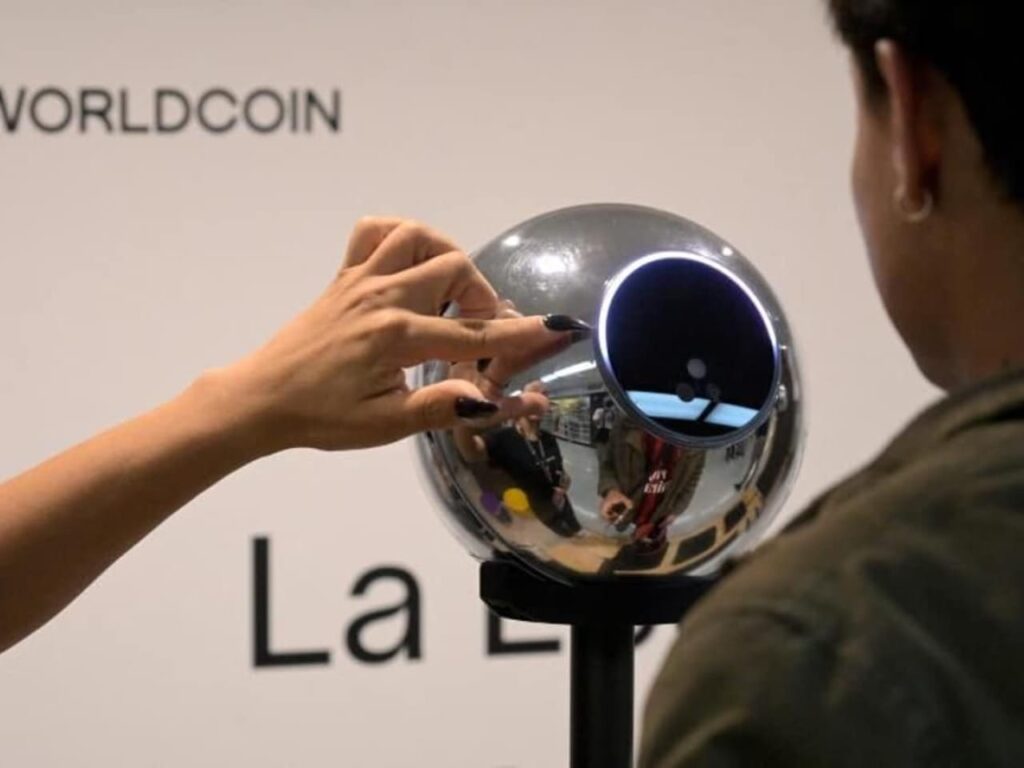
Digital identity project World will appeal a cease and desist order against its developer, Tools for Humanity (TFH), issued by the Philippine privacy watchdog last week over alleged data privacy law violations.
In its response to National Privacy Commission’s (NPC) decision, World also states that misconceptions about the project persist because World ID is a misnomer – it does not store specific proof about a user, such as name, address, age, but only proof that the user is human. The company said last Friday to file a motion for reconsideration of the NPC’s order to stop collecting and processing biometric data of Filipinos
The regulator’s decision is “alarming” considering the year-long compliance process that the firm has conducted with local government agencies and privacy experts, says Ryuji Wolf, World’s local operator.
“This sudden change in interpretation undermines the certainty that legitimate investors rely on when working with Philippine regulators,” says Wolf.
Despite this, World has promised to continue working with Philippine regulators to clarify the system’s design, the Philippine Daily Inquirer reports.
Biometrics for crypto
The country’s privacy watchdog says that the company’s undue influence, lack of transparency over data use, excessive data collection, and risks to users amount to violations of the 2012 Data Privacy Act. The regulator’s biggest thorn in the side, however, seems to be Tools for Humanity’s decision to offer monetary incentives in exchange for iris biometrics.
“When consent is compromised by the lure of compensation, it ceases to be a genuine expression of choice,” says Deputy Privacy Commissioner Jose Amelito S. Belarmino II.
World’s tactic to offer cryptocurrency tokens in exchange for registration has been a major draw for users in developing countries with lower incomes.
Soon after the platform’s launch in the Philippines in February, media reported that Filipinos had been lining up to have their irises scanned by the company’s Orb devices and register their World IDs. Registered users were airdropped WLD tokens worth 5,400 Philippine Pesos (US$93 at the time).
World says that it offers a referral program to help grow its network, which gives Filipinos who refer others the chance to claim WLD tokens. The National Privacy Commission, however, sees it as a practice that exploits “socioeconomic vulnerabilities.”
World ID a ‘bit of a misnomer’
The NPC also says that World’s collection of biometric data is unnecessary for its stated purpose of verifying that users are human. The company’s representative Wolf, on the other hand, emphasizes that the system processes all biometric images locally and deletes them within seconds.
“Our system does not identify individuals. It simply verifies that they are unique humans, not bots or AI accounts,” he says. “We don’t store, sell, or purchase biometric data.”
Instead, the eye and facial images taken by the Orb devices are sent only to the user’s smartphone, while the network uses cryptography to analyze the images and prove that the user is human and has not signed up for the network previously.
The process creates an anonymized user, which makes World ID a “bit of a misnomer,” according to the firm.
“It’s actually a digital proof that you’re a human, not proof that you’re a specific human or anything about you,” World says. A physical ID typically contains your name, address, birthdate and a photo. But the purpose of World ID is only to prove that you are a) human and b) unique.”
Related Posts
-
 July 10, 2025
 -
 November 8, 2024
 -
 January 23, 2025
 -
 May 16, 2025
 -
 May 14, 2025
 -
 July 29, 2025
Article Topics
biometric data | cryptocurrency | data privacy | iris biometrics | National Privacy Commission (NPC) | Philippines | Tools for Humanity | World | World ID

Comments