
China expands biometric customs clearance for ports to Hong Kong, Macao, Taiwan
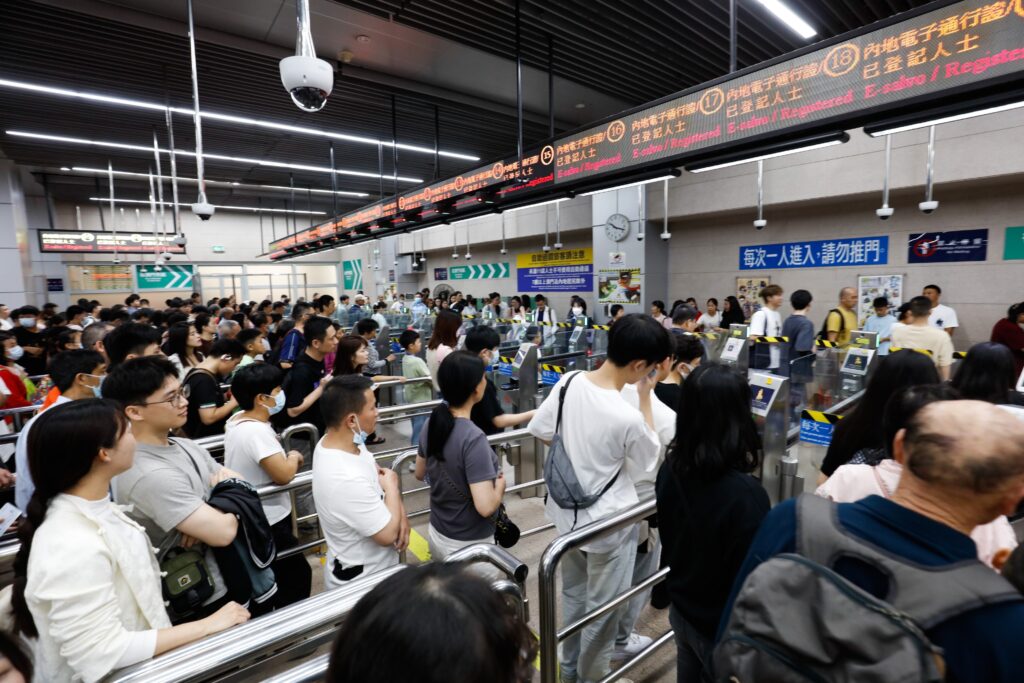
China is set to expand its biometric-based intelligent customs clearance system across Mainland ports that connect with Hong Kong, Macao, and Taiwan.
From Wednesday, November 5, the “face swiping” fast-track system will be deployed at an expanded range of airports, wharfs, and land crossings.
These include Shanghai Hongqiao Airport, Xiamen Gaoqi Airport, Wutong Wharf, Guangzhou Pazhou and Nansha Passenger Ports, and several Shenzhen checkpoints such as Huanggang, Luohu, Liantang, Futian and Wenjindu, as well as Zhuhai Hengqin Port and the Hong Kong-Zhuhai-Macao Bridge.
Biometric border lanes are already in use at Shenzhen Bay Port in Shenzhen and Gongbei Port in Zhuhai, allowing travelers to enter mainland China from Hong Kong and Macao, which are Special Administrative Regions (SAR) with their own immigration rules.
The system will be available to Mainland residents over age 14 who hold valid travel permits and multiple-entry endorsements for Hong Kong and Macao, as well as Hong Kong and Macao residents with valid mainland travel permits.
Taiwan residents with five-year China travel permits are also eligible. Taiwan residents must consent to the collection and verification of their face biometrics, fingerprints, and other biometric data for border inspection may use the “face swiping” lanes at the aforementioned ports.
To use the biometric fast track, travelers must consent to the collection and verification of face biometrics, fingerprints, and other biometric data for border inspection. Travelers report using the biometric lanes as much speedier compared to the older method of presenting documents to officials.
The announcement of new biometrics-based customs is part of a broader initiative to ease the movement of skilled workers between the mainland and Hong Kong and Macao, which includes liberalizing multi-entry travel permits, as well as expanding the number of ports (mainly in Guangdong province) that will grant 240-hour transit visas to foreigners.
Hengqin Port gets biometrics, Hong Kong boasts of rapid immigration clearance
Additionally, China will launch “Smart Immigration Clearance” at Hengqin Port tomorrow, which is located at the junction of the Guangzhou-Zhuhai Intercity Railway and the Macau Light Rapid Transit. The initiative aligns with President Xi Jinping’s call for deeper integration between Hengqin and Macao.
The system upgrade includes 64 automated joint inspection channels, enabling document-free clearance for eligible travelers aged 14 and above. These include residents of Macao, Hong Kong, Taiwan, and the Mainland who hold valid travel permits and have registered for automated clearance services. The process involves face biometrics and fingerprint scans at two gates.
Authorities plan to expand the system in 2026 with 46 additional channels, aiming to boost inspection capacity by at least 65 percent.
Ahead of the National Games, Hong Kong officials have proclaimed that athletes will be able to enter and depart in Hong Kong in seven seconds, enabled by 16 dedicated e-gates across four checkpoints, South China Morning Post reports.
“Registered athletes and relevant personnel will be able to cross the border without having to use any physical identity document, instead using facial recognition technology [that completes clearance] in seven seconds,” Director of Immigration Benson Kwok Joon-fung told the publication.
The multi-sports event will mark the first time visitors will be able to use the contactless immigration clearance lanes in Hong Kong. Last month, the region launched the “Face Easy e-Channel” service for Hong Kong residents at Hong Kong International Airport. Eligible residents can have their face biometrics scanned in the e-channel for identity verification for faster, automated arrival clearance.
ACS launches compact multi-modal ePassport reader AIR60U
Hong Kong’s Advanced Card Systems (ACS) has introduced the AIR60U ePassport Reader, a compact identity document reader that combines OCR, RFID/NFC and contact smart card capabilities in a single device.
Designed for kiosks, e-gates and desktop counters, the AIR60U streamlines ICAO Doc 9303-compliant identity checks, reducing errors and improving user experience, the company says. The AIR60U enables fast, accurate verification with sub-second MRZ reading and e-passport chip access.
Its modular design and USB Type-C interface support easy integration across sectors including eGovernment, travel, telecom and enterprise access management. The device supports Windows and Linux platforms and offers plug-and-play deployment. Variants include the AIR60U-A2 with integrated QR and barcode scanning, and the AIR60U-A1 without. Use cases span airport check-ins, visa issuance, SIM registration, hotel self check-in, among others.
Related Posts
-
 October 6, 2025
 -
 November 19, 2024
 -
 June 2, 2025
 -
 January 29, 2025
 -
 June 10, 2025
 -
 January 31, 2025
Article Topics
biometric passport | biometrics | border security | China | contactless biometrics | facial recognition | Hong Kong | Macau | Taiwan

Comments