
Zurich Airport rolls out EES biometric border control with secunet
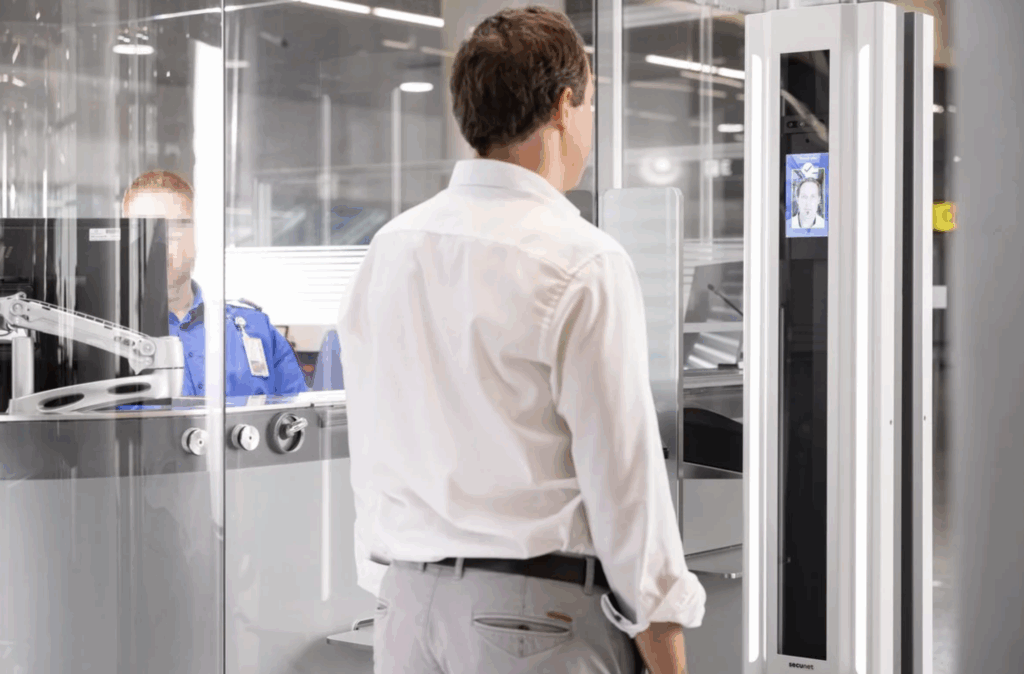
Zurich Airport is the latest Schengen border to implement the European Union’s Entry/Exit System (EES), launching the biometric border control platform on Monday with support from secunet.
At Zurich Airport, Switzerland’s busiest international hub, the rollout was led in partnership with the Zurich Cantonal Police and secunet. The deployment includes a suite of EES-compliant technologies from the secunet border gears border control portfolio.
This includes automated border control gates (secunet easygate), self-service kiosks (easykiosk), facial image capture towers (easytower), the bocoa EES-compliant border control application, and the easyserver backend that links to the EU’s central EES database.
The infrastructure enables travellers to pre-register data at kiosks, reducing wait times and easing pressure on border officers. “As a leading provider of border management solutions, we have worked with authorities in various European countries to develop a robust, scalable platform that now ensures smooth EES-compliant processes with the highest security and data protection standards,” says Marc-Julian Siewert, CEO of secunet. “The successful EES rollout with the Zurich Cantonal Police is an excellent example of this.”
Switzerland joins other Schengen states — including Germany, Austria and Czechia — where secunet is supporting national authorities in the phased EES rollout.
While secunet secures various EES rollouts across the continent, Inverid and iProov are behind the “Travel to Europe” pre-registration app launched by Frontex in January. Frontex announced the arrival of the app as a voluntary tool for national authorities to streamline EES entry processes. The app’s passport scanning function is supplied by Inverid’s Read ID, while the liveness check function is provided by iProov.
The “Travel to Europe” app aims to ease the EES process with biometric pre-enrollment, but needs to be integrated into the various national solutions for EES. Sweden is the only country to implement the app so far, though other Member States are rumored to be planning launches.
Palma de Mallorca Airport joins growing list of Spanish airports
Palma de Mallorca Airport has joined the growing list of Spanish airports implementing the European Union’s Entry/Exit System (EES), with the new border control process going live today. On their first arrival in Mallorca, travellers must complete a one-time biometric registration, as with any Schengen country post-EES implementation. The data is stored for three years and replaces the traditional passport stamp.
For subsequent visits, travellers using the same passport can pass through EES-enabled lanes with facial recognition and passport scanning, without needing to re-submit fingerprints unless their passport has changed or the previous record has expired.
Departing passengers must also scan their passports to log their exit from the Schengen Area. While manual stamps may still be used during the transition, the EES record will become the official proof of travel from 10 April 2026.
Despite the automation, travellers are still required to carry their passports. Border officers may request to see them at any time. Palma follows other Spanish airports — including Madrid, Barcelona, Málaga, Alicante and Menorca — that have already begun phased EES deployments.
Land borders in Poland launch Entry/Exit System
The Bobrowniki border crossing in northeastern Poland, along with nearby Kuźnica Białostocka, both reopened, on the same day, after years of closure. These border the country of Belarus.
Starting at 2pm, Polish Border Guards began operating the EU’s Entry/Exit System (EES). Non-EU nationals will need to register biometric data, fingerprints and facial images, entering Poland and the Schengen area. According to General Sławomir Klekotka of the Podlaskie Border Guard, the system enables faster identity verification and bolsters border security, as reported by Polskie Radio.
Port of Dover delays EES rollout to early 2026
The Port of Dover is working in close coordination with French border authorities to ensure a seamless introduction of EES for tourist passengers in early 2026. The joint approach aims to minimise disruption during the busy end-of-year travel period.
Following successful implementation for coach, freight and foot passengers in October, Dover has registered nearly 13,000 traveller profiles, which account for over 30 percent of all EES registrations made by French seaports since 12 October. This figure surpasses initial targets, Dover port officials said, who claim it reflects the effectiveness of joint planning and testing between UK and French agencies.
Officials say the collaborative model will support a smooth transition for tourist passengers as the full EES programme comes online. However, the Port of Dover is delaying the rollout to car passengers until early next year. The EES was expected to be introduced for car passengers on November 1 but has been delayed to 2026.
The EES kiosks at London’s St Pancras railway station temporarily removed certain questions in order to speed up traveler registration for the European Union’s biometric-based border scheme, after it launched in October. International railway service Eurostar had installed 49 self-serve biometric kiosks for EES pre-registration at St Pancras station, which connects London to Belgium, France and the Netherlands.
Related Posts
-
 April 17, 2025
 -
 July 7, 2025
 -
 November 28, 2024
 -
 November 19, 2024
 -
 December 17, 2024
 -
 November 22, 2024
Article Topics
airport biometrics | biometric identification | biometrics | border security | Entry/Exit System (EES) | Europe | identity verification | port security | secunet | Spain | Switzerland | Travel to Europe

Comments