
African digital ID systems need better governance by stronger independent bodies: Researchers
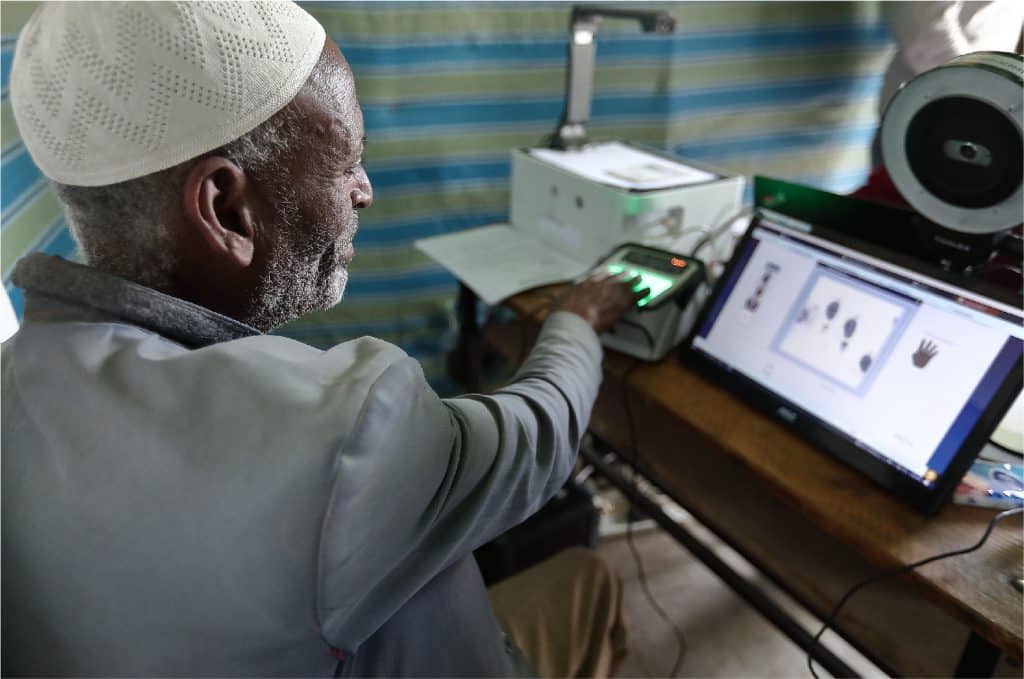
Digital ID systems backed by biometrics are being imposed on Africans, preventing millions from receiving essential services they are entitled to, according to a new report from the UK-based Institute of Development Studies (IDS).
The report “Digital-ID in Africa: Assessing progress and challenges to date” looks at 10 countries; Botswana, Côte d’Ivoire, Democratic Republic of the Congo, Egypt, Ethiopia, Liberia, Malawi, Namibia, Senegal, and Tunisia. It uses the Evaluation Framework for Digital Identity developed in 2019 by the India-based Centre for Internet and Society. The CIS and Research ICT Africa applied the Framework to the digital ID systems being deployed across Africa in 2021.
Researchers carried out 15 diagnostic tests to assess the legal foundations, human rights implications and risk considerations of digital identity systems.
Sophisticated legal frameworks that protect human rights are in place in some African nations, the researchers found, but gaps and failings effect even those with adequate laws in place. As argued in other analysis, African governments must enable strong, independent governance of digital identity systems to realize their benefits while protecting human rights.
“Translating legal provisions into tangible benefits also requires that adequate resources and expertise are dedicated to independent oversight and redress mechanisms to correct mistakes and errors that inevitably occur and demand prompt and adequate attention,” the report authors write.
Common concerns around inadequate data privacy, particularly for biometrics, mission creep and exclusion are reflected in observations about all of the countries examined, though to varying degrees.
The researchers conclude that “Africa’s biometric-ID systems blocking citizens from rights and services,” an outcome difficult to avoid given their observation that “Digital-ID systems in Africa emerged from colonial tools of control and post-independence mechanisms of power consolidation, and are now digitised infrastructures that increasingly serve government and corporate interests.”
“To address these gaps,” they argue, “African countries must shift from rhetorical commitment to practical governance: adopting clear, enforceable protections; empowering independent regulators; and ensuring inclusive participation by those most affected.”
Related Posts
-
 February 7, 2025
 -
 February 26, 2025
 -
 August 19, 2025
 -
 April 1, 2025
 -
 July 16, 2025
 -
 April 17, 2025
Article Topics
Africa | biometrics | biometrics research | Center for Internet Security (CIS) | data privacy | digital ID | human rights | Institute of Development Studies | regulation | Research ICT Africa

Comments