
Ring and Flock call off integration as scrutiny of camera-to-police partnership intensifies
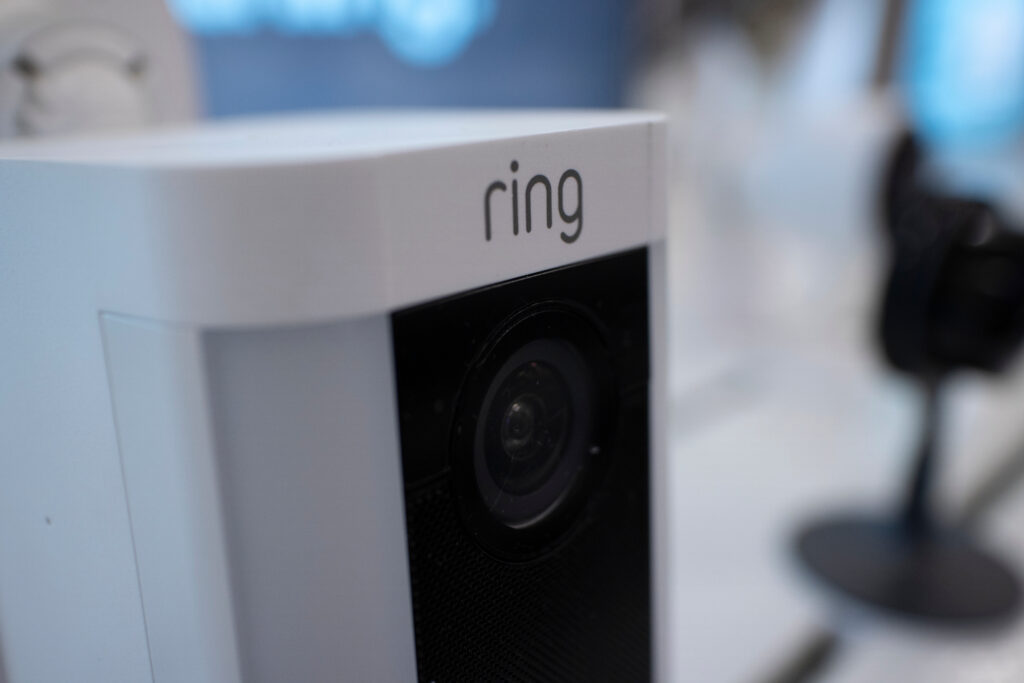
Amazon-owned Ring and Flock Safety have canceled their planned partnership, stepping back from an integration that would have linked one of the country’s largest networks of residential doorbell cameras with a rapidly expanding law enforcement surveillance platform.
Ring announced Thursday that it would not move forward with the collaboration after conducting what Ring described as a comprehensive review.
The integration never launched, and no Ring customer footage was ever shared with Flock.
The now-scrapped partnership would have connected Ring’s Community Requests feature with Flock Safety’s investigative systems, which are widely used by police departments for license plate recognition and video analysis.
The goal was to streamline how law enforcement agencies using Flock could request video from Ring users during active investigations. Participation would have remained voluntary, with users retaining the ability to decide whether to share footage.
Even so, the proposal triggered swift backlash from privacy advocates and some lawmakers who argued that connecting residential cameras to an established law enforcement intelligence network risked accelerating the consolidation of a nationwide surveillance infrastructure.
Critics contended that the integration symbolized a broader shift in which private consumer devices increasingly function as extensions of public policing tools.
The controversy unfolded against a wider backdrop of scrutiny surrounding networked camera systems. Ring faced criticism over its Super Bowl ad promoting the AI-powered Search Party feature, which is designed to help users locate lost pets by scanning neighborhood camera footage.
While framed as a community safety tool, critics argued the feature illustrated how easily large-scale video networks could be adapted for more expansive tracking purposes. The proposed link with Flock reinforced those concerns.
Flock Safety itself has grown rapidly in recent years, marketing automated license plate readers and video analytics systems to thousands of law enforcement agencies.
The company emphasizes that its tools are designed to support crime solving and public safety. But civil liberties groups have questioned how data collected by such systems is retained, shared, and analyzed, particularly when integrated across jurisdictions.
Bringing Ring’s residential footage ecosystem into closer alignment with that infrastructure raised alarms about scope creep and cumulative surveillance capacity.
The cancellation signals that public perception and consumer trust remain powerful constraints on how far technology companies can push integrations with law enforcement.
Ring has long maintained that its Community Requests feature allows users to voluntarily assist police while preserving user control. Yet the reaction to the Flock partnership suggests that even voluntary systems can generate concern when they appear to embed private devices within broader law enforcement investigative architectures.
The episode may also reflect growing political sensitivity around surveillance technologies. Lawmakers in both parties have increasingly scrutinized facial recognition systems, automated license plate readers, and AI-powered video analytics.
As courts continue to grapple with how constitutional protections apply to digital data collected at scale, companies considering new camera-to-law-enforcement integrations may face a more complex regulatory environment than in previous years.
For future partnerships to gain traction, companies may need to provide more explicit transparency around data flows, retention policies, and third-party access.
Clearer user controls, stronger technical safeguards, and detailed public reporting could become prerequisites rather than optional features. The bar for demonstrating that integrations serve narrowly tailored public safety goals without enabling generalized surveillance appears to be rising.
Ring has stated that its Community Requests feature will continue to operate independently of Flock. Users can still choose to share footage with law enforcement through existing channels.
But the failed integration highlights a broader tension at the heart of modern smart home technology. As cameras and AI tools become more capable and more interconnected, the line between neighborhood security and systemic surveillance grows thinner.
Whether the Ring and Flock reversal represents a temporary recalibration or a more durable shift remains to be seen. What is clear is that consumer backlash can reshape corporate strategy, and that future efforts to connect private camera networks with law enforcement platforms will likely be approached with greater caution.
Related Posts
-
 November 4, 2025
 -
 November 9, 2025
 -
 March 31, 2025
 -
 October 23, 2025
 -
 April 12, 2025
 -
 July 2, 2025
Article Topics
Amazon | biometrics | facial recognition | Flock Safety | law enforcement | license plate readers | Ring doorbells | video surveillance

Comments