
Sudan’s planned national digital ID could strengthen recovery push: Experts
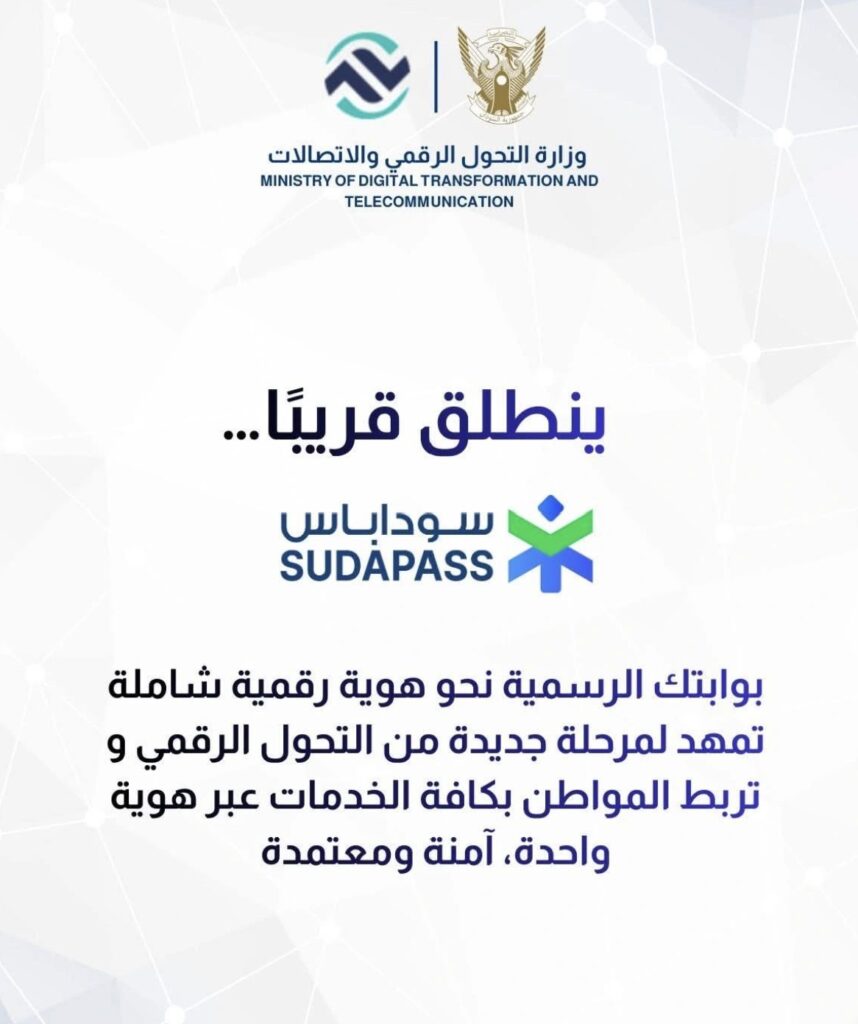
A recent announcement by the Sudanese government of plans to introduce a unified national digital identity system has been received positively, with experts opining that the move could play a major role in supporting the country’s road to recovery.
Sudan has faced political and security challenges for decades and the country’s socio-economic fabric has been badly touched as a result. For nearly three years now, the Sudanese Armed Forces (SAF) and the paramilitary Rapid Support Forces (RSF) have been locked in vicious fighting which has greatly weakened the economy and triggered a huge humanitarian problem.
For the recovery and resilience efforts to make sense, experts believe the country’s digital identity and broader digital transformation plans stand a chance of supporting meaningful growth.
Sudan’s government announced plans in December last year to launch SudaPass, a unified digital identity that will streamline identity verification and enable citizens to have access to a wide range of services from government institutions as well as from the private sector.
In a piece published by the World Economic Forum blog, two experts hold that the new system will be vital in addressing the lack of a reliable identity mechanism which has limited access to public services, financial inclusion, and social protection for millions of Sudanese.
To the experts, SudaPass will not only serve as a technical registry but as a trust-building tool for national recovery, facilitating the rebuilding of state capacity by improving coordination among government agencies; enabling service delivery across multiple sectors including social protection, education and healthcare; enhancing economic participation, and fostering citizen confidence in institutions.
Like with digital identity systems in other countries, the authors underscore the need for Sudanese authorities to put in place a system that goes beyond the technology. They believe the people must be actively involved in all stages of the process and trust must be placed at the centre of it all. Other considerations such as inclusivity, transparency and safeguards and partnerships without the imposition of any external control, must also not be ignored, they suggest.
With a trusted digital ID system in place, it is hoped that not only access to services will be facilitated, confidence in state institutions will be greatly renewed which is a key factor for the country’s political stability.
Most importantly, the experts warn Sudan against repeating mistakes seen in digital ID projects elsewhere, where such systems tend to become tools of exclusion or digital surveillance. Kenya is one example where the digital ID system has been labelled as exclusionary and with privacy issues.
According to Sudan’s Ministry of Digital Transformation and Communication, the launch of SudaPass is imminent. It shall be free and can be activated using one’s passport details and their face biometrics.
Recently during the 29th session of the Arab Telecommunications and Information Ministers Council, Sudan’s Digital Transformation Minister, Ahmed Dirdiri Ghandour, spoke about his country’s digital transformation efforts outlining its major pillars. He said the plan entails implementing a digital governance system which will make life easier for Sudanese, according to Fana News.
As part of its national digital transformation drive, the government also recently launched the Sudanese Cybersecurity Authority, charged with the responsibility of building a national cybersecurity framework for the country.
Related Posts
-
 November 13, 2025
 -
 February 6, 2025
 -
 November 25, 2025
 -
 October 24, 2025
 -
 August 19, 2025
 -
 July 21, 2025
Article Topics
digital government | digital ID | financial inclusion | government services | social protection | Sudan | SudaPass

Comments