
iFlytek launches AI glasses as privacy concerns grow over wearable cameras
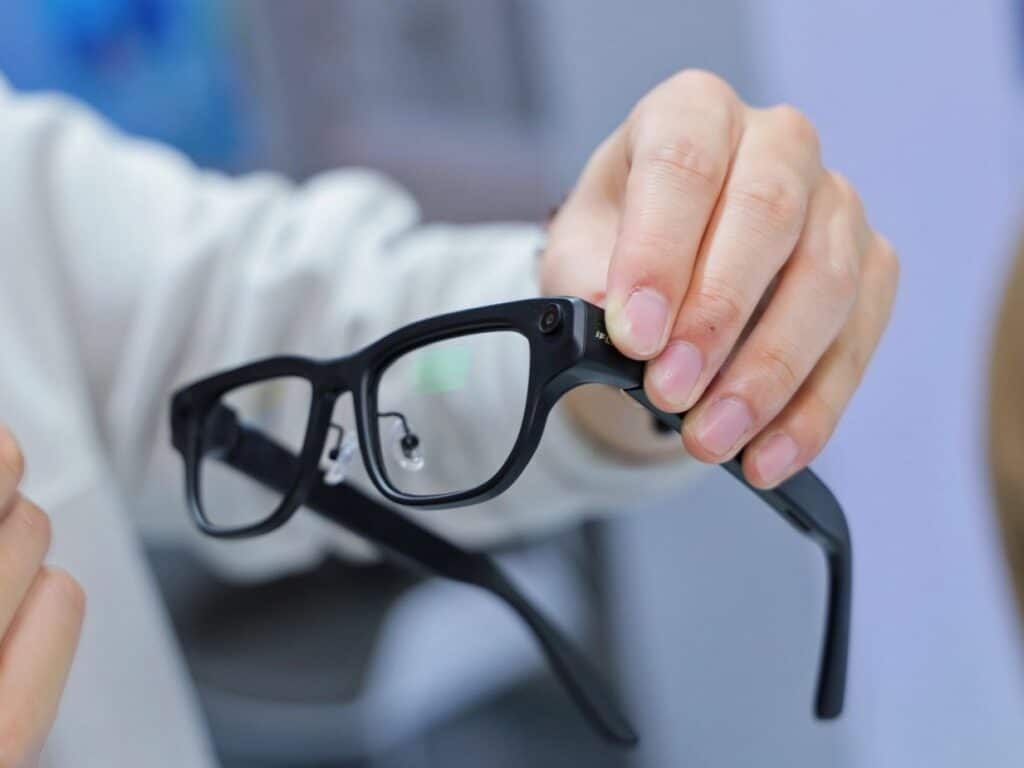
iFlytek has launched a new pair of AI smart glasses aimed at turning the category from a novelty device into a practical tool for translation, office work, and real-time communication, as the broader market for camera-equipped wearables faces growing scrutiny over privacy, recording, and facial recognition.
The Chinese AI company introduced the iFlytek AI Glasses at BEYOND Expo 2026 in Macau, positioning the device as a “super AI assistant” that can sit directly in front of the user’s eyes rather than inside a phone.
The company had previously showcased the glasses at MWC26 in Barcelona, where it described the device as combining real-time visual and voice translation in a lightweight wearable, and highlighted its lip-movement-based multimodal noise reduction system.
At the Barcelona launch, iFlytek tied the product to its broader “AI for Use” and “AI for Trust” strategy, which emphasizes practical AI deployment and secure, compliant architecture.
The launch comes as smart glasses are moving from experimental hardware into a more aggressive commercial phase. Meta’s Ray-Ban Meta glasses, developed with EssilorLuxottica, have already expanded into Asian markets including Japan and South Korea.
The iFlytek glasses weigh about 40 grams and use a resin waveguide display. They are priced at 4,299 yuan, or about $635.
iFlytek says the glasses support real-time translation across 122 languages, accents and dialects, including face-to-face translation, phone calls, online meetings, and augmented reality translation of text from menus, road signs, and presentation slides.
The more technically significant feature may be the company’s noise recognition system. iFlytek says the glasses combine a 5+1 microphone array, cameras, and bone-conduction technology with lip-motion recognition to identify the person the wearer is looking at and isolate that person’s speech in crowded environments.
The company describes the feature as a “hear who you look at” capability designed for airports, rail stations, exhibitions, and other noisy public spaces.
The function underscores both the promise and the sensitivity of the device.
On one hand, it could make translation and transcription far more useful in real-world settings where multiple people are speaking at once. But on the other hand, it depends on glasses that can observe faces, lips, and surrounding speech in public spaces, making the device part of a fast-expanding class of wearables that blur the line between personal assistant and ambient sensor.
iFlytek is also pitching the glasses as an office tool, saying the device includes an AI agent called GlassClaw that can transcribe meetings, organize information, draft and send emails, generate partnership proposals, plan travel, and execute other workflow tasks through voice commands.
The glasses also include an intelligent teleprompter that scrolls text based on the wearer’s speaking pace, aimed at speeches, interviews, and presentations.
The glasses further allow users to take photos and videos by voice command, ask AI questions about objects in front of them, and use translation features.
The same characteristics that make these products easier to use also make them harder for bystanders to understand and opens the door to myriad potential privacy issues.
A smartphone camera usually requires a visible gesture. Glasses can record what the wearer is looking at with far less obvious movement, which has raised concerns about illegal or unauthorized recording in cafes, streets, subways, meeting rooms, offices, and schools, as well as the possible capture of documents, whiteboards, computer screens, or private conversations.
There’s been rumblings on the part of some lawmakers about possibly needing to extend wiretap laws to “smart glasses.”
Meta has said its glasses include a front-facing LED that turns on during recording, and that camera functions are restricted if the indicator is covered. But reports that users can bypass or disable such safeguards have fueled doubts about whether indicator lights alone are enough protection once AI glasses become more common.
The larger controversy is facial recognition. Ray-Ban Meta glasses do not officially include facial recognition, but privacy concerns have intensified because camera-equipped glasses can be paired with external face search tools and public databases.
In 2024, two Harvard students demonstrated how Meta glasses could be modified to identify people and pull personal information from online sources.
Meta has separately faced pushback over reported plans to add facial recognition to its glasses.
More than 60 civil society groups warned Congress that adding face identification to Meta Ray-Bans would represent a major escalation in public surveillance, and senators have asked Meta how it would obtain consent, handle biometric data, test for bias, and prevent misuse.
Meta is also reportedly developing a broader wearable lineup, including several new AI glasses and an AI pendant that may include a camera.
Meta reportedly is also considering devices that would more tightly connect AI wearables with paid AI services, as the company seeks to build recurring revenue around hardware that can continuously perceive the user’s environment.
That competitive pressure is the backdrop for iFlytek’s launch. Google, Samsung, and Qualcomm are also working on extended reality and AI wearable ecosystems, while Apple and OpenAI are reportedly exploring their own AI hardware.
The market is moving toward devices that do more than record or display information. They listen, translate, summarize, recognize context, and increasingly act on behalf of the user.
For iFlytek, the bet is that smart glasses will finally become useful enough to wear every day.
For lawmakers and privacy advocates, it’s just another seemingly ubiquitous surveillance device that will be used for no good. The question then is whether society is prepared for consumer devices that look like ordinary glasses but function as AI-enabled cameras, microphones, and language translators in public and private.
Related Posts
-
 April 14, 2026
 -
 February 13, 2026
 -
April 1, 2026
-
February 20, 2026
-
March 17, 2026
-
May 21, 2026
Article Topics
biometrics | facial recognition | iFlyTek | Meta glasses | smart glasses | video surveillance | wearables

Comments