
UK launches digital ID for veterans with hopes of allaying public fears
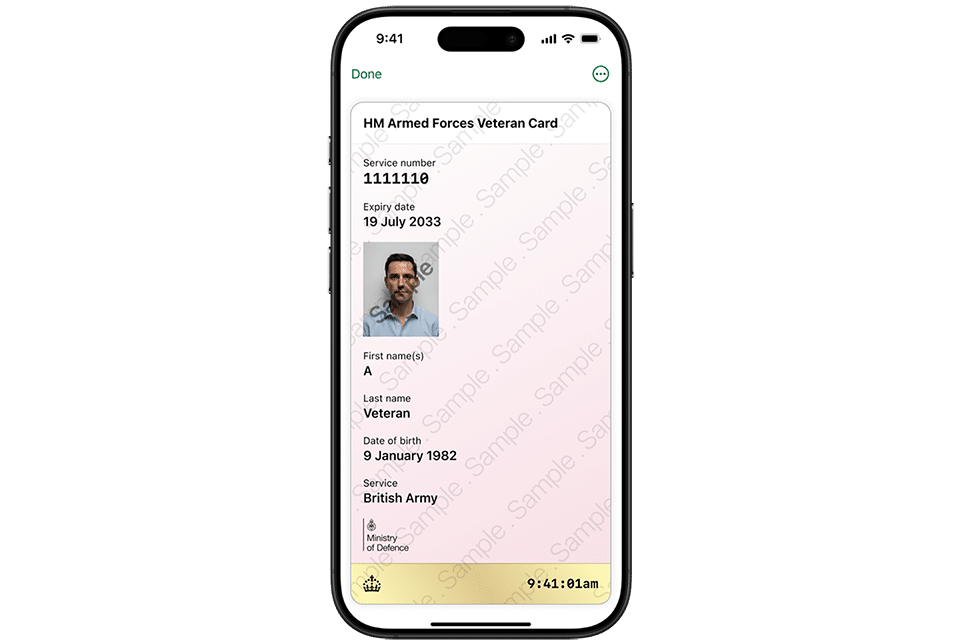
Digital Veteran Cards are launching today in the UK, where nearly 1.8 million people can now download a digital version of the credential to use for in-person status verification.
The HM Armed Forces Veteran Card gives bearers access to a range of services and discounts, including for healthcare, housing and career support.
The optional digital ID is stored within the GOV.UK One Login app, and therefore is accessed with a PIN or native device biometrics. It is the first credential issued by the government to be stored within the government-issued digital wallet, but will be followed by a mobile driver’s licenses (mDL), the government says.
The digital Veteran Card’s functionality will be expanded over time, according to the government announcement, to enable use in online transactions.
“The digital Veteran Card cannot yet be used for domestic air travel or getting a Veteran Rail Card. Full end-to-end programmatic verification will be rolled out over the next year, unlocking a wider range of uses both in person and online,” the Department for Science, Innovation and Technology explains.
“Over time, acceptance will increase as organisations update systems and staff training.”
Increasing acceptance of digital ID over time may be one of the goals, or at least hoped-for knock on effects, of the digital Veteran Card. The BBC reports that Digital Government Minister Ian Murray says the digital version is actually available to about 300,000 veterans, which could serve as “a really good case study to show that it does work.”
The launch follows through on a commitment made near the end of 2024 for the UK to issue up to 250,000 digital Veteran Cards this year.
Murray is one of several Labour ministers participating in an outreach campaign as the government attempts to save its proposed national digital identity scheme from a trouncing in the court of public opinion.
Details and consensus
Ministers and officials told MPs that the system will use a federated architecture to avoid a single point of failure, The Guardian reports. One MP reported that the main concern among about 50 lawmakers attending an information session was around cost, but no clarity on budgeting was offered at the meeting. One small detail emerging from the meeting is that the government does not intend the digital IDs to hold any data from the National Health Service.
The outreach campaign is expected to consist of two or three roundtable events per week, each organized around a particular theme.
A recent post from IBM addresses the challenge that the “privacy paradox” poses for national ID projects. The paradox is that technology offers the possibility to either empower or control citizens, raising a question: “how can governments build an effective digital identity infrastructure while also earning public trust?”
IBM Consulting Government Center of Excellence Partner Stewart Jeacocke suggests using a familiar foundation, like GOV.UK, integrating open standards, giving people control over their own data and embedding security from the beginning of the process. But the process playing out in the UK demonstrates that the familiarity of GOV.UK has limited value to public trust. Open standards are rarely raised by consumers and commentators, whether in media or parliament. The government’s proposal leaves room for significant user control.
What it does not do, at least yet, is tap into a consensus about what the UK needs, and how to achieve it.
Related Posts
-
 July 18, 2025
 -
 February 6, 2025
 -
 August 19, 2025
 -
 September 29, 2025
 -
July 2, 2025
-
 July 16, 2025
Article Topics
digital ID | digital trust | digital Veteran Card | digital wallets | Gov.UK | government services | identity management | One Login | UK | UK digital ID

Comments