
Democratic states face scrutiny over quiet DMV access by ICE
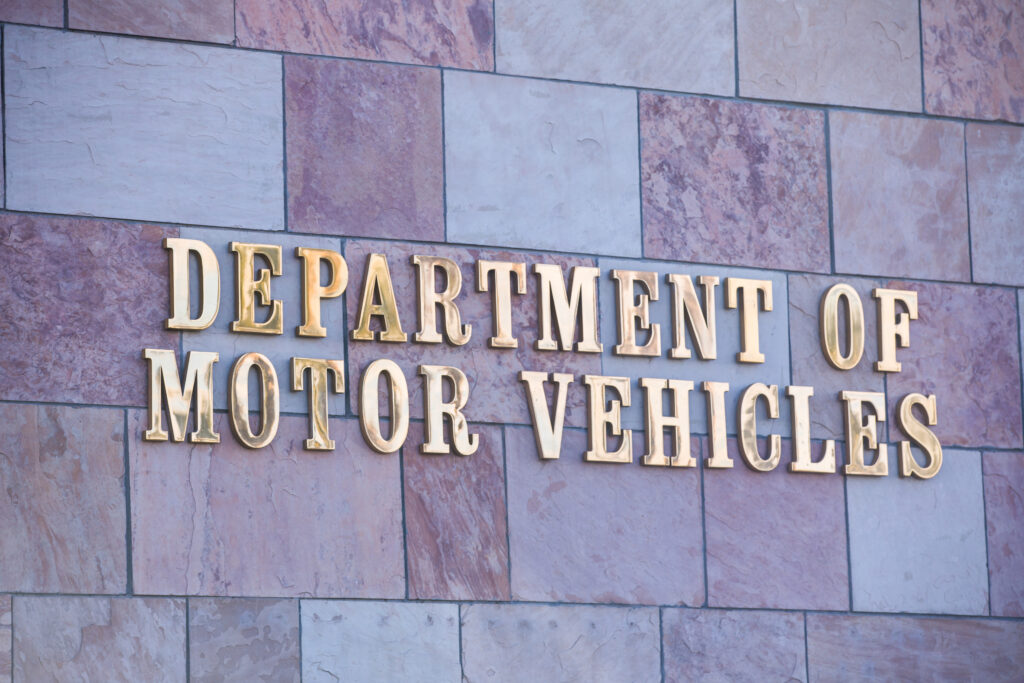
For years, many Democratic led states have touted themselves as sanctuaries for immigrants, promising not to assist federal deportation efforts or to share sensitive personal data with immigration authorities. But a recent congressional investigation has revealed that behind the scenes, vast troves of driver license information from some of those same states have been quietly accessible to U.S. Immigration and Customs Enforcement (ICE).
ICE has been accessing driver license information through an obscure law enforcement data-sharing network known as the National Law Enforcement Telecommunications System (Nlets).
Nlets is a nonprofit information-sharing network headquartered in Arizona that connects all 50 states, U.S. territories, federal agencies, and some international partners to exchange law enforcement, criminal justice, and motor vehicle data in real time.
The revelation came after Senator Ron Wyden of Oregon and Representative Adriano Espaillat of New York led a coalition of 38 Democratic members of Congress in sending letters to 19 Democratic governors warning them that their states may be “unwittingly providing ICE with near self-service access” to state driver license and vehicle registration databases.
They urged governors to conduct audits of their data-sharing practices and to “immediately block” federal immigration agencies from using their systems.
“This commonsense step will improve public safety and guard against Trump officials using your state’s data for unjustified, politicized actions, while still allowing continued collaboration on serious crimes,” the lawmakers wrote.
They added that “implementing blocks for other federal agencies whose agents now work on immigration enforcement” would not undermine investigative work into serious crimes, because states could still choose to share data on a case-by-case basis after reviewing data requests.
In the year prior to October 1, Nlets facilitated over 290 million queries for Department of Motor Vehicles (DMV) data, 292,114 of which were from ICE and 605,116 were from Homeland Security Investigations. These statistics represent federal and out-of-state requests for data because law enforcement agencies do not generally access DMV data about residents of their own states through Nlets.
ICE and its investigative arm, Homeland Security Investigations, together accounted for nearly 900,000 DMV-related queries over the year preceding October 1.
Lawmakers say many state officials do not fully understand how access is provisioned or which federal agencies can run queries, and they warned that default connectivity can undercut state policies limiting cooperation with immigration enforcement unless technical blocks are put in place.
States’ responses vary. New York, Illinois, Massachusetts, and Minnesota have implemented blocks on ICE access to DMV data via Nlets. Washington has “recently barred” ICE, and Oregon officials are said to be in the process of restricting access.
In other Democratic governed states, including some of the largest, the public record does not yet confirm an equivalent technical block. Lawmakers are asking governors to obtain query logs from their Nlets coordinators, publish transparency reports, and lock down pathways that allow ICE to pull person-identifying information.
The stakes are significant for jurisdictions that extended licensing to undocumented residents to improve road safety and reduce hit-and-run incidents. Those programs collected photographs, addresses, and other identifiers with the promise that the information would not be funneled into deportation pipelines.
The lawmakers’ letter and subsequent reporting suggest that without explicit safeguards, the plumbing of interagency data-sharing may supersede those assurances.
Legally, states operate under the federal Driver’s Privacy Protection Act, which restricts disclosure of DMV records but allows releases for law enforcement functions, a category that has historically encompassed immigration enforcement.
Wyden and the other lawmakers are pressing governors and Nlets administrators to narrow access in practice and are signaling interest in reforms that would better align statutory exceptions with state policies that limit cooperation with ICE.
Advocacy groups have long warned that the country’s data-sharing infrastructure enables immigration enforcement to draw on state repositories at scale, particularly when commercial brokers and multi-jurisdiction networks stand between the state and the federal requester.
They argue that transparency, auditable logs, and technical gating are prerequisites for states that want to ensure local policy choices are reflected in data flows rather than overridden by default connectivity.
Related Posts
-
 February 4, 2025
 -
 September 8, 2025
 -
 November 6, 2025
 -
 January 13, 2025
 -
 October 20, 2025
 -
 June 19, 2025
Article Topics
data privacy | data sharing | DHS | driver's license | ICE - U.S. Immigration and Customs Enforcement | identity document | immigration | law enforcement | United States

Comments