
Security, ruggedness key for reliable biometric physical access control tools
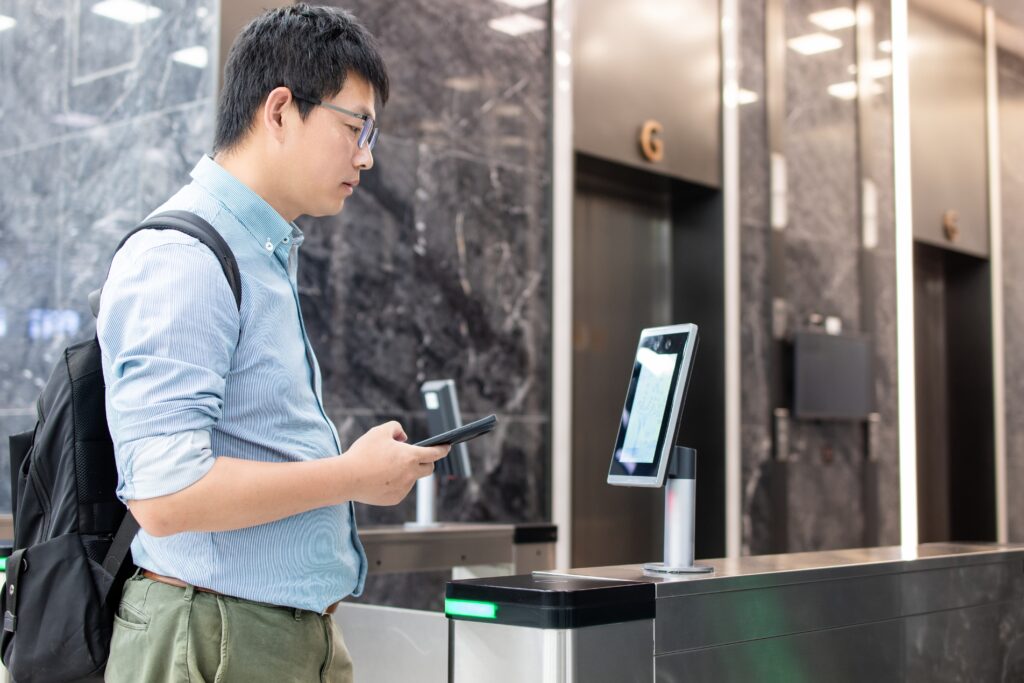
A recent webinar from Biometric Update and Goode Intelligence opens up the hood on the 2026 Biometric Physical Access Control Market Report and Buyer’s Guide, a free resource designed to help buyers know what to consider when choosing a biometric physical access control (BPAC) product.
The BPAC market is mature, but still growing. Use cases in offices, residential spaces and sports and entertainment venues continue to expand. New technologies make choices facing organizations increasingly complex in terms of deployment, and success is conditional on selecting the appropriate technology.
Alan Goode, chief analyst at Goode Intelligence, identifies four key drivers for biometric physical access control: security, convenience, cost savings, and tighter integration with other physical security applications. Moreover, “the ability to easily integrate biometrics into existing physical access control systems is a major driver for adoption,” offering greater potential for hybrid physical-logical access control systems.
Biometric door locks are a major part of growth for residential use cases, like large condo or apartment buildings. “There is growing availability of inexpensive biometric enabled door lock equipment that can be purchased from major retailers for under $50 and can easily be integrated by either the home owner or a locksmith,” says Goode. “A significant proportion of activity is aligned with the smart home movement, with connected and integrated home devices.” For this sector, he says, “support for Apple, Google, and Amazon home automation solutions is an important consideration.”
In addition to offices and residential use cases, key sectors include government, healthcare, transport, education, and technology, including data centers. These variously deploy biometrics to control access to harmful substances, authenticate workforces, integrate with time and attendance systems, secure facilities, and more.
Market forecasts for the sector predict growth, with 913.34 million projected users by 2028, and projected total revenue exceeding $9.84 billion.
Modalities for BPAC systems span the spectrum, from established and affordable fingerprint use cases to face biometrics, palm prints, palm vein biometrics, iris scans and multiple modality systems. As with any physical product designed for wear, a BPAC system must consider environmental factors like direct sunlight, high humidity or extreme temperatures.
Alan Goode says a good solution should be “able to process access requests in all physical conditions including low light and wet weather.” But that’s context dependent. “Fingerprint systems may struggle in high humidity or very dry conditions, while facial recognition may struggle with extreme lighting or face masks. Volume is also a concern. “Can the solution deal with peak times, for example the start of the business day for office use?”
Certifications demonstrate trust, and Goode says proven adherence to industry standards and best practices is also a must for reliable BPACS providers.
Eliminate tailgating, make more money
The reasons for choosing biometrics for physical access control span security, customer experience and revenue. Guests Allen Ganz of RealSense ID and Pratik Shah of Alcatraz AI both invoke the dream of the total walk-through experience, in which one’s face automatically opens doors and provides authorization.
Ganz, head of sales and strategy for RealSense ID points to Major League Baseball’s Go Ahead Entry program as an example that brings advantages for both the fan and the company. “The venue is not making money when people are standing in line,” he says. “They’re making money when fans are sitting in their seats ordering beers, hot dogs and merchandise.”
On the security side, a theme that surfaces repeatedly is how BPAC systems can address the problem of tailgating, or multiple people entering on one authentication. Advanced sensor technology can map body parts and movements to analyze how many people are moving through a gate at one time. Vision AI and security intelligence expand capabilities to make the overall security position stronger.
Ganz says that, “historically, biometrics answered a single question: is the person who they claim to be? But now we can really understand what’s happening around the authentication device.”
Most important thing is that the product works, anywhere, any time
For buyers, key considerations start with security – what Alcatraz AI’s hardware product lead, Pratik Shah, calls “being able to actually reliably work all the time across any of your environments, for anyone, across any geographic location.”
Ganz agrees, noting that “it boils down to the system’s ability to perform well in real-world conditions.” He gives the iPhone as an example of a tech device he doesn’t think about using – because it usually always works.
Convenience is a close second. “Something that is a drop-in addition or works off the shelf without needing complicated integrations or having to change your existing access control infrastructure is a pretty big thing,” Shah says.
Future-proofing, scalability and costs are also important factors. As is privacy – which is where Shah says the most trip-ups occur, as organizations focus on compliance rather than privacy as a core principle.
“It’s not just around being compliant with GDPR or BIPA or anything along those lines,” Shah says. “Of course, those are important. But it’s building privacy by default. It’s privacy by design.
Only collecting the data that you absolutely need. Making sure that you safeguard the user’s data with utmost care.”
Shah says “keeping a fairly good segregation between the ACS systems and the biometric systems is a really good model, because it allows us to be compliant regardless of which regulations come up.”
Modality-wise, he says “the beauty of the facial modality is it replicates what humans know intuitively to do, which is just look at something.”
Companies demo advanced mapping, instant deployment
Both firms showcase tools that give a glimpse of what the market has to offer.
RealSense’s latest solution, RealSense ID Pro, combines a number of features into a very small form factor. Multiple cameras allow the tool to capture in complete darkness or very strong back-light conditions. It offers onboard face matching and strong liveness detection. Optically, it provides a wide field of view in the vertical position. The firm also provides depth sensing vision AI for robotics, and it leverages aspects of this capability in its body part classification system and skeletal mapping mode.
Alcatraz AI’s Rock X combines liveness, facial authentication, tailgating protection, an intercom and video. Shah emphasizes the firm’s foundational approach to security. “Privacy is built in,” he says. “It’s never bolted on. Every user consents to enrolling. Data is always encrypted. It stays anonymous.” The product “drops into your existing access control infrastructure, with the Rock X sitting in between your badge reader and the panel. You can deploy it within hours, scale across sites, and stay future ready.”
What about identical twins?
Shah says the facial modality for physical access control has one remaining hurdle: identical twins. What if Chester and Lester both want to get into the same venue? Adding another modality could solve the problem. But Ganz says it’s not as daunting a challenge as it once was.
“It was more of an issue 10 years ago. It’s less of an issue today. You know, even identical twins, as children they’re truly identical and it’s hard to distinguish the two. But as you mature, as you age and you’re exposed to different environments, then even identical twins will separate.”
“What I tell people is that, if the mother can tell the difference between the twins, then then we can.”
Related Posts
-
 July 24, 2025
 -
 February 4, 2026
 -
 May 15, 2026
 -
 January 14, 2026
 -
October 30, 2025
-
 June 4, 2025
Article Topics
access control | Alcatraz AI | biometric authentication | biometrics | face biometrics | facial authentication | Goode Intelligence | market report | RealSense ID

Comments