
Co-Develop sets sight on new DPI milestones with DPGA affiliation
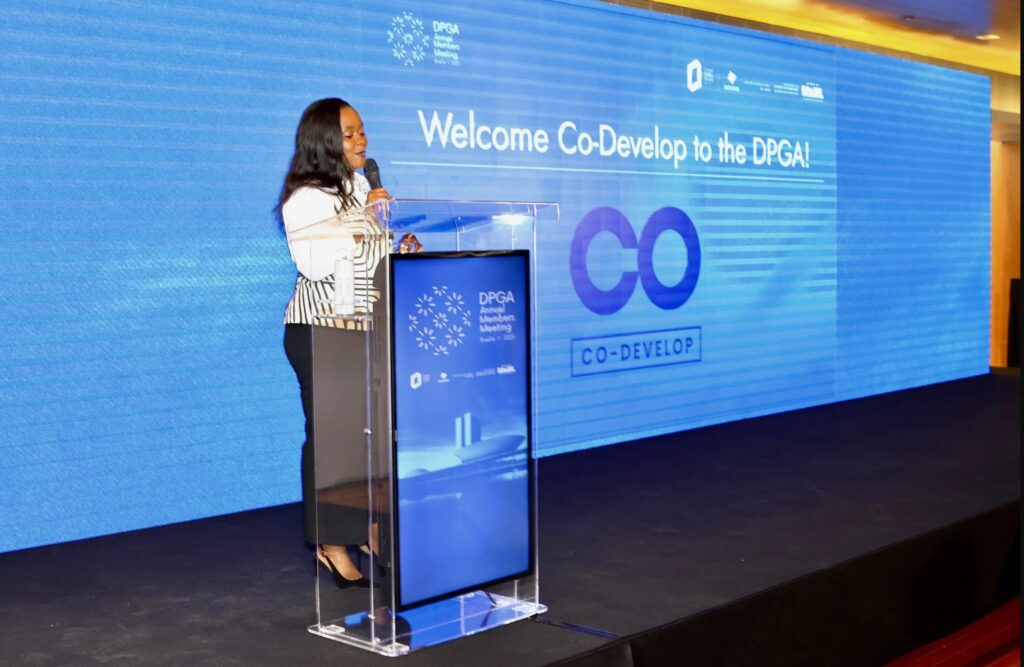
Nonprofit fund, Co-Develop, has announced its membership of the Digital Public Goods Alliance (DPGA), saying it will use the platform to strengthen its push for the deployment of safe and inclusive Digital Public Infrastructure (DPI) around the world.
With many nations increasingly engaged in building DPI, Co-Develop said its DPGA membership will bring on board “substantial commitments” that will positively influence how the DPGA contributes in facilitating the building and use of digital public goods (DPGs).
The DPGA is an initiative with multiple stakeholders whose key objective is to facilitate the discovery, development and use of DPGs to fast-track the attainment of the UN SGDs.
According to the announcement, Co-Develop will contribute to the DPGA’s 2025-2026 roadmap through four major commitments. These include fast-tracking the adoption of DPG at country level through targeted grant funding; pushing for the DPI safeguards framework through support for comprehensive policies that address the governance, design, deployment, and use of DPI; getting in more countries to adhere to the 50-in-5 campaign to demonstrate the transformative potential of DPI; expanding sector-specific DPG solutions such as those that can respond to concerns in agriculture, climate, and health, as well as enhancing its bridge-builder approach which entails connecting expertize and building useful partnerships.
Commenting on the DPGA membership, Co-Develop’s Chief Partnerships Officer, Tim Wood, noted that DPGs are central to countries intending to build DPI in a robust and rapid manner.
“By joining the DPGA, we are emphasizing Co-Develop’s commitment to help counties identify pathways to leapfrog traditional development trajectories using proven, open-source technologies,” Wood said.
CEO of the DPGA Secretariat, Liv Marte Nordhaug, expressed optimism that “Co-Develop’s membership to the DPGA will significantly strengthen the use and understanding of digital public goods for digital public infrastructure.”
“Their co-coordination of the 50-in-5 campaign, deep country engagement, and commitment to safe, inclusive, and interoperable digital public infrastructure directly advances our shared mission to empower governments with DPGs they can trust and adapt to meet their contextual needs,” she added.
Co-Develop emphasized that the membership will support a shift towards more “open-source, interoperable solutions that countries can own and adapt”, in a process whose impact would be gauged by the lives transformed through properly built DPI systems.
Co-Develop has made significant contributions to DPI development over the years, including its investment in the open-source civil registration platform OpenCRVS, and an ongoing partnership in the building of cross-border DPI in Southern Africa. The DPI investor is also contributing to policy discussions, together with Brookings, on the future of funding for digital systems around the world.
2025, a turning point for DPI development
Meanwhile, a map by the UCL Institute for Innovation and Public Purpose shows the expanding nature of DPI across the world, although the level of development, use patterns and challenges differ from country to country.
As of 2025, as highlighted in a UCL blog article, there were 64 countries with DPI-like digital ID systems, 97 with DPI-like digital payment systems and 103 with DPI-like data exchange platforms.
The figures show regional disparities with Europe having the highest concentration of mature DPI systems, while countries in other regions struggle with challenges. However, the UCL IIPP says that what matters more “is whether countries are making progress toward infrastructure that serves their populations effectively and equitably.”
As a way forward, the blog article proposes peer learning, stronger regional coordination and evidence-based investments as key aspects which countries must focus on as they advance their DPI journeys because these systems have become a cornerstone of governance.
Related Posts
-
 May 12, 2025
 -
 February 25, 2025
 -
 July 18, 2025
 -
 October 17, 2025
 -
October 20, 2025
-
 November 21, 2025
Article Topics
Co-Develop | digital ID | digital inclusion | digital public goods | Digital Public Goods Alliance DPGA | digital public infrastructure | SDG 16.9

Comments