
World token surges but biometric social media network is mostly more noise
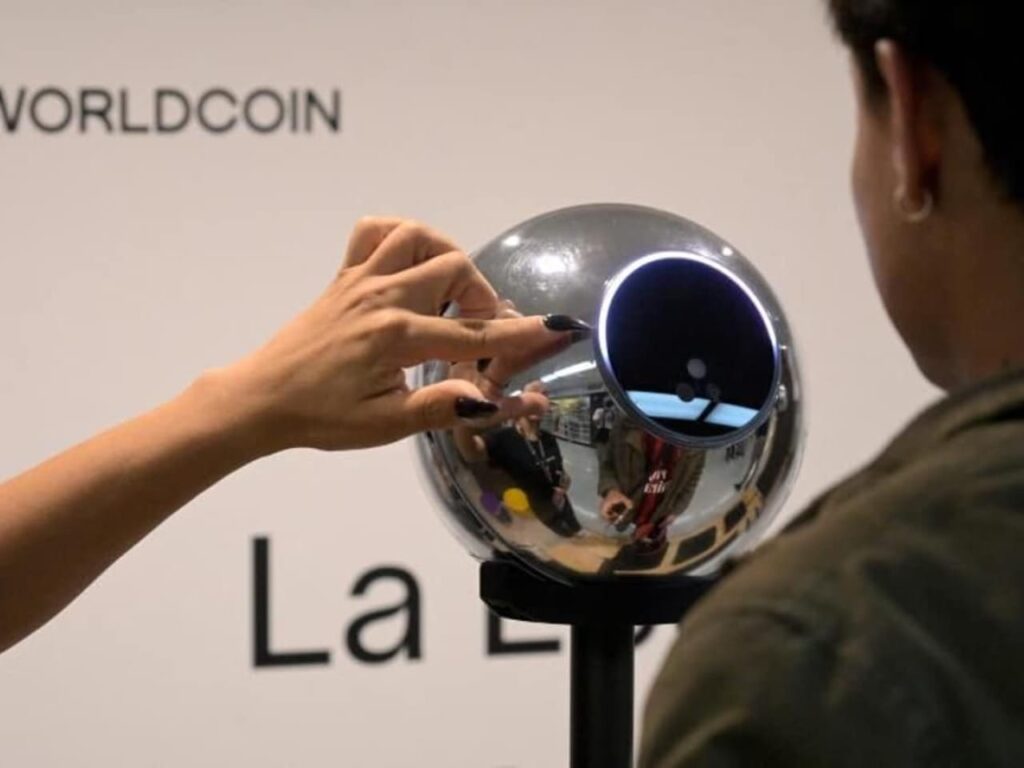
Coverage in Forbes has spiked interest in the World project and its associated cryptocurrency, WLD, after the business magazine reported that OpenAI is developing its own social media network, advertised as “a real-humans-only” platform. Sam Altman is the CEO of both OpenAI and World, and the article implies a more connected relationship between the two entities.
“The app is being developed by a very small team – fewer than 10 people,” says the piece, “and may include a biometric identity recognition element.”
The framing pits the would-be social platform against X, which Forbes says has become “an endless and toxic sump of the platform formerly known as Twitter,” thanks in large part to an invasion of AI bots. According to Coindesk, it prompted a 27 percent spike in the value of the WLD token this week, “even though it didn’t confirm any formal collaboration between OpenAI and World.” The company has reportedly also floated the idea that Apple’s FaceID could serve as the biometrics element.
Followers of Altman’s World project will know this is not technically news. A social component for the World network has been in the cards for some time, and everything in its product suite is tied to the unique World ID it generates from iris scans done with its Orb device. Proof of personhood is the fundamental service World and its tag-team partner, Tools for Humanity, offer.
Forbes notes that major social networks like Facebook and LinkedIn do not presently use biometrics to verify humanness. However, biometrics are not a secret; age assurance legislation has already introduced biometric verification and estimation processes into the social media ecosystem. Should proof of personhood become a priority for users, OpenAI will not be alone in promising it.
Big Tech bros battle bots, each other
Indeed, the amplified whispers about a World social network may have been spurred by a growing antagonism between Altman and his billionaire counterpart Elon Musk. The rift goes back to 2024 and involves lawsuits, open mockery, and a war of insults on social media, whereupon Musk urged his followers, “Don’t let your loved ones use ChatGPT,” and Altman responded by throwing shade at Musk over its LLM chatbot Grok’s ongoing production surge of nonconsensual, AI-generated “nudify” porn.
Both participants in the back-and-forth avow their hatred for bots. Per Forbes, “Musk declared war on bots prior to acquiring Twitter.” (It didn’t work.) Altman has referred to the “dead internet theory” – a conspiracy theory that says most of what happens on the internet now is algorithmically controlled bot activity designed to control the population.
In effect, Sam Altman has built his career and his fortune on building AI bots, while telling anyone who will listen that AI bots are going to flood the internet and make it unusable. The Tools for Humanity/World project is his proposed solution: a bet that the future he has helped usher in will be so intolerable and incomprehensible that people will be forced to prove who they are by submitting their biometrics to the World crypto network. That his visions might converge in the rumored OpenAI social network is no surprise.
World maintains that its processes, which leverage a decentralized model it calls Secure Multi-Party Computation (SMPC) are private and secure. It claims to only register users over 18, and publicly remains committed to working with regulators to address concerns. And the money keeps pouring in; last year, World raised $135 million from Andreessen Horowitz and Bain Capital Crypto to fund network expansion.
Forbes notes Altman’s success in bringing his products to a mass market. “OpenAI has a solid track record of building apps with significant customer virality,” it says. “ChatGPT, which brought AI to the mainstream, had 100 million users within two months of its launch and now boasts over 800 million.”
Given ChatGPT’s track record on user safety, and the parade of regulators that have taken issue with World’s biometric collection schemes and practices, that should worry anyone who believes biometrics’ future is dependent on adhering to strong privacy principles, and on treating humans as people rather than verified nonbots.
Related Posts
-
 June 4, 2025
 -
 January 29, 2025
 -
 January 31, 2025
 -
 June 3, 2025
 -
 February 24, 2025
 -
 October 10, 2025
Article Topics
biometrics | OpenAI | proof of personhood | social media | Tools for Humanity | World | World ID | World ID Orb

Comments