
3D contactless fingerprint biometrics shrink toward smartphone-ready format
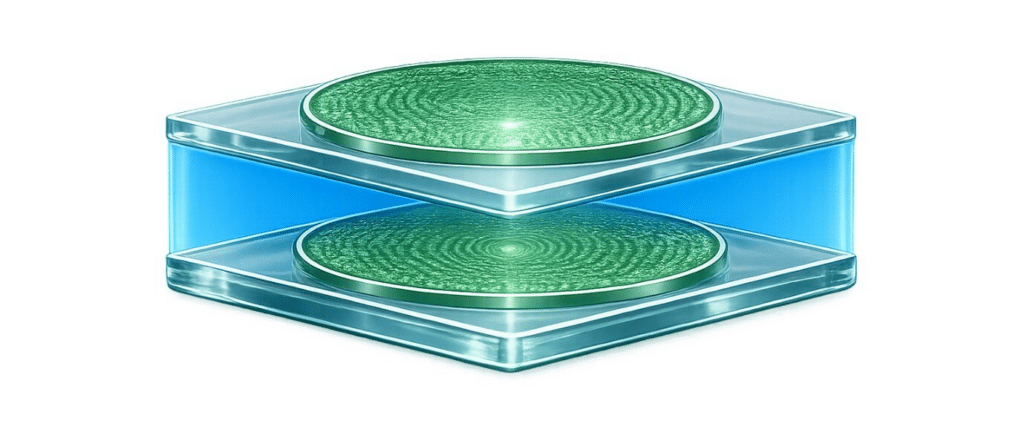
MetaOptics is embarking on shrinking biometric sensors as it unveils plans to build an ultra‑compact optical module for 3D, non‑contact fingerprint recognition.
It’s a technology aimed at future smartphones and other space‑constrained consumer devices. The Singapore‑listed company is developing the module with a national semiconductor research institute, a partnership aiming to speed up the transition of advanced optical research into commercial biometric and digital identity systems.
The project builds on MetaOptics’ existing 3D sensing work but focuses on replacing bulky mechanical focusing components with electronically tunable metalenses. “This programme builds directly on the insights gained from our first-generation 3D non-contact fingerprint module,” says Dr. Tobias W. W. Mass, VP of systems at MetaOptics.
“With this next-generation tunable metalens solution, we are targeting a significant reduction in module size down to approximately a 5mm encapsulation, enabling mounting in space-constrained consumer electronics such as 5G smartphones and notebooks.”
The design is a flat‑lens optical stack made from two nanostructured metalenses separated by a liquid‑crystal layer roughly the thickness of a human hair. By applying voltage to the liquid crystal, the module can adjust its optical properties on the fly, enabling autofocus‑like behaviour without moving parts. The result is a 1.65mm optical stack within a target module thickness of around 5mm.
The demonstrator uses a 532nm green light source, a monochrome sensor and dedicated control electronics to capture high‑resolution 3D fingerprint features. MetaOptics says this “active” optical architecture, which is capable of tuning itself for optimal capture, offers stronger security and is non-contact compared to today’s widely used 2D contact‑based fingerprint biometric sensors.
Mass says the design draws on MetaOptics’ experience with liquid‑crystal spatial light modulators, a class of compact electro‑optic systems that require precise, repeatable tuning. He argued that the electronic approach offers better scalability and yield than mechanical focusing systems such as VCM actuators.
The company plans to showcase the new module at CES 2027 in Las Vegas next January. MetaOptics showed off a contactless 3D biometric sensor using its proprietary metalens technology at CES 2025.
Related Posts
-
 February 10, 2026
 -
 April 1, 2025
 -
 December 9, 2025
 -
 September 9, 2025
 -
 December 1, 2025
 -
 December 5, 2025
Article Topics
3D contactless fingerprint scanner | biometrics | consumer electronics | contactless biometrics | fingerprint biometrics | metalens | MetaOptics | smartphones

Comments