
Thales supplier Linxens comes under scrutiny by UK’s Labour party
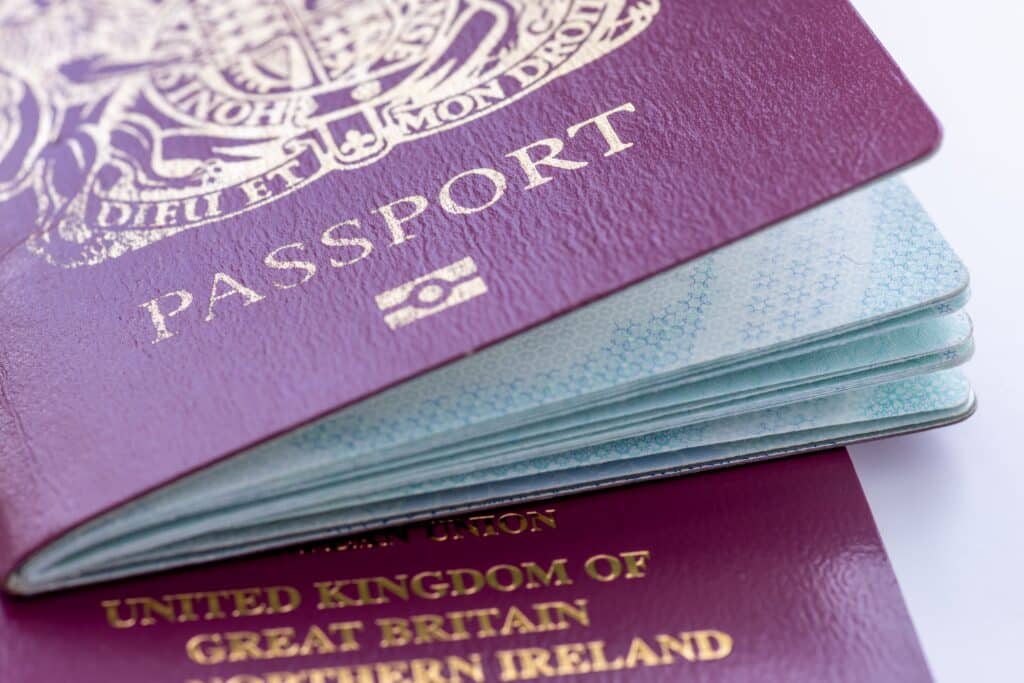
Passport component supplier Linxens is facing scrutiny over ownership links to Chinese investment firms that have been placed on the U.S. government’s Entity List. Linxens produces components for e-IDs, biometric smart cards and the inlays used in e-passports. The French company supplies these parts for UK and EU biometric passports.
The Financial Times reports that the holding company that owns Linxens was created by a consortium of investors led by Wise Road Capital and JAC Capital, two private equity companies based in Beijing.
Wise Road Capital and JAC Capital were placed on the U.S. government’s “entity list” for restrictions on trade in 2024 because of national security concerns related to alleged involvement with “sensitive semiconductor manufacturing capability” and the Chinese government trying to buy such entities.
In the UK, the Labour party’s chair of a business and trade committee Liam Byrne told the Financial Times that the newspaper’s report on Linxens would be added into an investigation the committee is conducting on China and the UK economy.
In 2024, the UK government instructed another consortium led by JAC Capital to sell its stake in Scottish semiconductor company Future Technology Devices International (FTDI) after it invoked the National Security and Investment Act.
In a comment, Linxens said that its inlays are made in Thailand at a “secure facility that holds all relevant certifications” and that it undergoes regular audits by third parties. Linxens manufactures the passport inlays that hold the chip and antenna used in biometric passports, while the chip itself is supplied by another manufacturer. These inlays are found in UK passports, which are manufactured by Thales, for which Linxens is a supplier.
Thales has held a contract with the UK Home Office to provide passports since 2018. Thales personalizes the inlays with passport holders’ data in the UK. In a comment, the Home Office said that no personal data leaves the UK and that “all confidential encryption technologies are controlled and secured by His Majesty’s Passport Office.” The department said it does not consider Linxens’ role in the supply chain to pose a security risk.
The Financial Times reports that Wise Road and JAC Capital’s combined share in Linxens’ holding company is below 50 percent. This means Linxens’ holding company is not affected by the U.S’. export restrictions which automatically apply to majority-owned subsidiaries of companies on its “entity list.”
Linxens has contracts with a Czechia state-owned printer for chip-based components for identity cards and with France’s Imprimerie Nationale for passport inlays. The Czech printer stressed that the chip was made by a “trusted Dutch company” and that Linxens had satisfied all legal requirements and that no security risks have been found. French officials had not responded.
Thales declined to comment, citing contractual confidentiality.
The scrutiny comes as the UK Home Office seeks a supplier for its next passport manufacturing and personalization contract, which will replace the agreement currently held by Thales. The new contract is valued at an estimated £480 million (US$649 million) excluding VAT, making it one of the UK’s most significant identity infrastructure procurements.
Related Posts
-
 August 7, 2025
 -
 March 19, 2026
 -
 August 1, 2025
 -
 December 1, 2025
 -
 November 13, 2025
 -
 December 5, 2025
Article Topics
biometric passport | China | Home Office Biometrics (HOB) | Linxens | national security

Comments