
Oklahoma Supreme Court asked to halt driver license data transfer to national system
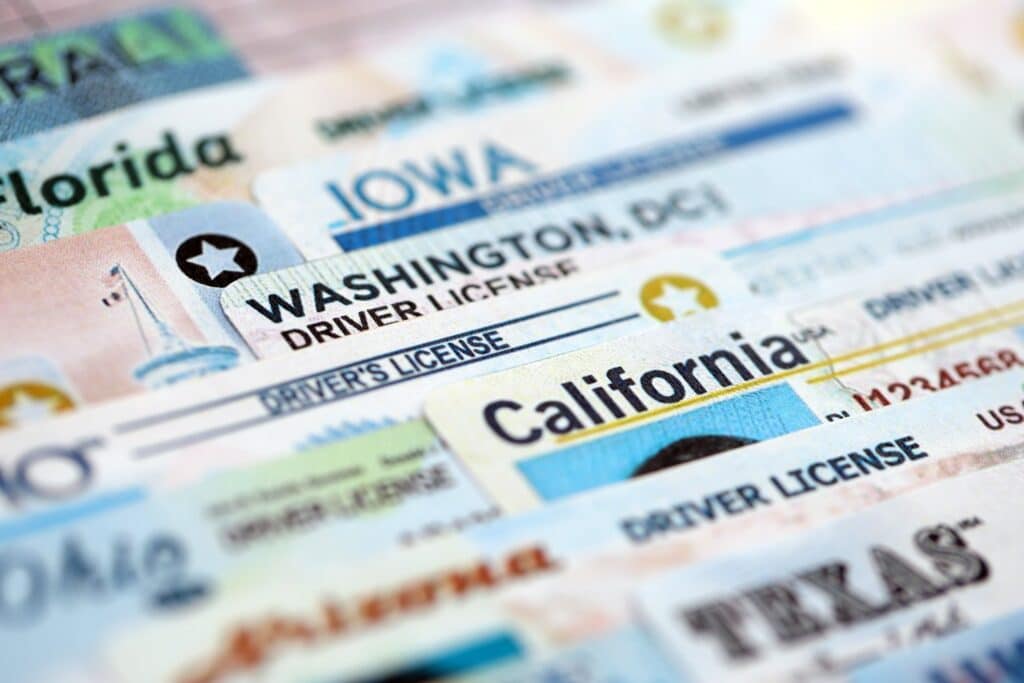
Oklahoma lawmakers have asked the state Supreme Court to immediately block the transfer of driver’s license and identification card data to a national interstate data exchange run by the American Association of Motor Vehicle Administrators (AAMVA).
The lawmakers argue that the planned transmission exceeds statutory authority, violates state privacy protections, and collapses a key distinction that Oklahoma law makes between REAL ID–compliant and noncompliant credentials.
The lawsuit places Oklahoma at the center of a broader national debate over how much control states retain over identity data once they integrate with interstate systems built and operated by AAMVA.
In their filing Tuesday with the Oklahoma State Supreme Court, a group of Republican state senators and representatives led by Sen. Kendal Sacchieri asked the court to assume original jurisdiction and issue an emergency stay preventing Service Oklahoma, the state’s motor vehicle agency, from transmitting credential holder data to AAMVA’s State-to-State (S2S) system.
STS is a centralized pointer-based architecture that allows motor vehicle agencies to determine whether an individual holds a credential in another jurisdiction and to exchange driver history information.
The transfer to STS is scheduled to occur in February as part of Oklahoma’s planned onboarding to the multistate data exchange.
The lawmakers argue that Service Oklahoma has moved forward with what they describe as a programmatic, bulk transmission of identity data without explicit authorization from the state legislature.
In doing so, they contend, the agency has crossed a constitutional line by making a fundamental policy decision reserved to lawmakers and has created an irreversible loss of control over Oklahomans’ personal identifying information once it enters a system administered by a private association.
According to the filing, Oklahoma law establishes two distinct credential tracks. REAL ID–compliant credentials meet federal standards for use in federal facilities and air travel, while REAL ID–noncompliant credentials are clearly marked as not acceptable for official federal purposes.
The legislature, the petitioners argue, deliberately preserved this choice and imposed limits on how personal and biometric data associated with those credentials may be shared, particularly with the federal government or outside entities absent a specific statutory mandate.
The dispute centers on AAMVA’s State-to-State system, which AAMVA characterizes as a fraud-prevention and record matching tool. Oklahoma lawmakers, though, argue that participation requires ongoing synchronization of credential holder data into a multijurisdictional environment that fundamentally alters how identity records are stored, queried, and relied upon across state lines.
That concern is amplified by the role AAMVA already plays as an intermediary between state motor vehicle agencies and federal identity verification systems.
One of AAMVA’s core services, the Verification of Lawful Status (VLS) system, is designed to interface directly with the Department of Homeland Security’s (DHS) Systematic Alien Verification for Entitlements (SAVE).
Through this system, identifying information submitted by state agencies is routed through AAMVA to DHS databases to confirm immigration or citizenship status for licensing and identification purposes.
In practice, VLS functions as a technical gateway between state credential systems and federal verification infrastructure. States contract directly with AAMVA for access, and AAMVA is treated as the authorized provider of the SAVE interface for motor vehicle agencies.
While DHS operates SAVE, AAMVA controls the integration layer, messaging standards, and operational workflows that determine how and when state identity data enters federal verification processes.
This arrangement has made AAMVA a central component of REAL ID compliance and lawful status verification nationwide, even though it is not itself a government agency.
The Oklahoma lawmakers do not challenge the existence of SAVE itself, but they argue that the architecture matters. By transmitting credential data into AAMVA-administered systems that are expressly designed to be interoperable with federal programs, they contend that Service Oklahoma is enabling downstream federal access to state identity data without the clear legislative authorization Oklahoma law requires.
In their view, once data is uploaded into AAMVA systems, it becomes part of an interstate infrastructure that supports multiple use cases beyond simple license verification, including lawful status checks tied to DHS databases.
The lawmakers’ lawsuit emphasizes that AAMVA itself has publicly stated that participation in State-to-State is not required for REAL ID compliance, and that that undercuts any claim that federal law compels Oklahoma’s participation.
The REAL ID Act, the lawmakers argue, sets conditions for federal acceptance of state credentials but does not require states to upload identity data to a centralized or quasi-centralized interstate system, nor does it authorize state agencies to bypass their own legislatures when making that decision.
In their brief, the lawmakers repeatedly stress that once Oklahoma credential data is transmitted to AAMVA, it cannot be clawed back. Other states may query or rely on the data, and the practical ability of Oklahoma residents to control or limit downstream use effectively disappears.
That, they argue, constitutes immediate and irreparable harm to both individual privacy interests and the legislature’s constitutional authority to set fundamental data governance policy.
The lawmakers are also challenging how Service Oklahoma proceeded. According to the filings, the decision to onboard to SVS was implemented through internal policy or operational directives rather than through formal rulemaking or express legislative approval.
That approach, they argue, violates the Oklahoma Administrative Procedures Act and improperly substitutes agency discretion for legislative policymaking on a matter that affects every credential holder in the state
The petition names Service Oklahoma and its executive director, Jay Doyle (who was tapped in 2021 by Governor Kevin Stitt to spearhead the state’s delivery of Real ID) as respondents, and asks the court not only to issue a temporary injunction, but also to ultimately declare that the agency lacks authority to transmit driver’s license and identification card data to AAMVA absent express statutory authorization.
The relief requested would prohibit uploading, synchronizing, or otherwise disclosing Oklahoma credential data to the STS system or any successor platform.
Founded in 1933, AAMVA is a nonprofit association representing state and provincial motor vehicle administrators. Over time, it has become the technical backbone for interstate license verification, fraud detection, and lawful status checks tied to federal programs such as REAL ID and SAVE.
States typically contract directly with AAMVA for access to these services, which are treated as single-source offerings rather than competitively bid technology procurements.
Critics have increasingly questioned whether that structure effectively outsources core identity governance functions to a private association that is not directly accountable to voters or state legislatures.
The Oklahoma lawsuit echoes those concerns, framing the issue not as a routine IT integration, but as a major policy decision about how identity data is pooled, shared, and relied upon nationwide.
Related Posts
-
 February 14, 2025
 -
 July 28, 2025
 -
 February 10, 2025
 -
 September 22, 2025
 -
 July 31, 2025
 -
 July 10, 2025
Article Topics
AAMVA | AAMVA State-to-State (S2S) | AAMVA Verification | biometric data | data exchange platform | DHS | driver's license | identity document | identity verification | Oklahoma | Real ID

Comments