
South Korea’s SK Telecom joins FIDO Alliance board
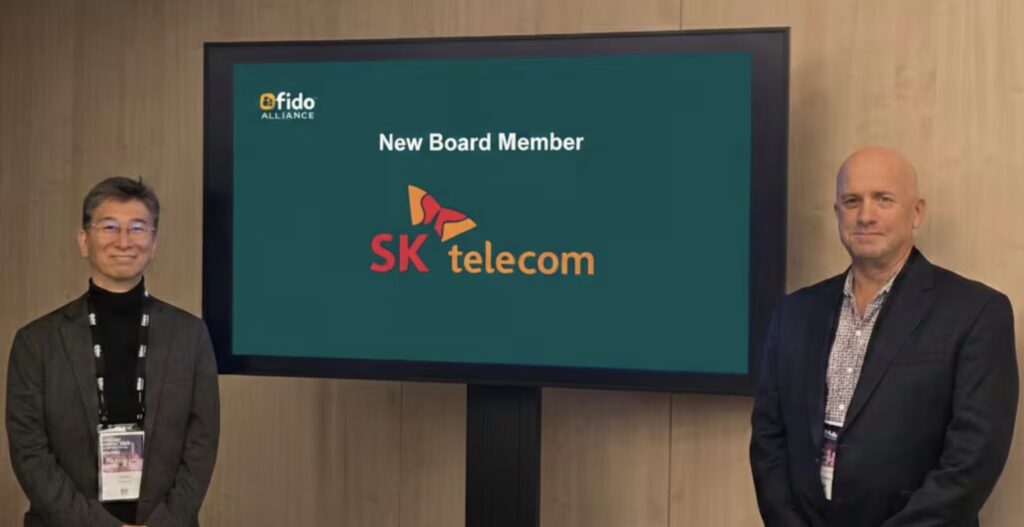
SK Telecom has been appointed to the board of the FIDO Alliance, the global body that develops authentication and security standards.
The major South Korean telco began its board activities at the Alliance’s general meeting in Paris on February 4.
The FIDO Alliance’s membership includes the likes of Amazon, Apple, Google, Meta and Microsoft. The body promotes passwordless authentication technologies including biometrics. FIDO’s standards aim to reduce risks like phishing and account hijacking by eliminating stored passwords.
Andrew Shikiar, CEO of the FIDO Alliance, welcomed the appointment, noting that SK Telecom’s expertise could help advance global authentication standards. Lee Jong-hyun, head of SKT’s Integrated Security Center, said the company intends to use its board role to strengthen global standards and build a more secure authentication environment.
At the annual Identity & Policy Forum, Shikiar highlighted the mainstreaming success of passkeys in his address, estimating that more than four billion passkeys are now being used to secure sign-ins around the world. The executive believes digital wallets and digital credentials are the next phase of the identity life cycle.
However, Shikiar believes a fragmented ecosystem inhibits progress. Industry stakeholders hope the FIDO Alliance can do for digital credentials what it did for passkeys, with the body aiming to add value to the digital credential space, with their first deliverable being a wallet certification profile.
Asia-Pacific pushes passwordless authentication as cyberattacks surge
Asia-Pacific has emerged as the most targeted region for cyberattacks, accounting for 34 percent of global incidents in 2024, according to IBM’s X-Force 2025 Threat Intelligence Index. Valid account abuse was identified as the leading entry point.
In an editorial in The Edge Malaysia, Edwardcher Monreal, a principal solutions architect at HID, writes on the need for passkeys to resist phishing and reduce reliance on vulnerable password systems.
Across Asia-Pacific, governments are taking action. Singapore’s Monetary Authority has updated its cyber resilience framework to discourage password use, while the Philippines’ Anti-Financial Account Scamming Act requires banks to phase out SMS and email OTPs by 2026. Australia’s Prudential Regulation Authority and Cyber Security Centre now list phishing-resistant MFA as a preferred control, and Japan’s Financial Services Agency is moving to mandate FIDO2 passkeys.
Industry adoption is accelerating. Studies from the FIDO Alliance show enterprises using passkeys report fewer login issues, faster access and reduced help desk demand. While challenges remain in environments where mobile devices cannot be used, flexible approaches — such as employee badges that serve both physical and digital access — are emerging.
Related Posts
-
 November 17, 2025
 -
 March 13, 2025
 -
 April 15, 2025
 -
 December 19, 2025
 -
July 30, 2025
-
 December 18, 2025
Article Topics
APAC | biometrics | digital ID | FIDO Alliance | passwordless authentication | SK Telecom | South Korea

Comments