
South Africa establishes fully digitalized ID issuance system in local banks
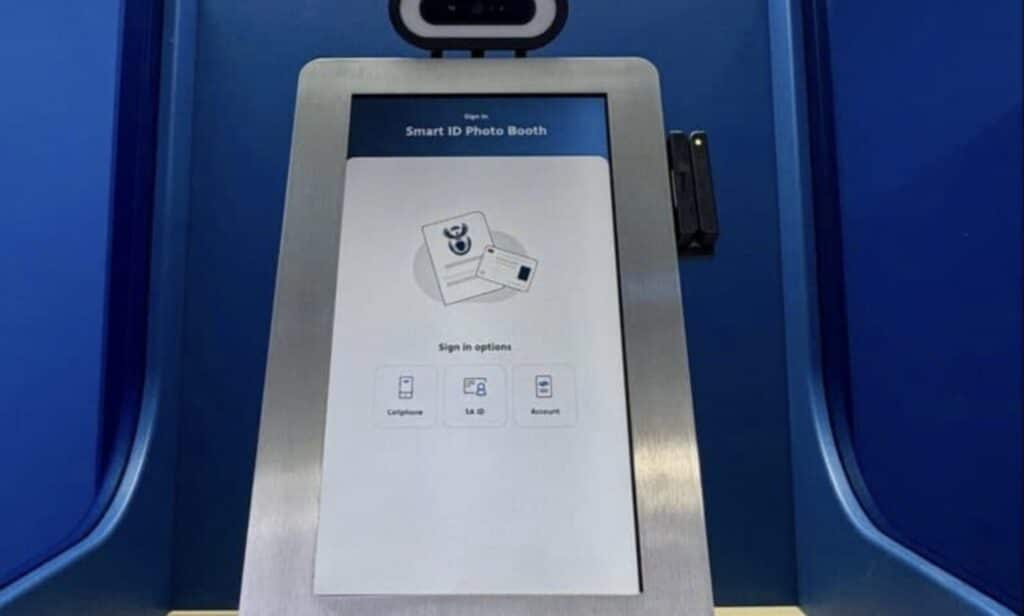
South Africa’s Department of Home Affairs has announced that Smart ID cards can now be obtained directly from many banks under a new digital partnership model.
The first phase of the process has already gone live at many branches of concerned banks, the department disclosed in a recent government announcement. Nine South African banks are involved in the initiative at the moment.
Many other branches are scheduled to go live on March 12 and 13 for the case of Capitec Bank and Standard Bank, as the hope is to get 17 live branches before the week runs out. Last year, some banks expressed the wish to open more branches in order to provide digital ID services under the Home Affairs partnership.
According to Home Affairs, the new model will greatly facilitate the process of acquiring a Smart ID card. Applicants will not have to move long distances to do this anymore; they can easily apply for a digital ID from their local bank branch where they reside, in just a matter of minutes.
This concerns green ID book holders who want to get a Smart ID for the first time, or those who need to replace a lost or damaged card.
Bringing the Smart ID application process to banks, officials say, will also greatly reduce queues that were often witnessed at the 349 Home Affairs offices in the country.
To the department, the move “signals our commitment to this new era in which Home Affairs services move closer to the people, through digital and automated channels that eliminate the scope for manipulation, while delivering unparalleled efficiency.”
Home Affairs explained that unlike the previous partnership model, which had just small ID service offices inside bank branches, this new one establishes a fully digitalized ID issuance system through which banks can “connect directly to Home Affairs systems through a secure API-based Digital Gateway.”
Authorities indicate that the rollout of the new system will happen in phases, but the objective is to make it available everywhere around the country by next year. This as the government plans to accelerate the transition from the green ID book, which is prone to fraud and still used by an estimated 16 million South Africans.
In his remarks regarding the new partnership, Home Affairs Minister Leon Schreiber said: “Today signifies by far the biggest milestone to date on our reform drive to deliver Home Affairs@home. By embracing digital transformation, we are redefining what public service delivery looks like in the modern age.”
“The fact that we have already reached this milestone after just 20 months in office means that we are on track to deliver on our goal to invert the principle of how government services work: instead of forcing people to go to Home Affairs to endure long queues and manual processes, we are using technological security and efficiency to bring Home Affairs to the people, delivering access, inclusion and dignity for all,” he added.
Regarding its future plans, Home Affairs says it intends not only to take the number of participating bank branches to 1,000 by 2029, but also to expand the range of identity services accessible at banks through mobile apps.
The move is part of South Africa’s government digital transformation drive. Last month, President Cyril Ramaphosa announced that a national digital ID system will be launched in the course of this year as part of a digital public infrastructure (DPI) plan dubbed MyMzansi.
Related Posts
-
 September 29, 2025
 -
 July 9, 2025
 -
 November 25, 2025
 -
 September 12, 2025
 -
 August 19, 2025
 -
 July 16, 2025
Article Topics
digital government | digital ID | government services | identity document | identity management | South Africa

Comments