
Biometrics at scale: EES setbacks meet growth push
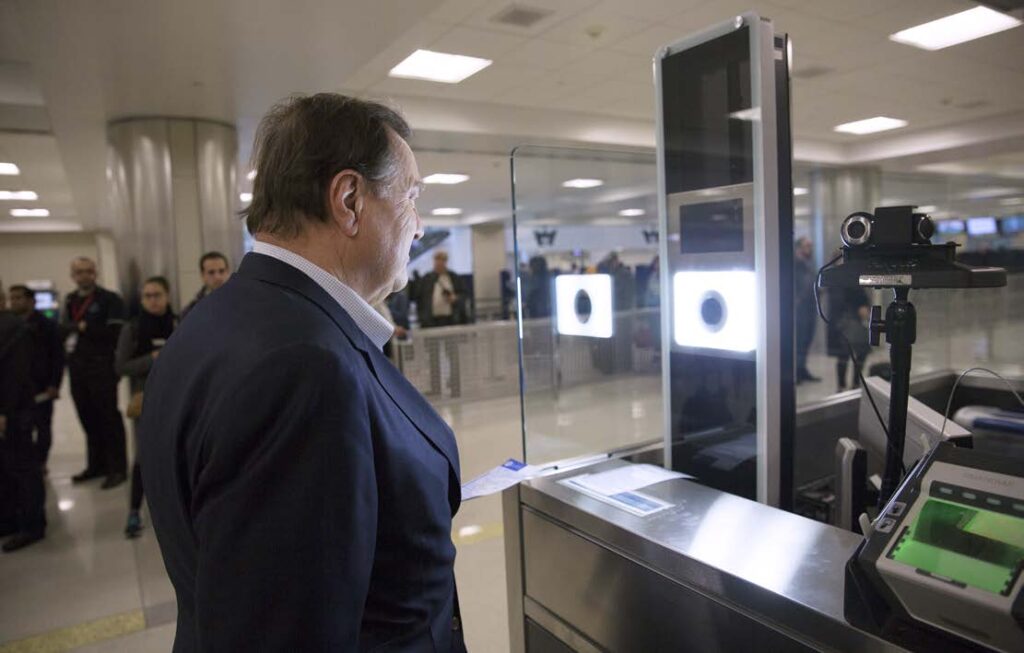
The effectiveness of biometrics deployments at scale can be prone to failures of procedure or coordination, as travelers to Europe found with EES newly in place this week. But as other top stories this week on Biometric Update show, scale can also enable biometrics providers to reach new growth opportunities. With the scale-up of age assurance in the spotlight at the annual GAASS in Manchester, new guidance on making mDLs more useful, and of course, the AI explosion, opportunity is knocking at several doors at once.
Not ready: EES
The first week of Europe’s EES was marred by delays, despite widespread suspension of the biometrics enrollment that underpins the whole system. Airports and airlines responded to the launch by calling for more flexible implementation rules, but appear in some cases to have botched its staffing and organization.
Ready: Relying parties and EU age assurance app (but what about the lingo?)
The Global Age Assurance Standards Summit 2026 was held in Manchester this week, with relying parties like Meta, Tik Tok, Epic Games and tobacco company Phillip Morris International taking a much larger role in this year’s event. Biometric Update reported from on location, and also gave a presentation on the relationship between stable language and trust.
Another presentation unveiled the “technically ready” EU white label age verification app blueprint. Representatives from Scytáles and T-Systems explained the vision for the app and how integration should work, and shared a demo of the biometric process for age proof creation.
Ready for more: digital payments in Africa
Mastercard and Ethio telecom discussed ways to boost cross-border digital payments and enable a new generation of fintech solutions. The partners’ talks have focussed on improving digital financial services in Ethiopia and across Africa as both a financial inclusion and joint market opportunity.
FPC and ROC CEOs on scaling up
Fingerprint Cards CEO Adam Philipott tells Biometric Update in a feature interview that his company’s merger with Precise Biometrics gives it the scale to make strategic changes, on top of reduced costs. Those changes could include acquisitions to generate inorganic growth while creating a full-stack offering.
ROC CEO Scott Swan joined the Biometric Update Podcast to talk about how his company plans to use its $24 million IPO as infrastructure to accelerate its domestic market growth. He says national security is ROC’s target area, but also sees opportunities providing its ABIS to law enforcement and its video analysis for commercial security.
AI and ID collide
Secure authentication has already been made more difficult by AI, and an anticipated flood of AI agents further complicates the landscape. As a company with its commercial success largely dependent on how trusted agents are, OpenAI has joined the FIDO Alliance to contribute to the protocol’s agentic extension.
Zero-knowledge proofs are the way past the threat generative AI poses to traditional identity verification, Authologic Co-founder and Chief Strategy Officer Jarek Sygitowicz writes in a Biometric Update guest post. ZKPs based on cryptographic proofs generated from mDLs and digital wallets avoid over-sharing data, and could gain popularity through use cases like Spain’s age verification law.
A new OpenID working group will seek to extend identity proofing assurance to relying parties to meet KYC requirements. The eKYC and IDA WG is a response to NIST NCCoE’s guidance on digital identity and mobile driver’s licenses for financial institutions.
The UK government sees public service delivery through digital ID as a lever against populism. But an update on the Information Gateway that sits between private sector DVS providers and public sector data does not clarify whether DVS providers will have the same credential-hosting rights as the GOV.UK Wallet.
New “Best Practice Guidelines and Minimum Security Standards for Identity Documents” from the Document Security Alliance, Intergraf and the Secure Identity Alliance present a framework for making IDs more reliable and verifiable, in large part by integrating physical and digital security elements.
Please let us know in the comments below or through social media if you see any podcasts of other content that you think we should share with the people in biometrics and the digital identity community.
Related Posts
-
 August 4, 2025
 -
 July 29, 2025
 -
February 11, 2026
-
 October 7, 2025
 -
 January 7, 2026
 -
May 22, 2025
Article Topics
biometric | digital ID | digital identity | identity verification | week in review

Comments