
Tony Allen’s Age Assurance in Practice insists age checks are more than a moment
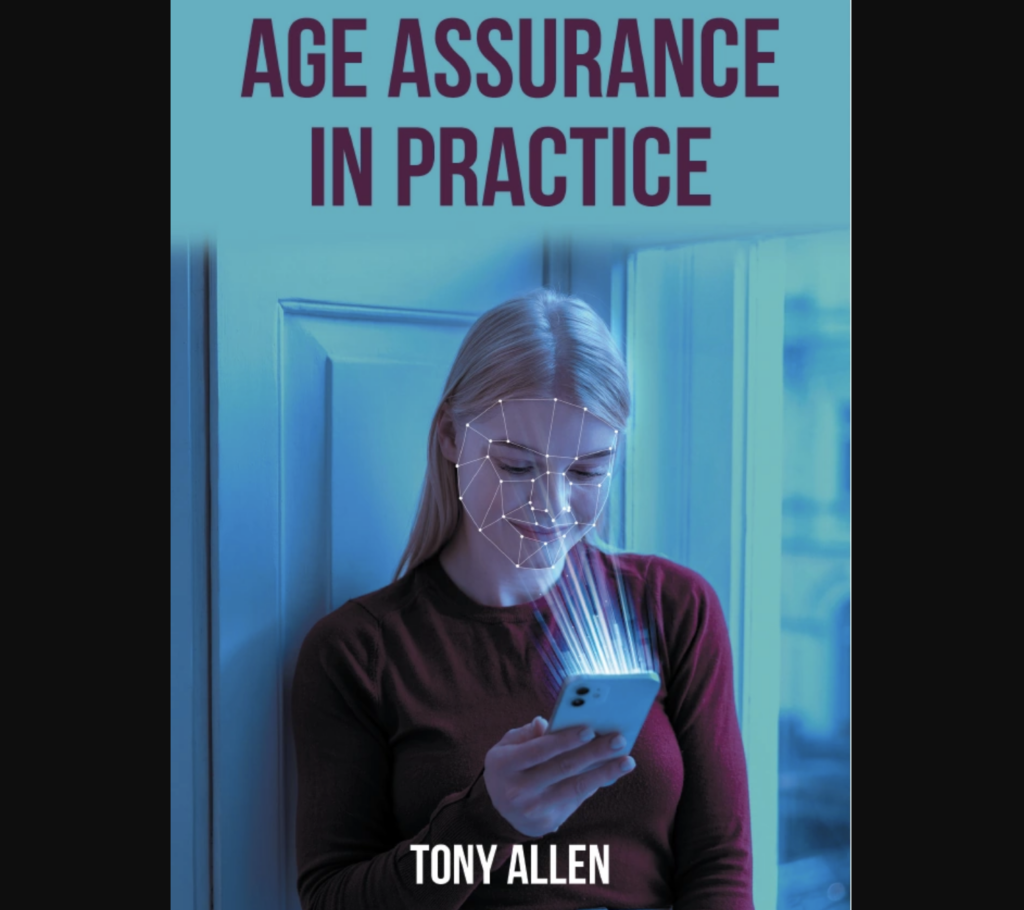
Age Check Certification Scheme (ACCS) Chief Executive Tony Allen is celebrating the publication of his book, Age Assurance in Practice. In a post on LinkedIn (which includes a preview), Allen says the 306-page volume, published by Grosvenor House Publishing, aims to be “a practical guide to understanding, governing and applying age assurance in complex multi-layered systems.”
It covers a slate of topics, with chapters ranging from the contextual (“Why Age Assurance Became Inevitable”) to the highly practical (“From Methods to Systems: Components, Flows and Dependencies”). Which is to say, it aims to be more than simply a glorified manual, by focusing on “explanation rather than instruction.” It wants to impart core knowledge, which will help sustain the industry as it changes over time.
“Rather than prescribing designs, recommending technologies or offering compliance guidance,” Allen writes in the Introduction, the book “examines age assurance as a system-level activity shaped by context, incentives, behavior and governance.”
“The emphasis throughout is on understanding and judgement, not on providing definitive answers.”
A core feature of the book is ISO/IEC 27566-1: Age assurance systems, which Allen helped draft and shepherd to publication. International standards, he says, provide a shared framework for reasoning about the complexity of age assurance, establish common language, and help stakeholders “engage with age assurance in a more consistent and transparent way.”
Allen frames his central argument as a more profound variant on the core assertion that “privacy preserving age assurance is possible.” Age assurance can be done, he writes, “but only if it is approached as a system-level, context-dependent activity, governed with humility and care.” It’s a frank, necessary acknowledgement of the unavoidable truth: age assurance will only ever be as good as the intentions of those deploying it.
“The real challenge is not choosing between deployment and prohibition but understanding how age assurance systems actually behave in practice,” Allen says. “How they fail, how they drift, how they interact with people and how confidence can be earned without overreach.”
Other sections of the book make the arguments that “age is not identity,” that configuration presents a problem when it functions as “invisible policy,” and that “age assurance is not a moment. It is a system.”
Print and digital versions are available here.
Related Posts
-
 January 29, 2026
 -
 May 22, 2025
 -
 November 6, 2025
 -
 June 20, 2025
 -
 September 26, 2025
 -
 January 27, 2026
Article Topics
age assurance standard | Age Check Certification Scheme (ACCS) | age verification | biometrics | ISO 27566-1

Comments