
US states deepen mobile ID rollouts as focus shifts to verification and privacy
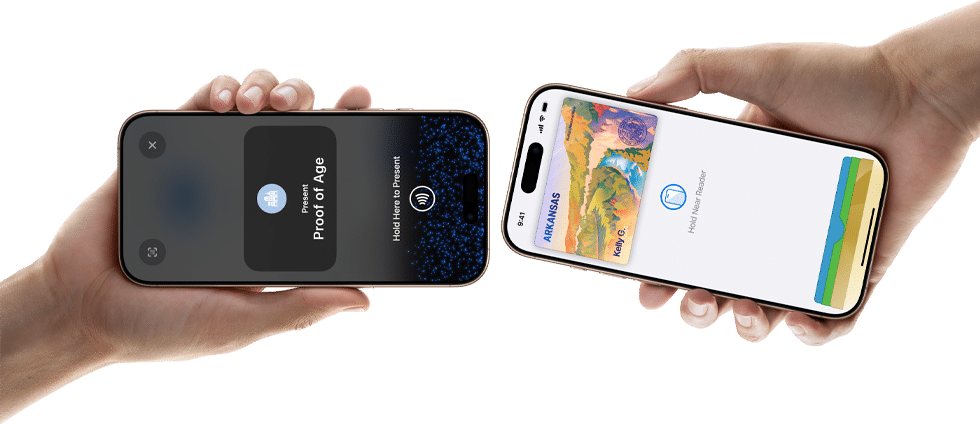
Mobile driver’s licenses are increasingly moving from pilot projects to identity infrastructure in the United States, as states expand digital credential programs and policymakers shift their attention from wallet adoption to questions of verification, privacy and data governance.
Arkansas residents can now add their driver’s licenses and state IDs to Apple Wallet, expanding the state’s mobile identity program from a standalone state app and Android wallet support into Apple’s native digital wallet ecosystem.
The launch, announced by Idemia Public Security and the Arkansas Department of Finance and Administration, allows residents to present an Arkansas-issued driver’s license or state ID from an iPhone or Apple Watch at select Transportation Security Administration checkpoints, participating businesses, and supported apps and websites.
Arkansas had already moved into Google Wallet and Samsung Wallet support last year, after first launching a state mobile ID app built with Idemia PS.
Connecticut says it is close to launching a mobile ID option after years of planning. Illinois is advancing cleanup legislation for its digital driver’s license law. Arizona, meanwhile, is expanding its state digital wallet beyond identity credentials to include vehicle registration and title documents.
The key policy question is no longer simply whether a driver’s license can live on a phone. It is how the credential is issued, where the data is stored, who can verify it, and whether verification creates a record that can be tracked by governments, vendors, businesses or law enforcement.
Arkansas’ Apple Wallet implementation follows the privacy-preserving architecture Apple has promoted for other state mobile ID programs.
Apple says its implementation supports the ISO/IEC 18013-5 mobile driver’s license standard, and Illinois’ Apple Wallet rollout says the state receives only the information needed to approve or deny enrollment, while the credential is encrypted on the user’s device after issuance.
Apple and the issuing state do not know when or where the user presents the ID, according to Illinois’ Secretary of State.
That is important because ISO/IEC 18013-5 is designed around cryptographic verification rather than a simple digital image of a license.
A compliant mobile credential can be checked by a relying party using issuer-signed data and trusted public keys, meaning the verifier can confirm that the credential was issued by the state and has not been altered without necessarily querying a centralized identity database for each transaction.
The American Association of Motor Vehicle Administrators Digital Trust Service is intended to support that model by giving relying parties a secure way to obtain issuing authorities’ public keys.
Illinois appears closest to that model among the states now moving through implementation. The Secretary of State launched Illinois driver’s licenses and state IDs in Apple Wallet in November 2025, with users scanning their physical card, taking a selfie, and completing facial and head movement checks that are sent to the state for verification.
Once approved, the ID is stored in Apple Wallet and users authenticate with Face ID or Touch ID before sharing requested information.
A bill now heading to Gov. JB Pritzker would refine that system by replacing older “electronic credential” language with “mobile identification card” and making clear that law enforcement may not take physical possession of a user’s phone to verify the credential.
Connecticut is less clear. DMV Commissioner Tony Guerrera has said the state hopes to launch a mobile ID in the coming months, and the DMV says the credential will be optional and not a replacement for a physical license or ID.
Connecticut was named by Apple in 2021 as one of the early states planning support for IDs in Apple Wallet.
If Connecticut launches through Apple Wallet or another ISO/IEC 18013-5-compliant mobile ID architecture, verification can be designed to avoid a centralized third-party transaction database. Publicly available information does not yet confirm all the implementation details.
Arizona is different again. Its Arizona Wallet, built by AstreaX, is a state digital wallet app that can store mobile driver’s licenses, state IDs, vehicle registrations, titles, and insurance information.
The Arizona Department of Transportation (ADOT) says the app now allows residents to view vehicle registration and title documents, receive expiration alerts, and link to AZMVDNow.gov for renewals.
Arizona’s wallet is broader than a driver’s license app, and the App Store listing says users control what they share with digital verifiers and can share mDL or mID information through a QR code, while ADOT says residents can manage access to mobile vehicle documents through their state MVD Now dashboard.
The larger trend is clear. States are increasingly building mobile identity systems around secure device storage, biometric device authentication, selective disclosure and cryptographic verification. Yet important differences remain in wallet architecture, governance models and verification flows, leaving open questions about interoperability, privacy and user control.
As mobile IDs become more widely accepted for travel, commerce and government services, the debate is shifting from whether digital credentials should exist to how they are verified and governed. The next phase of adoption may depend less on wallet availability than on whether states can deliver privacy-preserving verification without creating new identity tracking risks.
Related Posts
-
 January 8, 2026
 -
 April 13, 2026
 -
 March 25, 2026
 -
 October 14, 2025
 -
 August 19, 2025
 -
 November 19, 2025
Article Topics
Apple Wallet | Arizona | Arizona Wallet | Arkansas | Connecticut | digital ID | digital wallets | Idemia Public Security | Illinois | ISO 18013-5 | mDL (mobile driver's license) | mDL verification | United States

Comments