
Surveillance report opts for vague biometrics fear over specificity
A new report from a British think-tank suggests that African governments are investing heavily in biometrics for surveillance but appears to be confused about the applications it refers to.
The Institute of Development Studies looked into internet interception, mobile signal interception, social media surveillance, safe city technologies for monitoring public spaces, and biometrics.
“Mapping the Supply of Surveillance Technologies to Africa” presents case studies from Nigeria, Ghana, Morocco, Malawi, and Zambia. Sections enumerate the technologies supplied by China, the European Union, Israel, Russia, the UK and U.S.
Nigeria has invested $2.7 billion in the acquisition of surveillance equipment over the past decade, according to the report.
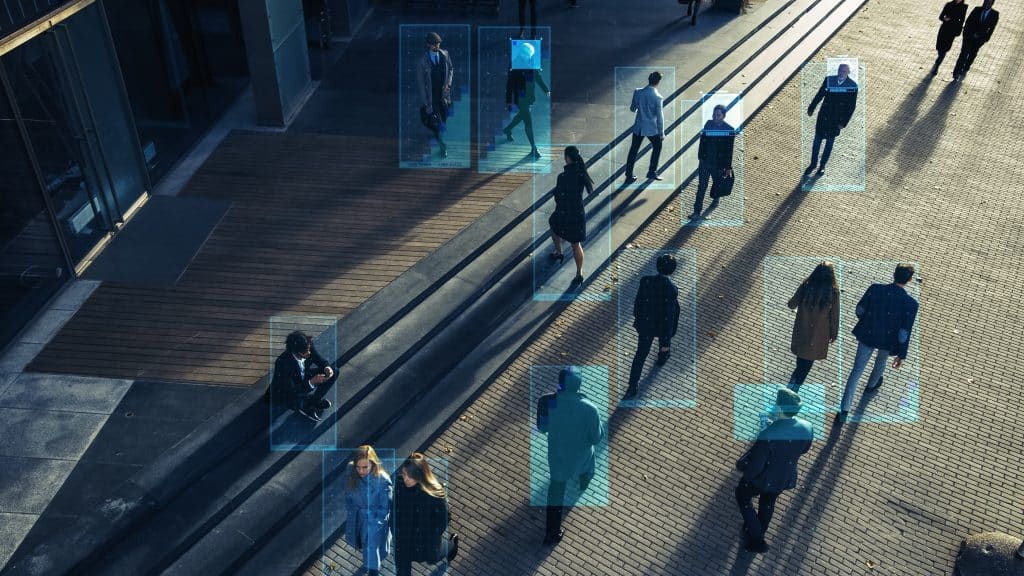
The report delves into public surveillance cameras connected to facial recognition systems and automated license plate recognition.
Nigeria, Ghana and Zambia have each spent $350 million or more on CCTV for public spaces, supplied by Huawei and ZTE. Ghana’s safe city system includes facial recognition-powered CCTV.
Other biometrics applications covered by the report are less clearly related to surveillance, or completely unrelated. The authors refer to Ghana’s adoption of biometric passports and border checks and the use of biometrics by the World Food Programme as having surveillance implications, but without explaining what those implications might be.
An article on the report from the Ecofin Agency names BIO-key and Agilis, Hacking Team, Thales, BAE Systems, Dermalog, NSO Group, Cyberbit and Elbit Systems as the leading suppliers for surveillance technology to Africa. Most of those, including BIO-key, Thales and Dermalog, are not mentioned in the report itself.
The section on Europe notes the provision of funding for biometric border systems in Ghana and Morocco by the European Union Emergency Trust Fund for Africa (EUTFA). Palantir is identified as a supplier of biometric technology to Africa from the United States.
Biometric Update asked Dermalog in an email about the allegation that the company supplies surveillance equipment to the African market. Dermalog Head of Marketing and Design Sven Böckler points out that the report gives the impression that the company supplies technologies like CCTV for public surveillance in Africa, which is not the case.
“It is correct that we provide biometric identification solutions with a focus on identity protection and document security to various countries in Africa,” he says.
The only Dermalog project mentioned in the report is biometric bank verification for the Central Bank of Nigeria. Dermalog won a $50 million contract to verify the identity of individuals with bank accounts for fraud prevention when they present their fingerprints. The technology is not used to identify people in public spaces, or who do not volunteer their biometrics.
The project “is based on a technology that is used by banks worldwide as a trustful MFA solution and is not perceived as a surveillance tool by either vendors or customers, as it makes a decisive contribution to financial inclusion and protection of bank accounts,” Böckler adds.
BIO-key Africa has similarly provided fingerprint biometrics to banks in South Africa and elsewhere for account-holder identity verification. The company is also providing biometrics to customers in Africa for enterprise IAM, civil ID, ecommerce and financial inclusion.
Managing Director Dr. Maduawuchi “Steve” Uwazie told Biometric Update in 2019 that the company’s strategy is based on local investment and strong data privacy protection.
The vagueness and casual conflation of disparate items is hardly unique among analyses of biometrics use. A recent report from the Observer Research Foundation claims that “The risk of identity theft has increased with the introduction of biometrics.” The claim is followed by an explanation of biometric data theft, and then stats for real-world identity theft which does not provide any account of what role, if any, biometrics played in those incidents. The statistics, therefore, show that identity theft is a problem, but do not connect it causally to biometrics adoption. No statistical comparison of identity theft in the presence and absence of biometrics use is provided.
The ethical considerations required for responsible biometrics use are all too real. Addressing them is challenge enough without conflating applications and misinterpreting statistics.
Related Posts
-
 November 8, 2023
 -
 June 28, 2024
 -
 October 26, 2023
 -
March 25, 2024
-
 February 27, 2024
 -
August 28, 2023
Article Topics
Africa | biometrics | facial recognition | responsible biometrics | video surveillance

Comments