
Regula debuts the Regula 7320 for mobile IDV even without network access
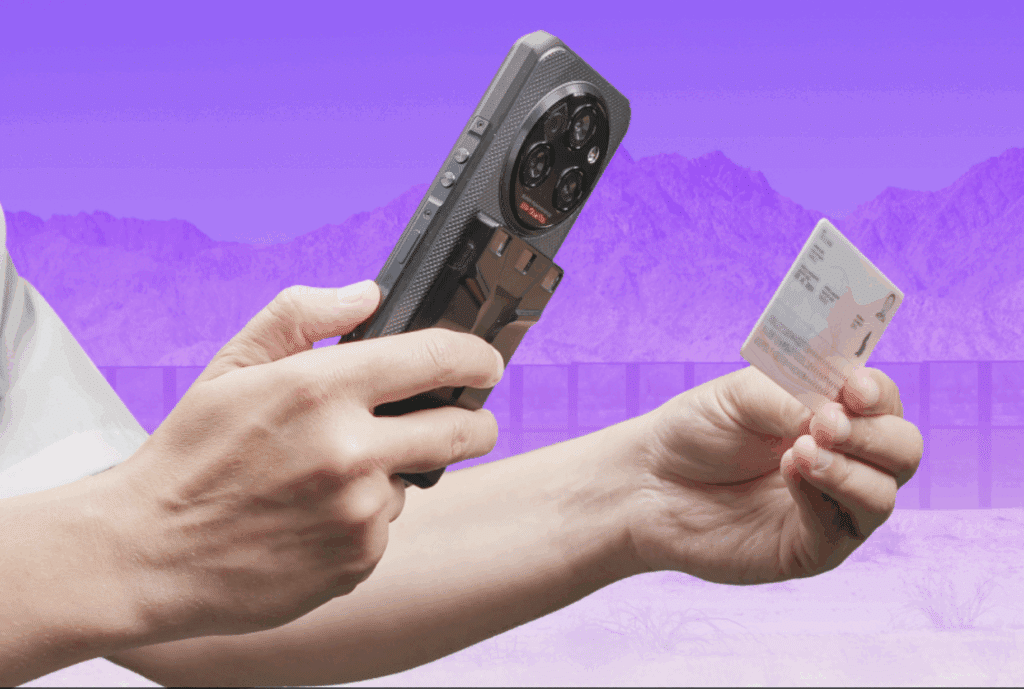
Regula has unveiled the Regula 7320, a compact mobile document reader aimed at tackling one of the industry’s enduring challenges. Namely, the need for a dependable, fully autonomous and seamless solution for identity verification beyond fixed checkpoints.
Verification workflows in the field can still be disjointed, with officers having to manually re-enter or transfer data, operate under limited connectivity, and count on tools that fail to integrate with centralized systems.
Such inefficiencies lead to delays, inconsistencies and security gaps. The Regula 7320 aims to address these issues by delivering border-grade verification, full autonomy and native ecosystem integration in any location, even without network access.
“The Regula 7320 turns field verification from an isolated task into part of an integrated ecosystem,” says Alex Lewanowicz, director of hardware engineering at Regula. “By merging document, biometric, and data verification into one connected workflow, it enables organizations to cut costs, reduce verification times, and strengthen trust across every touchpoint of the identity lifecycle.”
Built for professionals in high-risk and high-security sectors such as border control, road police, transport security and regulated industries like gambling or car rental, the device performs full identity verification on the spot. According to the company, it reads and validates ID data, checks document authenticity, and conducts face matching, then instantly aligns results with centralized policies and workflows via the Regula IDV Platform.
“This upgrade also empowers organizations to address long-standing challenges like limited mobility, fragmented tools, and complex integrations,” added Lewanowicz.
The Regula 7320 has been designed for critical operations, adding autonomy, power and interoperability to support demanding scenarios. It enables teams to verify documents in varied conditions and locations, including RFID reading and validation, facial matching, and fingerprint capture, ensuring reliability even in remote or restricted zones.
Once verification is completed, whether offline or online, the device automatically synchronizes structured and validated data with back-office systems through the Regula IDV Platform. This automation eliminates manual re-entry, speeds up case processing, reduces errors and ensures every identity record is consistent across the lifecycle.
The device also integrates with existing Regula infrastructure or third-party databases, supporting automated anti-money laundering (AML) and politically exposed persons (PEP) checks, data extraction and reporting, thereby minimizing manual work and complex integrations.
High-resolution, visible-light and 8MP infrared cameras provide forensic-level detail in the Regula 7320, enabling officers to detect even the smallest traces of forgery or alteration, according to the company. Optimized ultraviolet color rendering allows laboratory-grade UV imaging under normal ambient light, while a dedicated infrared algorithm prevents overexposure and preserves fine detail. These features bring field-ready authenticity checks comparable to those of stationary forensic workstations.
The device also offers extended autonomy, powered by Regula’s in-house authenticator with an 11,000 mAh battery that can be recharged directly from a high-capacity smartphone. This ensures longer runtimes without recharging, a critical advantage for field operations. When connectivity is unavailable, verified data is securely stored on the device and automatically synchronized with central systems once the connection is restored, maintaining continuity and compliance.
Related Posts
-
 January 16, 2025
 -
 August 14, 2025
 -
 May 8, 2025
 -
 August 15, 2025
 -
 December 9, 2024
 -
 December 2, 2024
Article Topics
biometrics | digital identity | document reader | document verification | identity verification | mobile biometrics | Regula | remote identity proofing

Comments