
SITA and Abu Dhabi Airports sign MoU to explore AI-driven airport platform
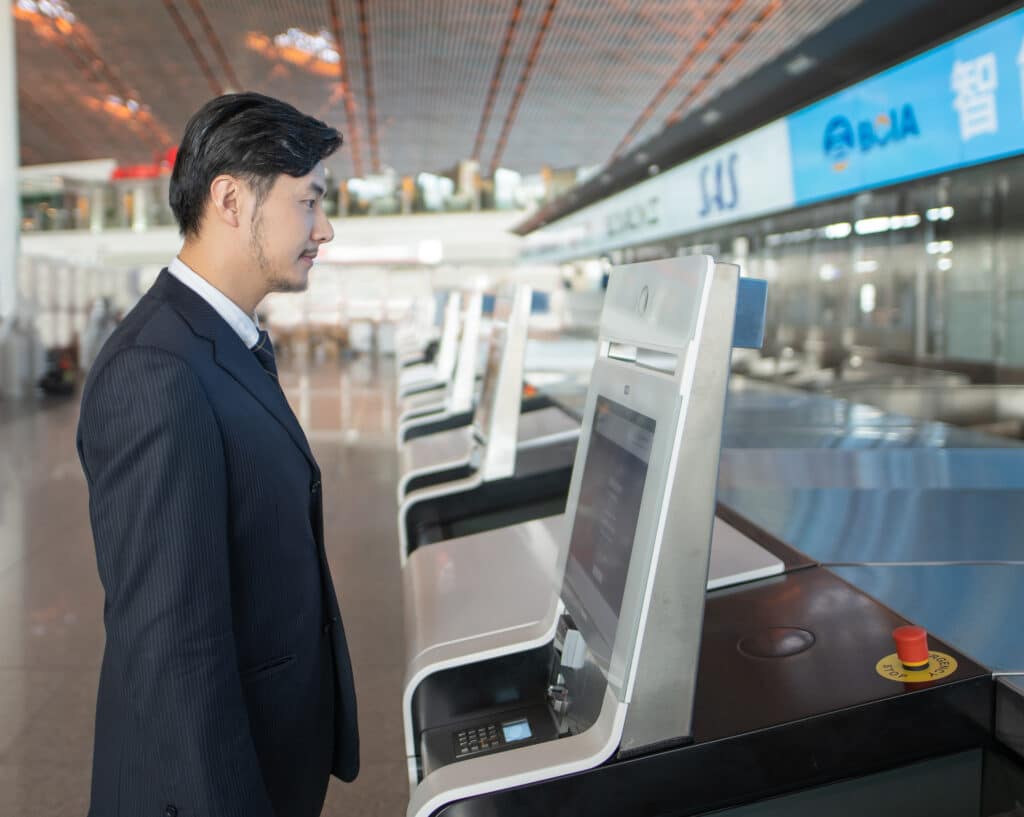
The digitalization of airport operations is accelerating. While global passenger numbers continue their upward trajectory, airlines and airports are increasingly expected to deliver smarter and more seamless experiences.
Now, SITA and Abu Dhabi Airports are engaging in a joint effort to push forward the airport ecosystem. The multinational aviation technology company and Abu Dhabi Airports (ADA) have signed a Memorandum of Understanding (MoU) to explore the co-development of a new platform.
The collaboration speaks to Abu Dhabi’s ambitions of front-rank innovation in digitalization, as comments by Andrew Murphy, Chief Information Officer at Abu Dhabi Airports, made clear.
“By enabling Zayed International Airport to become one of the world’s first truly connected digital airports, and by powering this with iTAM at the core, we are creating a unified operational source of truth that accelerates growth and sets a new global benchmark for smart, seamless journeys,” Murphy said.
The Intelligent Total Airport Management (iTAM) looks to funnel real-time data, insights and operational decisions in an AI-driven platform. The MoU will see the organizations exploring how to integrate information from airlines, ground handlers, ATC, government agencies and airport systems via a shared operational data platform.
“Airports today work in an environment that is more complex and more interconnected than ever,” says Selim Bouri, president of MEA at SITA. “By collaborating with Abu Dhabi Airports, we have an opportunity to co-create a smarter way of working, one that uses data and intelligence to make every decision more predictable and more efficient.”
The new collaboration will see SITA and Abu Dhabi Airports leverage advanced analytics, AI and autonomous workflows to anticipate airport disruptions, optimize resource allocation and improve safety, efficiency, and on time performance. It would serve as a scalable foundation for end-to-end, AI-driven airport management.
“This approach supports the smooth journeys passengers expect and gives airport teams better tools to manage disruptions before it escalates,” added SITA’s Bouri. “Together, we can shape a model that becomes a reference point for airports globally.”
Smoother passenger journeys enabled by the use of biometrics, digital ID and smart airport technologies is part of SITA’s mission. The company has a new Customer Experience Centre in Singapore, around which Biometric Updates was given a tour. SITA showed off its ICAO-compliant Digital Travel Credential, which allows for pre-clearance as the passenger journey “starts at home,” and a vision of frictionless air travel.
SITA’s self-service kiosks and biometric bag drops will also feature in the $2 billion Techo International Airport (KTI), the new gateway airport for Cambodia’s capital city.
Biometric digital ID was also highlighted in a new IATA report that explores how the technologies can lead to a host of improvements. Significant cost savings and improved operational flexibility can be gained by utilizing biometric digital ID technology to manage the segregation of international and domestic departing passengers. IATA argues that physical barriers separating passenger flows are no longer necessary.
Related Posts
-
 July 29, 2025
 -
 December 12, 2024
 -
July 1, 2025
-
 April 14, 2025
 -
 February 24, 2025
 -
 April 7, 2025
Article Topics
airport biometrics | biometrics | digital ID | digital travel | passenger processing | SITA | UAE

Comments