
Brazil prepares to introduce mandatory biometric boarding for ports and airports
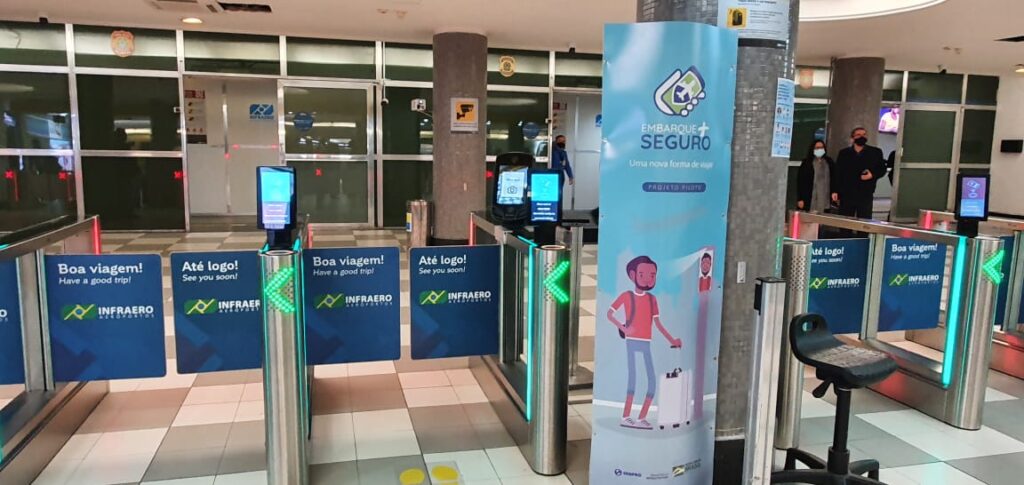
The Brazilian government is making headway in its plan to introduce a biometric boarding system that will ultimately become mandatory for all airports and maritime ports nationwide.
On January 21st, the Ministry of Ports and Airports (mPor) kicked off a public consultation on the draft National Biometric Identification Policy, which aims to introduce standardized procedures for biometric boarding. The country is also launching the first tests for its facial recognition-based boarding system at the largest maritime port passenger terminal in Latin America.
“We will have a significant gain in efficiency, improving the passenger experience and reducing operational risks by using biometric identification, especially facial recognition, in access procedures to sensitive areas of airports and port and waterway terminals,” says Minister of Ports and Airports, Silvio Costa Filho.
Aside from reduced queues for passengers, biometric boarding is expected to introduce better security by cross-checking with official data in real time. Among its main benefits is digitalization and reducing document fraud, according to mPor. The government also expects a 25 to 30 percent reduction in administrative and operational control costs in the initial phase.
The draft policy will help incorporate existing projects such as Embarque + Seguro, a biometric boarding program for air travelers, and Porto Sem Papel (PSP), a government program designed to reduce bureaucracy in port operations.
Consultations on the draft are open until February 20th and can be accessed here. The ordinance is expected to be published by the end of March.
First maritime port pilot begins
As the government details the regulation underlying the project, MPor is preparing to test its facial recognition identification system at the Giusfredo Santini Maritime Passenger Terminal at the Port of Santos.
The terminal, operated by Concais, will test devices used to identify passengers, crew members and other employees. Concais accounts for approximately 60 percent of the tourist traffic on cruise ships in the country, with more than 127,500 cruise passengers expected to circulate through the Giusfredo Santini Maritime Passenger Terminal in February alone.
The project has been under development since September last year. Some questions still remain, including those related to the financing of the project, according to newspaper A Tribuna.
Another is the issue of user consent and compliance with the Brazilian General Data Protection Law (LGPD).
According to the plan, biometric databases will be operated by Serpro (Serviço Federal de Processamento de Dados), which has previously participated in the Embarque + Seguro program.
Mpor says that the centralization of biometric databases at Serpro aims to ensure “high standards of governance, traceability, and fraud prevention, eliminating the need for user consent as it involves the implementation of public security policy and critical infrastructure, as provided for in the LGPD.”
The implementation will be coordinated by an interinstitutional technical committee, including representatives from MPor, the National Civil Aviation Agency (ANAC), the National Waterway Transportation Agency (ANTAQ) and other bodies.
The project will follow guidelines from the International Civil Aviation Organization (ICAO) and the International Maritime Organization (IMO).
Related Posts
-
 March 20, 2025
 -
 April 25, 2025
 -
 March 20, 2025
 -
 June 3, 2025
 -
 February 17, 2025
 -
 February 24, 2025
Article Topics
airport biometrics | biometric identification | biometrics | Brazil | facial recognition | passenger processing | port security | Serpro

Comments