
Biometrics pilots for air travel cleared for takeoff – but stall on runway
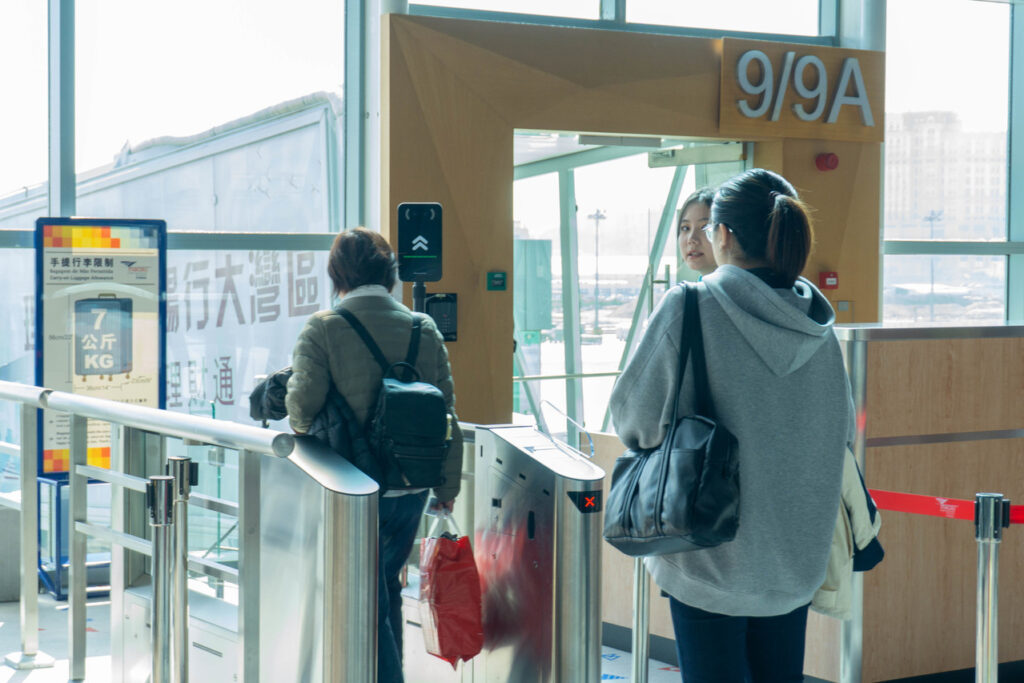
A successful trial usually means a green light to proceed with a full deployment of airport biometrics systems. But once the light is green, how far down the road do most organizations get?
Biometric passenger processing is no longer a new invention. As noted in a new publication from Valour Consultancy, “airlines have been piloting facial recognition and digital identity across check-in, bag drop, security and boarding for years.”
But where are the scalable, interoperable operating models? At best, they remain an exception. Valour’s argument aims to drop an uncomfortable truth: “most biometric programmes stall after the trial phase – not before it.”
This isn’t the technology’s fault: it is mature and is capable of doing what it’s supposed to. The problem is humans. Pilots fail, says Valour, “because the surrounding decisions and the required inter entity agreements haven’t been made.”
“Organizations are being overwhelmed by the rapid change in technology as well as the lack of standards that enable full interoperability across the entire journey for domestic, regional and international travel.”
“Initiatives such as IATA One ID, alongside government-led trusted traveller programmes, established a long-term vision: passengers moving through airports using a single biometric identifier, with identity verified once and reused securely across the journey. These initiatives helped align stakeholders conceptually, but they did not resolve fundamental questions around governance, liability, funding or ownership.”
The resulting gap between potential and actualization has brought the industry to an inflection point. “Biometric identity is no longer an innovation experiment, but an emerging component of core passenger processing infrastructure. “At the same time, regulatory complexity, fragmented ownership models, rapid pace of technology development and evolving supplier ecosystems are making long-term decisions harder, not easier.”
Limited pilots stagnate as regulations wobble
The white paper’s thrust is that context is critical when deploying biometrics systems. It’s not just biometrics that are evolving. Airline travel is seeing increased complexity, and adoption of biometrics for use cases beyond immigration and eGates is expected to rise rapidly over the next decade. Self check-in and self baggage drop options are expected to jump between 20 and 30 percent.
As the airport ecosystem evolves, the longer a single pilot remains isolated to a specific touchpoint or use case, the more it resembles (meagre) long-term infrastructure. This raises questions about interoperability, extensibility and lifecycle management, which are typically not addressed at pilot stage.
Many biometric trials were launched around the COVID-19 pandemic and the consequent restrictions on movement and travel and demand for contactless solutions. Since then, passenger volumes have rebounded, but systems evolution has not necessarily kept pace.
Beyond the physical environment, the regulatory landscape continues to fluctuate, as various nations shape their laws to suit their local needs. “Global operating models must increasingly be adapted to local legal and cultural realities, complicating standardization efforts,” says the paper. Stability is unlikely, meaning steps toward interoperability are always taken on unsteady ground.
Valour observes significant regional differences. North America has strong government involvement, uneven airport adoption, a domestic focus and fragmented delivery including commercial entities and DHS. Europe prefers “privacy-led regulation driving cautious, fragmented deployment, but with regional centric standards such as eIDAS and EES.”
Adoption in Asia-Pacific is faster, “often through government-enabled models.”
Airlines, airports, biometrics firms, governments all have a stake
Finally, there’s the intersection of technology and customer experience. Travelers expect the convenience they’re promised by trials of biometric systems. If positive outcomes fail to materialize, privacy concerns become inflamed.
Meanwhile, the need for tools that can address both needs, along with standard IT concerns, means some legacy procurement processes are outdated. Finding the right operational balance in the current environment is not an easy task, as responsibility is split between airline, airport and government interests, and the biometric and digital identity supplier landscape sees increasing overlap among traditional aviation vendors, specialist biometric providers and new digital identity firms.
As the task becomes more complex, it also becomes more important to long-term viability. “For airports and airlines,” says Valour, “supplier decisions increasingly shape long-term operating models,” as “early choices around architecture, data flows and integration points can be difficult and costly to reverse.”
Stakeholders land at PTE World 2026
The main takeaway is that pilots have tied biometrics to the travel experience. The benefits are clear. Between infrastructure and customer expectation, adapting to the new reality is a necessity, not an option. A smart choice factors in ecosystem compatibility, roadmap credibility, flexibility to regulatory and operational change, and “the requirement for a truly interoperable journey across multiple airports, airlines and governments.”
The insight comes ahead of PTE World 2026, the Passenger Terminal Expo, which takes place this week in London, connecting over 11,000 senior airports, airlines, aviation authorities, governments and related business executives from across the globe.
Related Posts
-
 November 18, 2025
 -
 May 16, 2025
 -
 February 12, 2026
 -
 December 9, 2025
 -
 November 25, 2025
 -
 September 23, 2025
Article Topics
airport biometrics | biometrics | digital travel | identity verification | passenger processing | PTE World 2026

Comments